Walk down the wrong street here and you'll hear a violin being tuned through an open workshop window — this is still, four centuries after Stradivari, a city built around a single obsessive craft.
I’ll admit Cremona wasn’t on my original route through Lombardy — it got added because a friend in Mexico City, a cellist, made me promise that if I was ever in the region I’d go pay respects to the birthplace of the modern violin. I didn’t fully understand what that meant until I was standing in the Piazza del Comune watching a visibly reverent group of Japanese and Korean violin students photograph a workshop window, and I realized this small city on the Po plain, population barely 70,000, still functions as something like Mecca for string instrument making.
The City Antonio Stradivari Built
Cremona has been a center of violin making since the sixteenth century, when Andrea Amati essentially established the modern form of the instrument here, and the craft passed down through generations of the Amati family before reaching its most famous practitioner: Antonio Stradivari, who worked in Cremona from roughly 1666 until his death in 1737 and produced somewhere around 1,100 instruments, of which about 650 survive today, scattered in concert halls and private collections around the world and worth, individually, sometimes tens of millions of dollars. What struck me is that the tradition never actually died here the way it did almost everywhere else — Cremona still has well over a hundred active violin-making workshops, a functioning international violin-making school, and UNESCO recognized traditional Cremonese craftsmanship as Intangible Cultural Heritage in 2012. This isn’t a museum piece. It’s a living trade, and you can hear it: walk the streets near the center on a weekday afternoon and workshop doors stand open, luthiers bent over half-formed instrument bodies, the smell of varnish and cut spruce drifting out onto the pavement.

The Museo del Violino, opened in 2013, is the essential stop — it holds several Stradivari and Amati originals, including instruments still played in concert on rotating schedule in the museum’s own auditorium so they don’t go silent from disuse, which is apparently a real risk for old wood. Hearing a genuine Stradivari played live, in a room built acoustically for the purpose, is a different experience than anything a recording can give you; there’s a warmth and complexity to the sound that I, someone with no formal ear for it, could still recognize as unusual.
Piazza del Comune and the Torrazzo
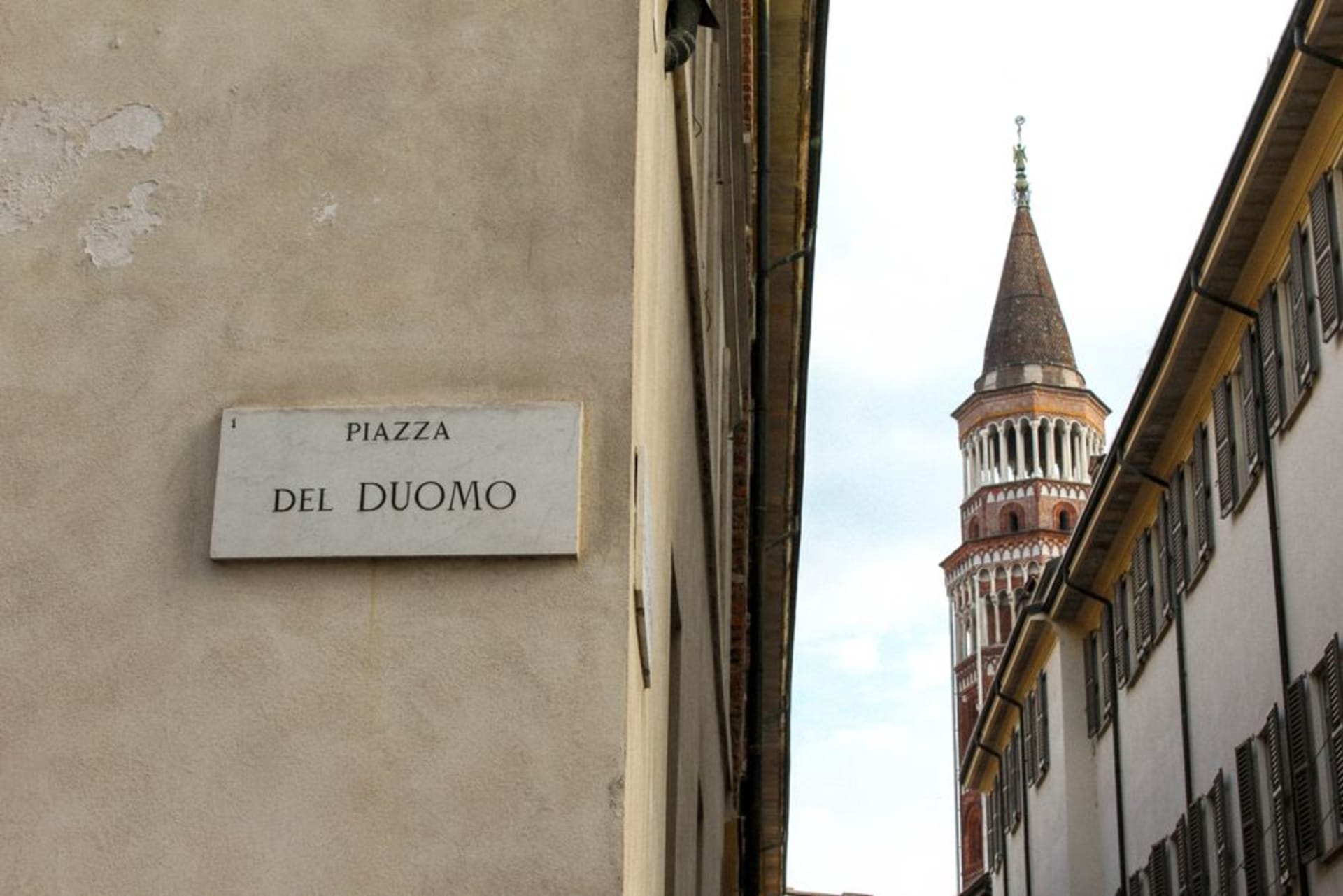
The civic heart of Cremona, the Piazza del Comune, is one of the most complete medieval squares in northern Italy — the Romanesque Duomo, consecrated in 1190 and expanded over centuries with a striking marble facade, sits beside the octagonal baptistery and the Torrazzo, at just over 111 meters reputedly the tallest medieval brick bell tower in Europe. Climbing it — several hundred steps, no elevator — rewards you with a flat, hazy view across the Po plain toward the Apennines on a clear day, and a close-up look at the enormous 16th-century astronomical clock built into its face.

Between violin history and church-climbing, don’t skip the food: Cremona is also the home of mostarda, that strange and wonderful condiment of candied fruit in a mustard-spiked syrup, traditionally served alongside bollito misto — a plate of mixed boiled meats that sounds austere and tastes anything but once the mostarda’s sweet heat hits it. It’s not a dish I’d have sought out on paper, but it’s exactly the kind of thing I travel for: a flavor combination so regionally specific it barely exists thirty kilometers away.
When to go: September to October, when the Cremona Musica festival draws instrument makers and musicians from around the world and the piazza fills with an energy that’s hard to catch at quieter times of year.