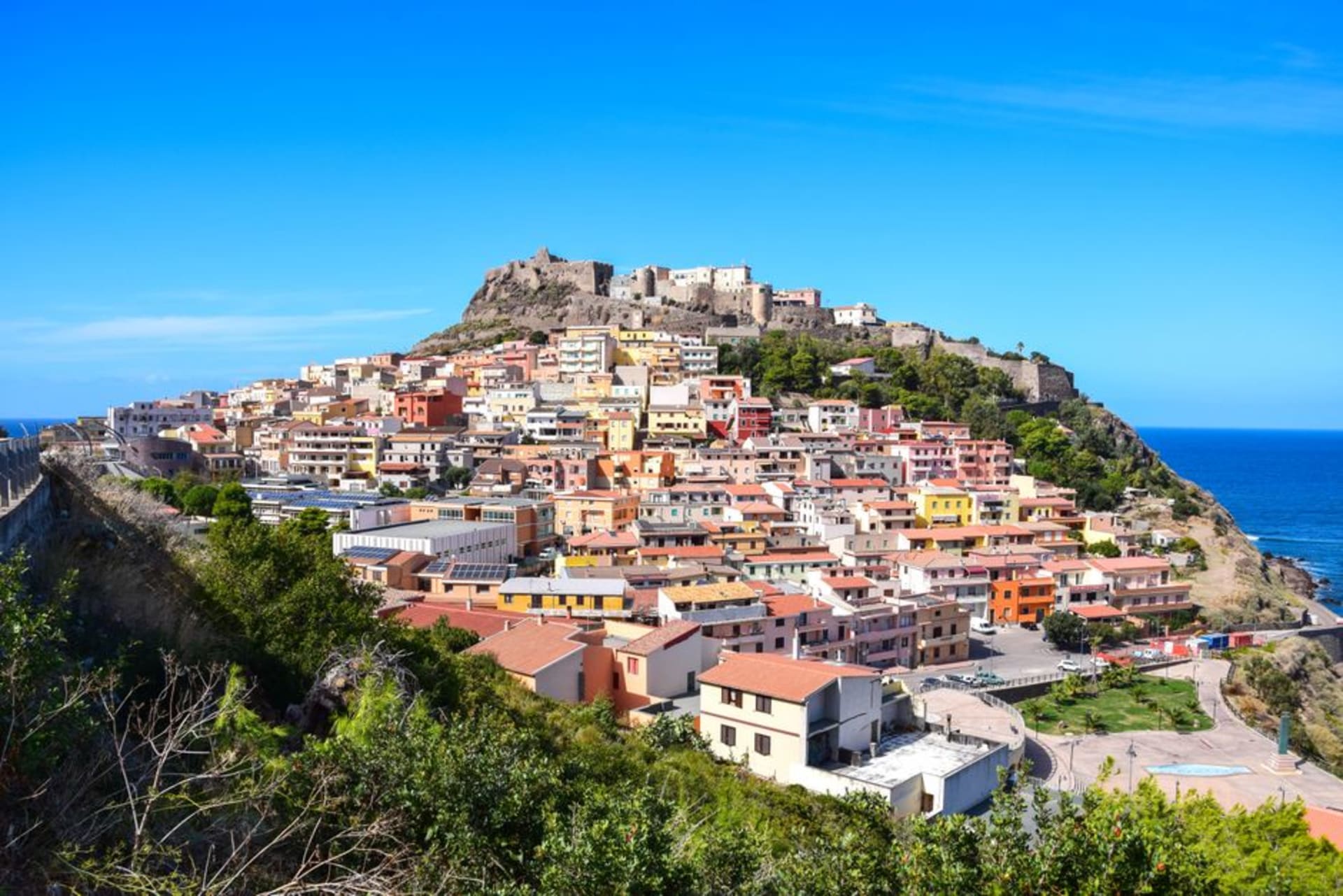
Castelsardo
"I climbed the switchback streets of Castelsardo out of breath and slightly annoyed, then turned around at the top and forgave the town everything."
A Genoese fortress town stacked on a headland above the Gulf of Asinara, where old women still weave palm baskets in doorways and the whole place looks like it was built specifically to be seen from a boat.
Castelsardo announces itself long before you arrive — a cone-shaped headland on Sardinia’s northwest coast with a tight cluster of pastel houses climbing toward a squat medieval castle at the summit, visible from the coastal road for a good ten minutes before you actually reach it. I’d seen photos, the kind that circulate as generic “Sardinia” images without anyone naming the place, and assumed the reality would be smaller and less dramatic. It was not. The town was founded in 1102 by the Genoese Doria family, who understood defensible real estate as well as anyone in medieval Italy, and picked this particular rock — a natural promontory jutting into the Gulf of Asinara with sheer drops on three sides — specifically because it was nearly impossible to attack. Nine hundred years later it is nearly impossible to leave without a full memory card.
The Climb and the Castle
There is no way to experience Castelsardo honestly except on foot, uphill, through a maze of narrow stone streets, covered stairways, and archways so tight that two people have to negotiate who steps aside. The town changed hands from the Doria to the Aragonese and eventually to the Savoy, and its Sardinian name for centuries was Castel Genovese before it was renamed for the House of Savoy in the nineteenth century — a small detail I only learned from a plaque halfway up, breathing harder than I wanted to admit. The Castello dei Doria at the summit now houses the Museo dell’Intreccio Mediterraneo, a museum dedicated to the region’s dwarf palm basket-weaving tradition, which sounds like a niche detour until you realize the craft is genuinely still alive here — walk the lower streets and you will see elderly women, usually seated just inside open doorways, weaving asfodelo and palm fronds into baskets exactly as their grandmothers did, selling directly from the doorway with no middleman and no markup for the view. From the castle ramparts the panorama runs west along the gulf toward Asinara island and, on a clear day, all the way to Corsica.

The Cathedral, the Sea, and a Very Specific Kind of Anchovy
Below the castle, tucked at the edge of the promontory, sits the Cattedrale di Sant’Antonio Abate, its polychrome majolica-tiled dome catching light in a way that makes it visible from boats far offshore — a landmark for fishermen for centuries before it was a landmark for anyone’s camera. Just past it, a narrow terrace looks straight down onto the rocks and the small fishing harbor below, where Castelsardo’s fleet still brings in anchovies that the town treats as a genuine point of local pride; I ate them fried, whole, with a squeeze of lemon at a table overlooking the water, and they were the best version of a fish I’d previously considered mostly a pizza topping. The town also gives its name to the wider Anglona region’s rural churches — a short drive inland brings you to Nostra Signora di Tergu, a striking Romanesque church built in Pisan style that most visitors to Castelsardo never bother to find, which is their loss.

When to go: Visit in shoulder season — May or September — for cooler climbing weather and to actually see the basket weavers at work rather than shuttered doorways during the midday summer heat.