Capri
"I paid too much for a lemon granita in the Piazzetta and did not regret it for one second — Capri taxes you honestly, at least."
Capri is what happens when limestone cliffs, Roman emperors, and Italian glamour all decide to occupy the same six square kilometers — and somehow none of them lose.
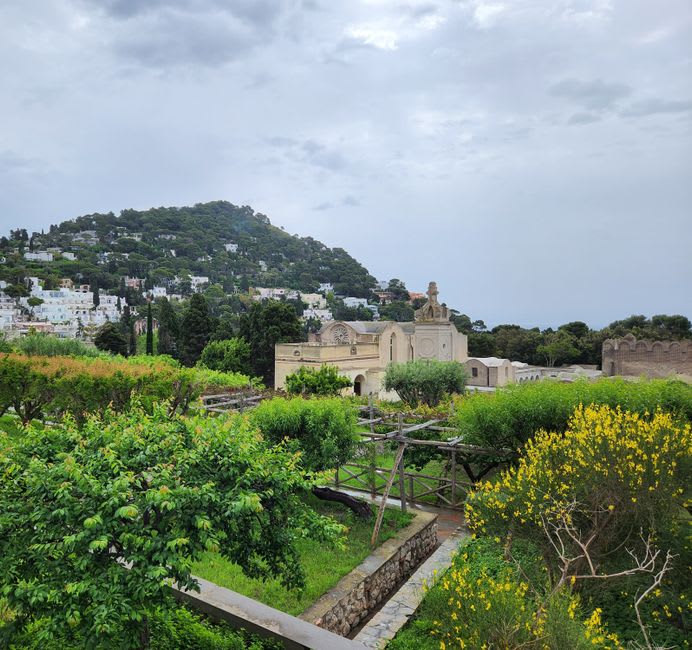
I took the hydrofoil from Naples on a morning so hazy that the island didn’t appear until we were nearly on top of it — a grey shape resolving into cliffs, then into the pastel stack of Capri town climbing the hillside above Marina Grande. The funicular up from the port is barely three minutes long but it does the essential psychological work of a much longer journey, lifting you out of the workaday harbor and depositing you in the Piazzetta, Capri’s absurdly small central square, where everyone seems to be either extremely well-dressed or extremely sunburned, sometimes both.
The Piazzetta and the Myth of Effortlessness
The Piazzetta is barely the size of a tennis court, ringed by cafés charging prices that assume you understand you’re not paying for the coffee. I sat at one anyway, because that’s the whole point — you’re paying for the clocktower, the churchgoers cutting through on their way to Santo Stefano, the parade of people who’ve been coming here since the 1950s when Capri became shorthand for a certain kind of postwar Italian glamour, all gauzy dresses and convertibles too wide for these streets. The island has been seducing outsiders for much longer than that, though. Emperor Tiberius retreated here permanently in 27 AD and ruled the Roman Empire from Capri for the last decade of his life, building twelve villas across the island. I hiked up to the ruins of Villa Jovis, his largest, perched on the eastern cliffs — a sweaty forty-five-minute walk from town that empties out almost everyone who started it, which is exactly why I kept going. What’s left is fragmentary, brick and mortar cores stripped of their marble, but the view down to the Gulf of Naples and Amalfi coast beyond makes the emperor’s real estate instincts embarrassingly obvious.
Blue Grotto, Faraglioni, and Getting Off the Main Drag
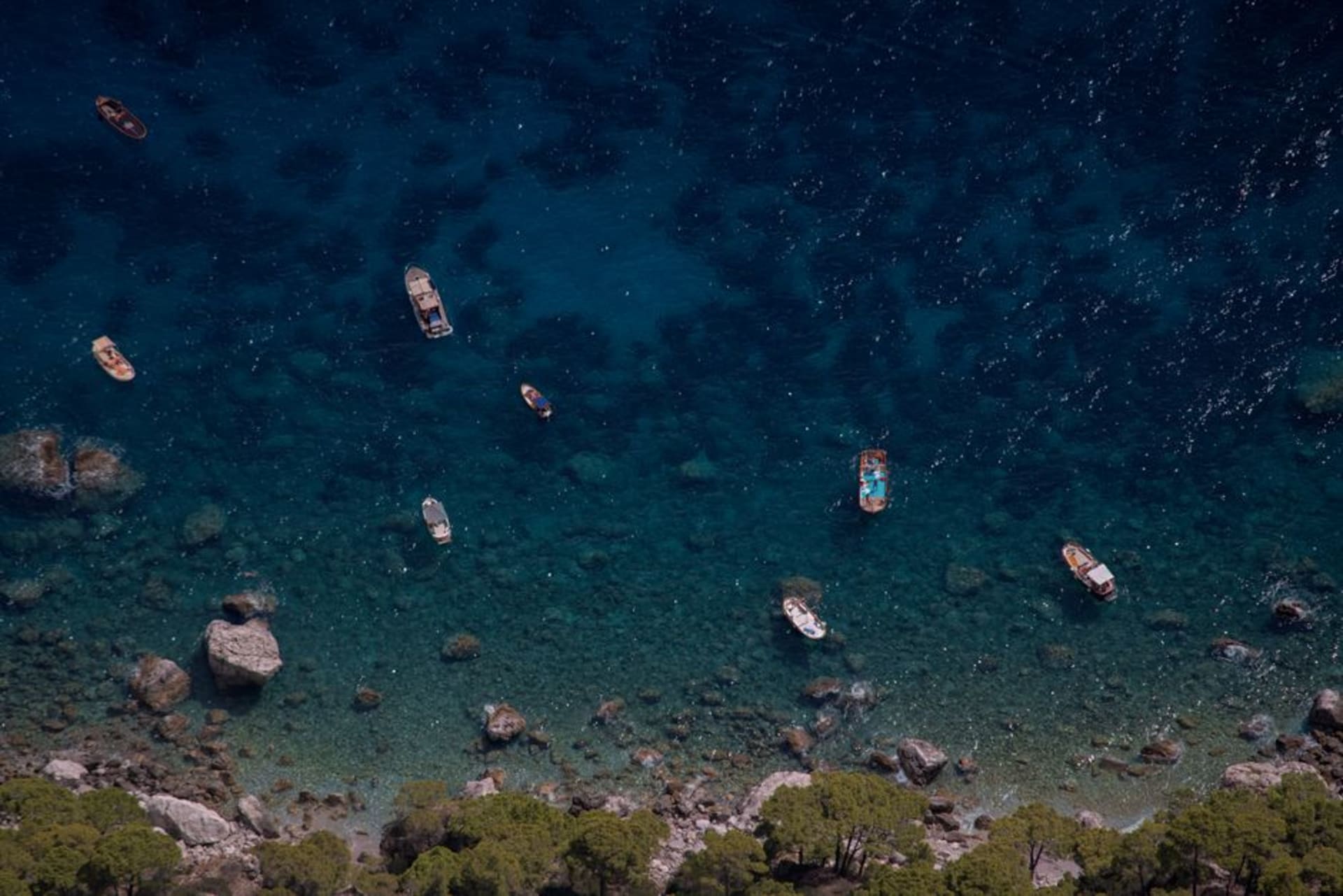
Everyone tells you to do the Blue Grotto and everyone is annoyingly correct — you transfer into a tiny rowboat, lie flat to clear an entrance barely a meter high, and then the sunlight refracting through underwater limestone turns the whole cave a cold electric blue that photographs poorly and looks better in person than any picture suggests it could. I did it early, before the queue of boats backed up outside the entrance like a nautical traffic jam. Better, honestly, was just chartering a small gozzo for a few hours and circling the island slowly, past the Faraglioni — the three limestone sea stacks that have become Capri’s unofficial logo — and into coves along the southern coast where the water goes a shade of green-blue I associate now specifically with this island and nowhere else. I swam off the boat near the Faraglioni, salt-heavy Tyrrhenian water, cliffs rising sheer on either side, and understood in a way I hadn’t from photographs why this particular six square kilometers of rock became a fixation for two thousand years of visitors.

The other half of the island, Anacapri, sits higher up and moves at a slower register — fewer boutiques, more actual residents, and a chairlift to the summit of Monte Solaro that deposits you at the island’s highest point with the whole Bay of Naples spread out below, Vesuvius smudged on the horizon. I’d go there before the Piazzetta, not after, if I were doing it again — it recalibrates what “quiet” means on an island that spends its afternoons very determined not to be quiet at all.
When to go: Late May through June or September offers warm water and thinner crowds than the July-August crush, when day-trip ferries from Naples and Sorrento arrive by the hundreds.