Arezzo
"Everyone was pointing at Florence, and I found the frescoes that actually stopped me cold in a side chapel in Arezzo."
A hill town that hid a Piero della Francesca masterpiece in plain sight for centuries while everyone else was busy looking at Florence.
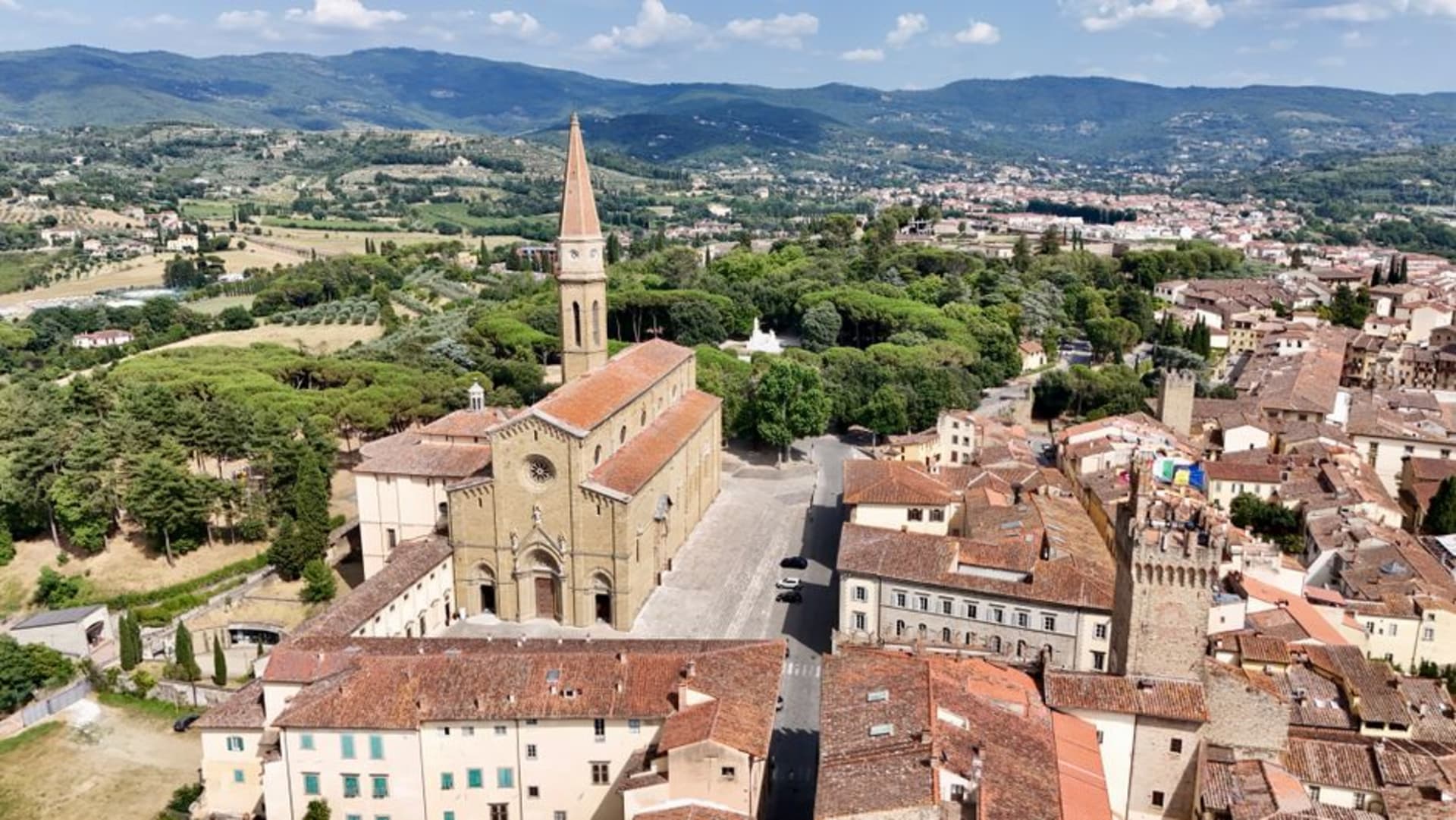
Arezzo doesn’t market itself the way Florence or Siena do, and honestly, that’s most of its appeal. This is a working Tuscan city — antiques dealers, jewelry workshops, a busy Saturday market — that happens to contain one of the greatest fresco cycles of the entire Renaissance, tucked into the choir of a modest basilica most tourists drive straight past. Piero della Francesca’s Legend of the True Cross, painted across the 1450s and 60s in the Basilica di San Francesco, is the reason serious art historians make the detour east from the Tuscan hill-town circuit. I booked a timed slot months ahead — visitor numbers into the chapel are strictly limited to protect the frescoes — and spent thirty minutes essentially alone with battle scenes and dream visions rendered with a geometric clarity that still looks startlingly modern nearly six centuries later.
What struck me, standing there, was how quiet the room was compared to the crush at the Uffizi an hour away. Piero della Francesca was, in his own time, somewhat overshadowed by more prolific contemporaries, and it’s only in the last century or so that art historians fully rehabilitated his reputation — his mastery of perspective and light influenced everyone from Piero di Cosimo to twentieth-century painters like Balthus. Arezzo got to keep him quietly, almost as a local secret, while Florence hoarded the household names.
Piazza Grande and the Joust
The heart of the city is the Piazza Grande, a sloped, irregular square ringed by medieval and Renaissance buildings on wildly different levels — the terrain here is genuinely steep, and the piazza tilts noticeably from one end to the other, which gives it a theatrical quality no flat square could match. Vasari, Arezzo’s other famous son — painter, architect, and the man who essentially invented art history as a discipline with his Lives of the Artists — designed the elegant loggia that runs along one side. Twice a year the piazza hosts the Giostra del Saracino, a jousting tournament in full medieval costume where riders from the city’s four historic quarters charge at a wooden effigy of a Saracen knight, a tradition documented since the 1600s and taken with total seriousness by locals who spend the rest of the year rehearsing.
I happened to be in town on a normal Saturday, market stalls filling the lower piazza with antiques and secondhand books, and it felt like the kind of scene that hasn’t fundamentally changed in a hundred years. Arezzo rewards exactly this — wandering without an agenda, letting the steep streets and mismatched rooflines do the work that a checklist itinerary never could.

When to go: June or September, to catch the Giostra del Saracino tournaments, or the first Sunday of any month for Arezzo’s large antiques fair, one of Italy’s oldest and most respected.