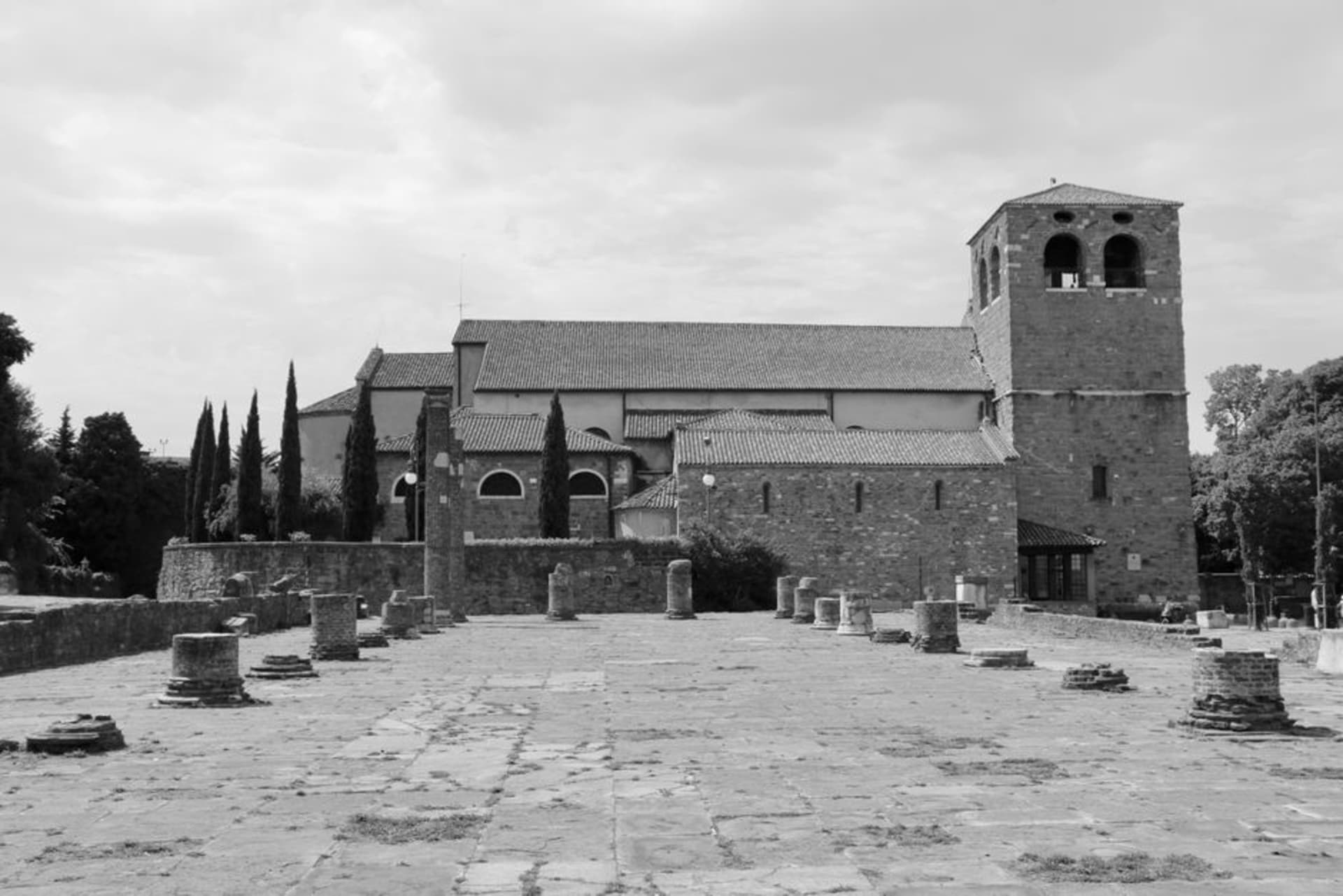
Aquileia
"I have never felt smaller in a small town than I did standing on Aquileia's Roman floor."
A cornfield town in Friuli that used to be one of the four largest cities on Earth, and still has the mosaics to prove it.
Nothing about the drive prepares you. You come off the flat farmland of the Friulian plain, past cornfields and gas stations, and then a bell tower appears above the tree line and you park next to what looks like an oversized village church — and then you walk inside and the floor underneath you is a Roman mosaic the size of a football pitch, one of the largest and best-preserved in the Western world, and you remember that Aquileia was once one of the largest cities on the planet. Founded by Rome in 181 BC as a bulwark against tribes from the north, it grew into the capital of the province of Venetia et Histria, a trading hub linking the Mediterranean to central Europe, home at its peak to perhaps 100,000 people — a population that put it in the same league as Rome, Alexandria, and Constantinople. Attila the Hun leveled it in 452 AD, and it never fully recovered, which is precisely why it survived so well: no medieval building boom ever paved over what came before.
Walking on the Fourth Century
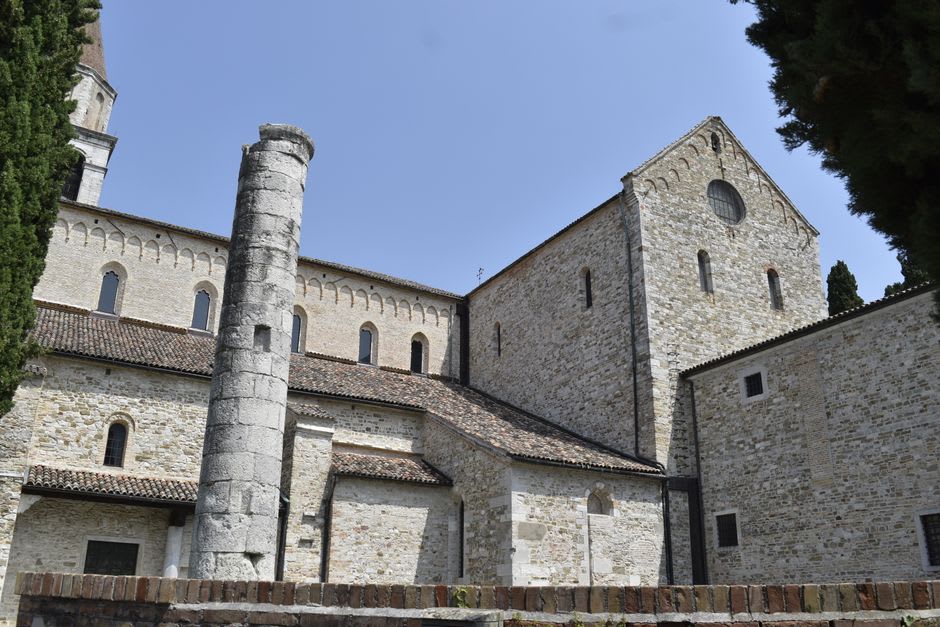
The Basilica of Aquileia, rebuilt in the eleventh century over its late-antique predecessor, holds a mosaic floor from around 313 AD — right around the time Constantine legalized Christianity — that covers roughly 760 square meters. Fish, birds, a rooster fighting a tortoise (a coded jab at rival philosophical schools, historians think), a naive and moving depiction of Jonah being swallowed by a sea creature that looks more like a curious dragon than a whale. UNESCO listed the whole archaeological area as a World Heritage Site, and standing there I understood why: you’re not looking at a museum reconstruction, you’re walking on the actual floor early Christians walked on, in a basilica still consecrated and in use. I sat in a pew near the apse for a long while, which is not something I do often in churches, but the light coming through those narrow windows onto fourteen centuries of stone earns a moment of stillness.
The City Beneath the Fields
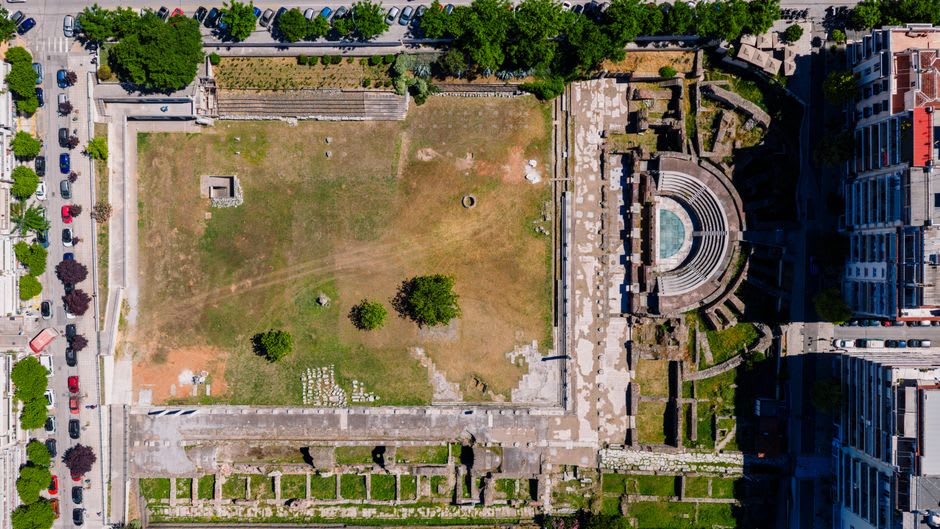
Outside the basilica, the Roman forum and the ruins along the old river port stretch out under open sky, half-excavated, cypress trees growing where warehouses once stood. The National Archaeological Museum nearby holds the finds — glassware, amber carved into extraordinary miniature figures (Aquileia was a major amber-trading post on the route down from the Baltic), portrait busts with the unnervingly direct gaze Roman sculptors specialized in. What struck me most was the scale of absence: this was a metropolis, and now it’s cornfields with a bell tower, a handful of restaurants, and tour buses that mostly pass through on their way to Grado’s beaches. Friuli doesn’t oversell its treasures, and Aquileia is the clearest case of that reticence I’ve found anywhere in Italy.
When to go: Spring or early autumn, when the light is soft for the mosaics and the archaeological area isn’t baking; pair it with a day in nearby Grado on the lagoon to balance ancient stones with a swim.