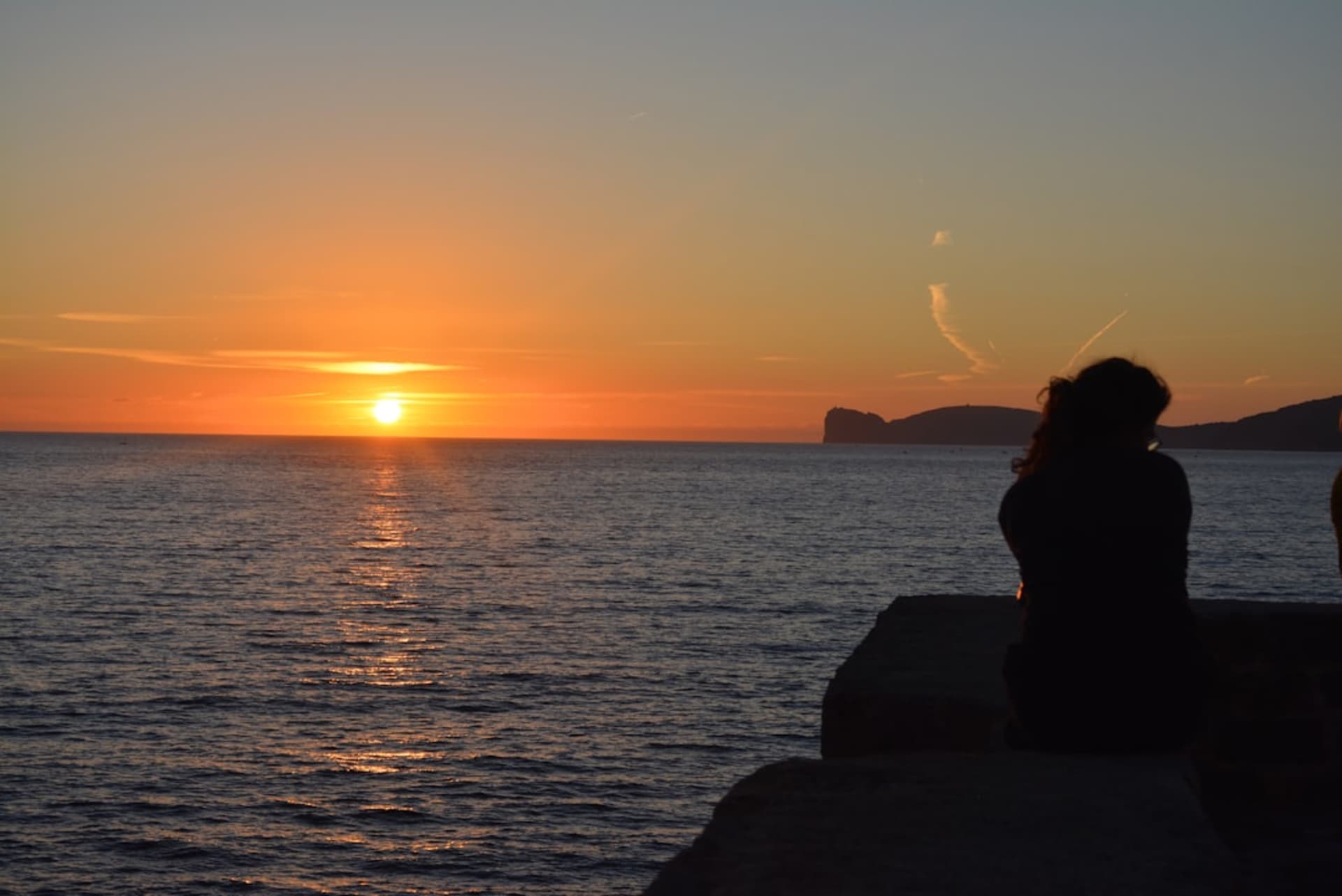
A walled port town where the street signs are in Catalan and the sunsets over the ramparts feel imported from Barcelona — because, four centuries ago, they practically were.
Alghero is the one place in Sardinia where I found myself doing a genuine double take at street signs, because half of them are written in Catalan. Not Italian dialect, not Sardu, but actual Catalan — Alguerès, the local variant — a linguistic leftover from the fourteenth century, when the Crown of Aragon conquered the town, expelled much of the existing population, and resettled it with Catalan colonists. Six hundred and some years later, the old town still calls itself “Barceloneta” — Little Barcelona — and after wandering its ramparts at golden hour, watching the light do exactly what it does over the sea walls of Barcelona’s old port, I understood the nickname wasn’t just nostalgia.
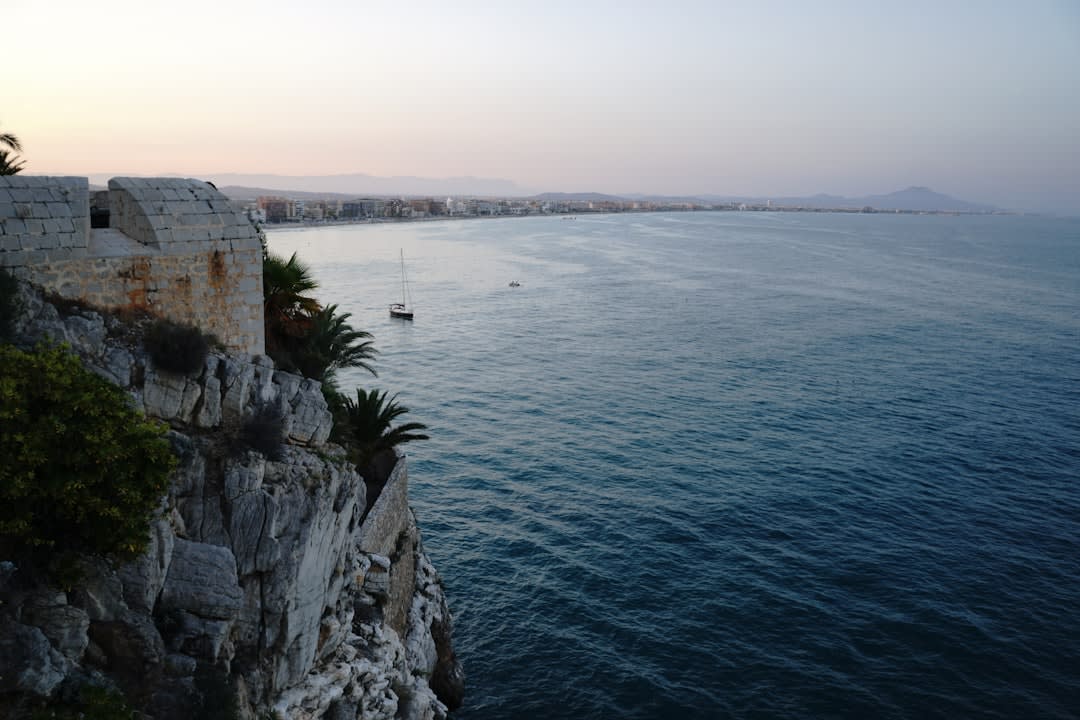
The Bastioni, the honey-colored fortified walls the Spanish and later Sardinian rulers built around the old town, are the town’s great set piece. They run along the seafront in a continuous rampart punctuated by towers — Torre di Sulis, Torre de Sant Jaume — and in the evening the whole population of Alghero seems to converge on them for the passeggiata, aperitivo in hand, watching the sun drop into the water off Capo Caccia. I did the same thing three evenings running and didn’t get tired of it once; the stone holds the day’s heat and turns rose-gold just as the light goes, and there’s a particular bar built directly into the bastion wall where you can order a glass of the local Vermentino and watch fishing boats come in against the sunset.
Inside the Walls
Alghero’s old town, still enclosed by those walls, is a knot of narrow lanes paved in dark volcanic stone, wrought-iron balconies, and a cathedral — the Cattedrale di Santa Maria — with a bell tower you can climb for a view over the terracotta rooftops to the sea beyond. Coral has been worked here since medieval times; Alghero sits on a stretch of coastline rich in red coral, and jewelers’ windows throughout the old town still display it, though sustainable harvesting has replaced the more reckless dredging of past centuries. I bought nothing but spent a long time looking, the way you do with a craft that clearly runs deeper than the tourist trade around it.
Capo Caccia and the Neptune’s Grotto
A short drive or boat ride from town, the limestone headland of Capo Caccia drops sheer into the Mediterranean, and beneath it sits the Grotta di Nettuno, a vast sea cave reachable either by boat or by descending the Escala del Cabirol — the “Goat’s Staircase,” 654 steps cut into the cliff face, which I took on the way down and deeply regretted on the way back up. Inside, the cave opens into chambers of stalactites and a still, salt lake, lit just enough to make the limestone formations glow. It’s touristy, sold hard by every boat operator on the harbor, and it is nonetheless genuinely worth doing — the kind of overhyped attraction that turns out to undersell itself.

Alghero food carries its Catalan inheritance too — lobster served in a simple tomato-based sauce, aragosta alla catalana, that tastes like it wandered over from the Costa Brava and just never left. Between the language on the signs, the flavor on the plate, and the light on the bastions each evening, Alghero is the closest Sardinia comes to feeling like two countries folded into one coastline.
When to go: June or September for warm swimming without August’s crowds, and clear evenings for the sunset walk along the Bastioni, which is really the whole point of the town.