Alba
"I have never paid so much for something that smelled faintly of dirty socks and changed how I think about food forever."
A town of red-brick towers and white truffles, where autumn smells like nothing else on earth.
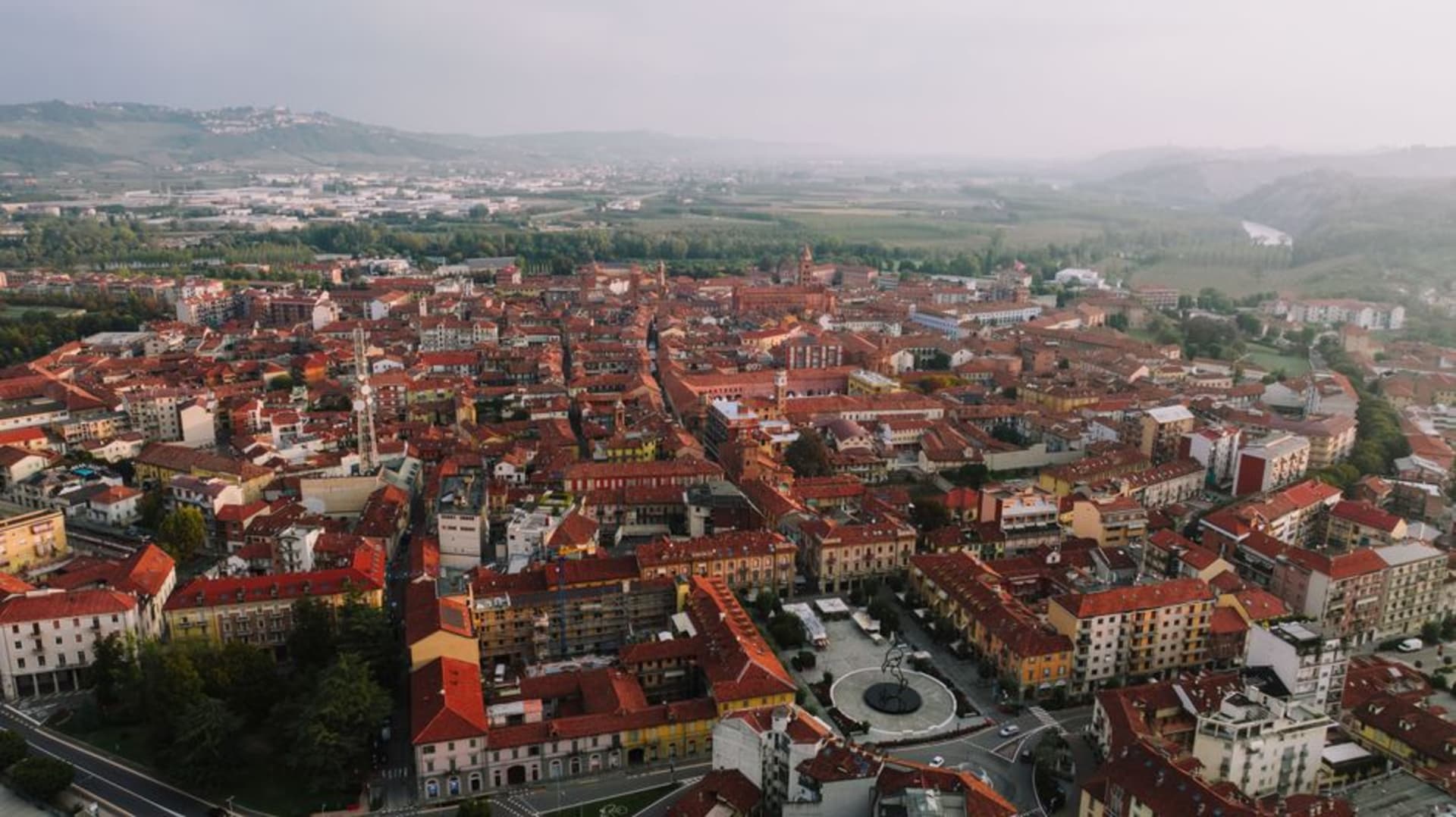
Alba is small enough to walk end to end in twenty minutes and important enough that half the world’s serious cooks make a pilgrimage here every autumn. This is the capital of the Langhe, the hilly wine country south of Turin, and the epicenter of the white truffle trade — the Tuber magnatum, or tartufo bianco d’Alba, that grows wild among the roots of oak and hazel trees in these hills and can sell, in a good year, for several thousand euros a kilo. I went once during the Fiera Internazionale del Tartufo Bianco d’Alba, the truffle fair that has run since 1929, and watched grown men in expensive coats lean over a folding table to smell a walnut-sized fungus with the seriousness of a diamond appraisal. It sounds absurd until you’re the one leaning over the table.
Towers, Brick, and Barolo
Like Asti, Alba’s skyline was once bristling with medieval defense towers — the city was nicknamed “the city of a hundred towers” — and though most were shortened or dismantled over the centuries, enough survive along Via Cavour and the old center to give a sense of that vertical, quarrelsome medieval town. The Duomo di San Lorenzo, Gothic and unassuming from the outside, holds beautifully carved wooden choir stalls from the early sixteenth century that are worth the detour alone. But Alba’s real cathedral is arguably the landscape around it: this is Barolo and Barbaresco country, the two most prestigious appellations in Piedmont, both named for villages a short drive from the town center, both built on the temperamental, late-ripening Nebbiolo grape that makes wines Italians half-jokingly call “tar and roses.”

Hazelnuts and Chocolate, Too
What surprised me most about Alba wasn’t the truffles or the wine, both of which I’d braced myself for, but the hazelnuts. The Langhe produces the Tonda Gentile Trilobata, considered by many pastry chefs to be the finest hazelnut variety in the world, and it’s the reason Alba is also, quietly, the birthplace of Nutella — the Ferrero company was founded here in 1946, born from a wartime cocoa shortage that pushed a local pastry maker to stretch chocolate with roasted local hazelnuts. There’s something very Piedmontese about that origin story: necessity dressed up as invention, and then perfected into an empire.

Eat tajarin — the impossibly thin, egg-yolk-heavy pasta native to this region — tossed with nothing more than butter and, if you’ve timed it right, a snowfall of shaved truffle on top. Drink a glass of Barbaresco with it, softer and more approachable in youth than its Barolo cousin. Then walk it off along the Via Maestra, the pedestrian spine of the old town, past shopfronts selling wine, chocolate, and cheese with the unhurried confidence of a place that has never needed to prove itself to anyone.
When to go: October and November, hands down, for truffle season and the Fiera del Tartufo — cool mornings, golden vineyards, and the whole town organized around a single obsession. Outside truffle season, late spring offers quieter streets and blossoming hills.