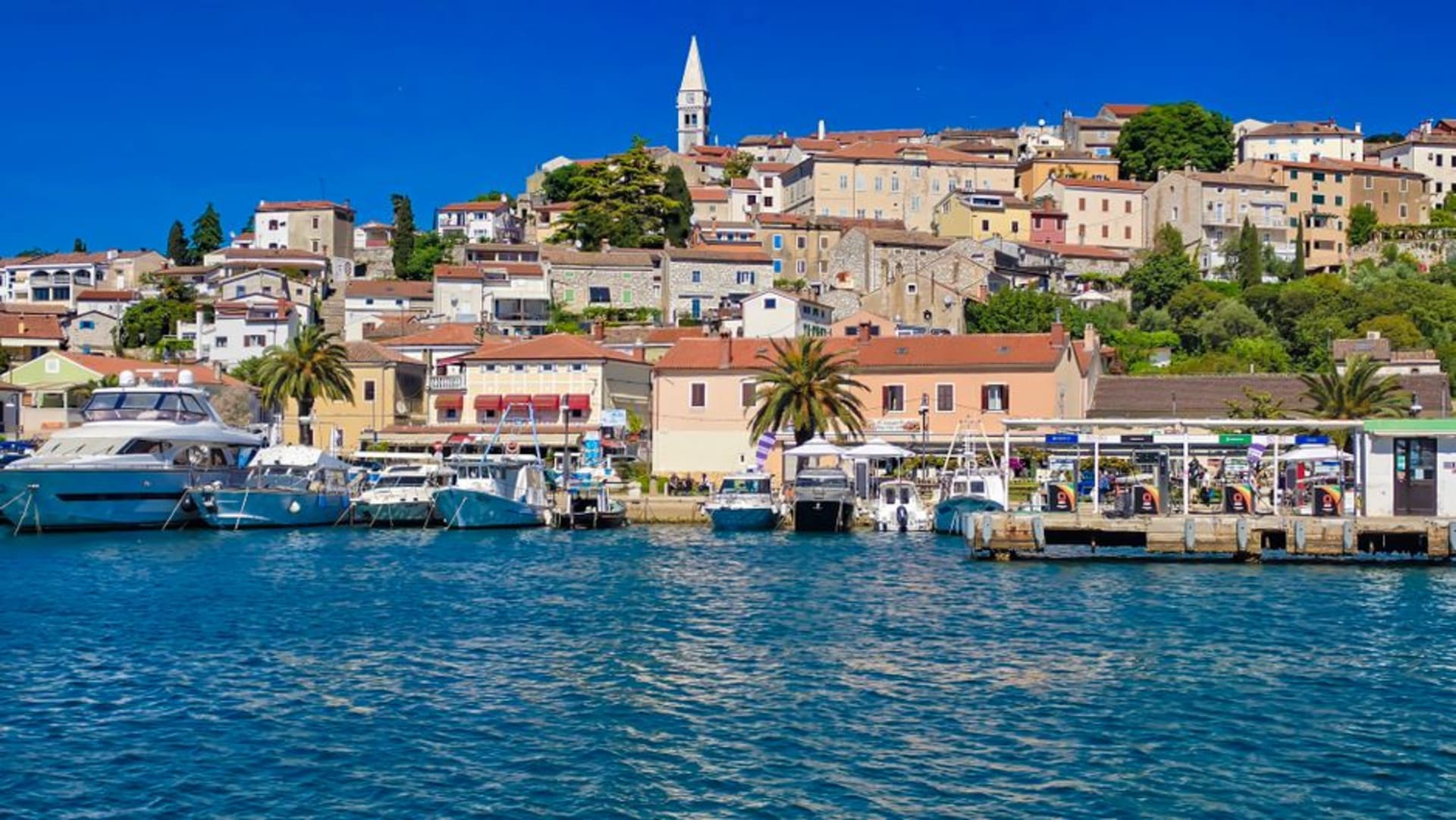
Vrsar
"Vrsar felt like a town that had been quietly exporting itself for two thousand years without ever asking to be noticed."
A hilltop harbor town on Istria's coast where Roman quarries, a Venetian bishopric, and Europe's first naturist resort share the same stretch of shoreline.
We came to Vrsar almost by accident, chasing a recommendation from a guy who ran the konoba where we’d eaten the night before in Poreč. He said it in passing — “go see the stone town, the one with the quarry” — and didn’t elaborate, which is usually how Lia and I end up somewhere we love. We parked below the hill and walked up through streets so narrow our shoulders nearly brushed both sides at once, stone underfoot worn smooth by centuries of the same walk. At the top, the Romanesque church sat looking down over the harbor like it had never once considered moving.
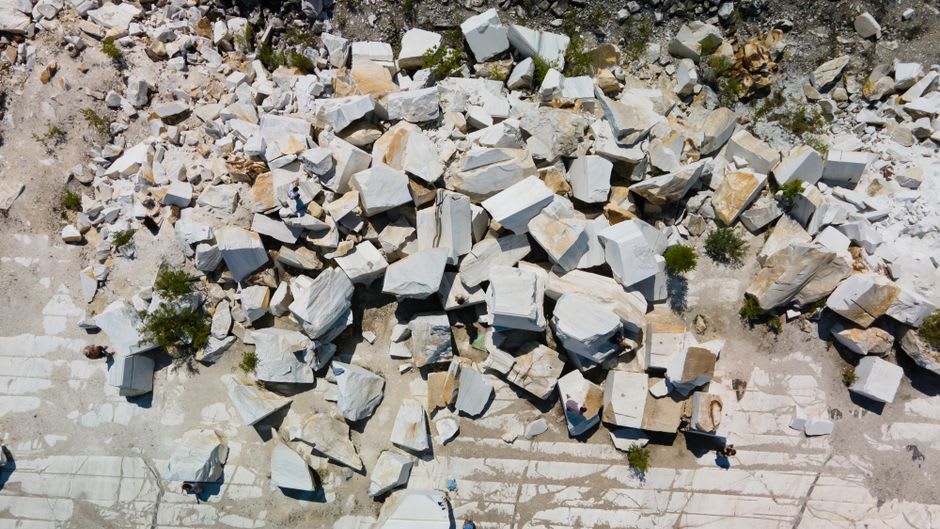
What got me was the marble. I hadn’t known, before a woman at a small gallery near the church told me, that the stone quarried right outside Vrsar had traveled as far as Vienna’s Ringstrasse and Venice’s grand facades — that some piece of this small Croatian hillside is sitting in a building I probably walked past in Vienna years ago without a second thought. Roman masons were already cutting into this rock long before the bishops of Poreč took the town under their wing, and there’s something about standing at the quarry’s edge, looking at the pale scarred rock face, that made the whole idea of “provincial” feel wrong for Vrsar.
Then there’s Koversada, which we could see from the harbor — the low green islet just offshore that’s been a naturist resort since 1961, one of the very first of its kind in Europe. We didn’t go over, but sitting at a waterfront table with grilled squid and a glass of Malvazija, watching the ferries shuttle back and forth to it, I liked that Vrsar carried both things without contradiction: a sober medieval hilltop with its bishops and its church, and this looser, sun-bleached reputation just a few hundred meters of water away. Lia pointed out that most towns pick one identity and defend it; Vrsar apparently never got the memo.
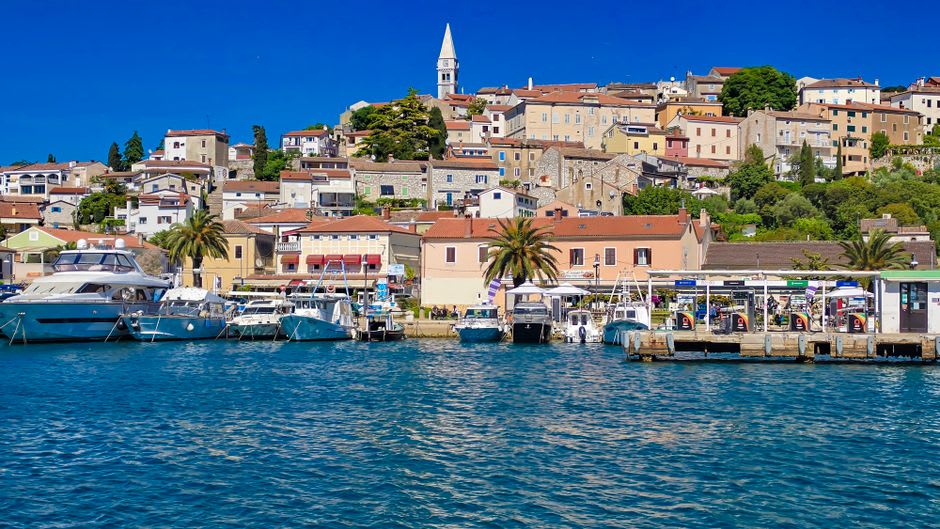
We ended the evening on the harbor wall, gelato in hand, watching the light go copper over the water and the Koversada pines turn to silhouettes. It’s a small place — you could see the old town in an hour if you rushed it — but we didn’t rush it, and I’m glad. Some towns reward slowness more than size.
When to go: June through September gives you the warm, swimmable Adriatic Vrsar is really built for, though if you’d rather have the stone streets mostly to yourself, come in May before the harbor fills up.