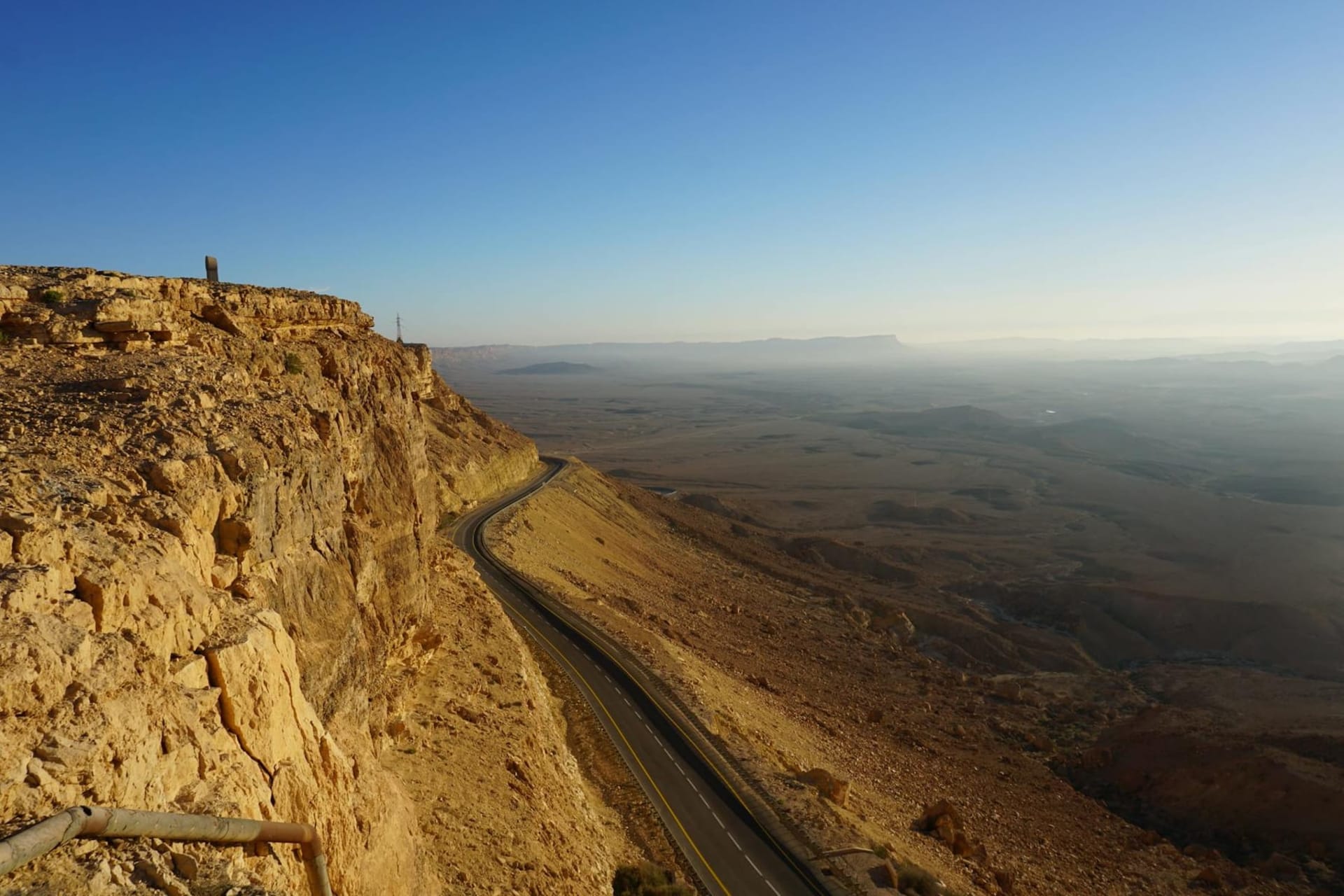
The vast crater of Ramon Makhtesh and a desert full of ancient Nabataean trade routes and star-filled skies.
I had read the geological explanation before arriving — erosion, not collision; a makhtesh is something the world quietly dug out of itself over millions of years — but standing at the rim of Makhtesh Ramon at first light, that knowledge dissolved entirely. The crater is forty kilometers long and holds its own weather. The air coming up from the floor smelled of warm mineral dust and something faintly green, like rain that had fallen somewhere else and drifted over.
The Crater Floor
We descended into Ramon on a trail that switchbacks off the rim near the Mitzpe Ramon visitor center, the orange sandstone crumbling underfoot in a way that made the path feel freshly made. By the time we reached the bottom, the town perched on the edge above had vanished. There were multicolored prisms of volcanic rock scattered across the flat — black basalt, white chalk, rust-red sandstone — and almost no sound except wind threading through the dry acacias. Lia stopped to photograph a single yellow wildflower growing from a crack in a boulder and I walked ahead, then turned back to find her completely alone against a backdrop the size of a country. That scale is the thing no photograph captures.
We followed the Nahal Ramon riverbed east toward the fossil field, where Cretaceous shells surface from the ground like messages from a sea that hasn’t existed for a hundred million years. I picked up an ammonite no bigger than my thumbnail and set it back exactly where I found it.
Nabataean Ghosts on the Spice Route
North of the crater, the remains of the Nabataean caravanserai at Avdat sit on a limestone ridge above the desert floor. Walking the ancient trade road between Petra and Gaza, I kept thinking about frankincense — how it was once worth more than gold, how these stone-paved paths once smelled of it. The ruins are austere and honest: walls worn low, a Byzantine church built over the Nabataean temple, a wine press carved directly into the rock. The spice merchants are gone but the geometry of their world persists.
In Mitzpe Ramon that evening we ate shakshuka at a small place on Ha-Atur Street — eggs poached in a tomato and harissa sauce so deeply reduced it tasted like it had been cooking since the Nabataeans passed through — and watched the sky turn from amber to violet to a deep, star-crowded black. The Negev is one of the few places in Israel with almost no light pollution. Orion was sharp enough to feel close.
The surprise came at two in the morning, when a desert fox walked into the glow of our headlamps on the rim trail and sat for a moment, entirely unafraid, before dissolving back into the dark.
When to go: March through May and October through November offer the most tolerable temperatures for walking the crater floor, with cooler nights ideal for stargazing. Avoid July and August when midday heat on the crater floor can reach dangerous extremes.