Golan Heights
"Nowhere else I've been asks you to hold beauty and political complexity in the same hand."
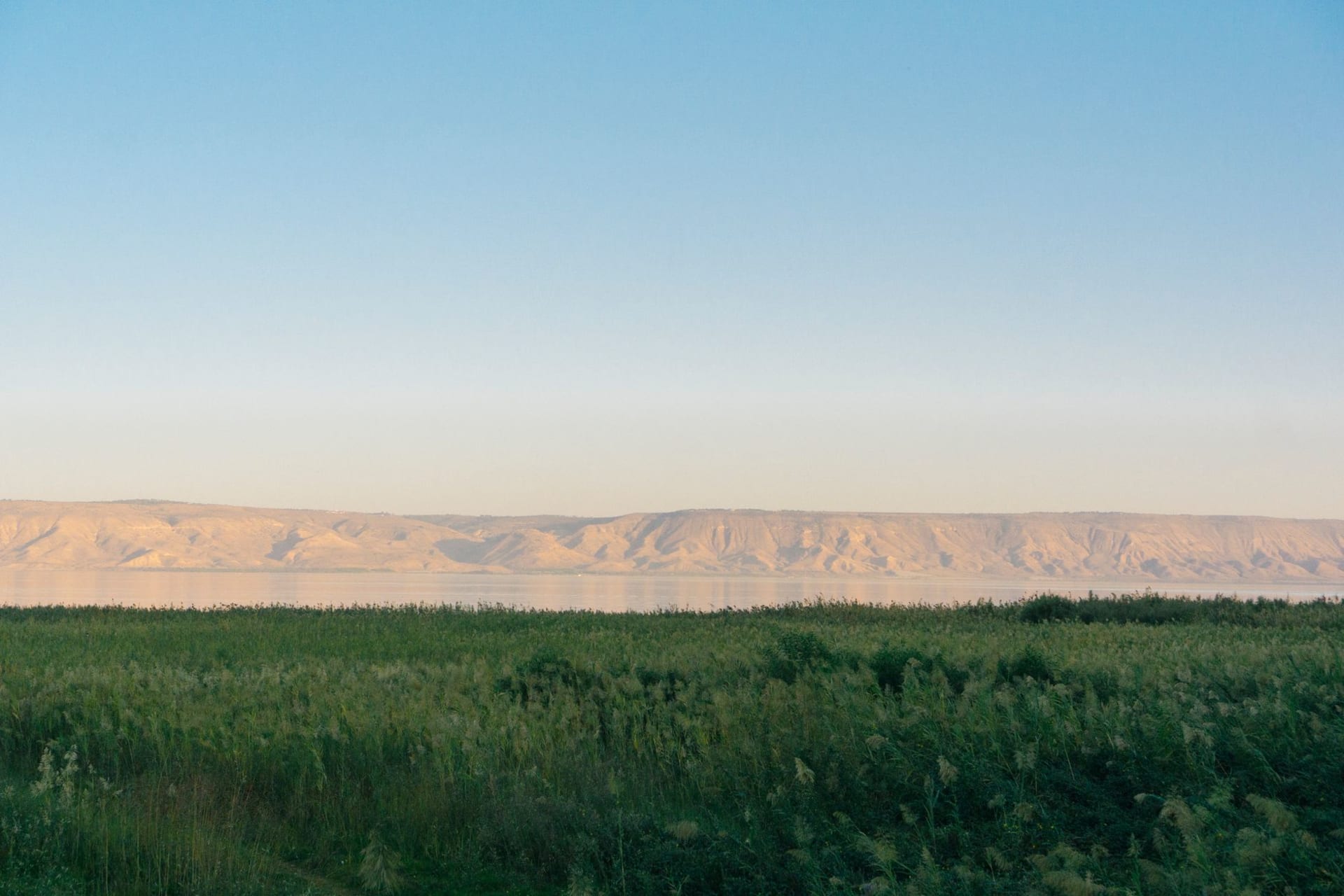
The Golan Heights is not a straightforward place to visit, and I’m not going to pretend it is. The territory is administered by Israel, claimed by Syria, recognized as Israeli by the United States, and listed as occupied by most of the international community. When you drive up from the Sea of Galilee, through the switchbacks where the escarpment rises sharply, you’re entering a landscape that carries a specific geopolitical weight that the vineyards and nature trails don’t entirely dissolve.
I went in early April, when the plateau was green in a way that felt almost Dutch — rolling meadows, streams running full from the winter rains, wildflowers in the road margins. The volcanic basalt that defines the Golan gives everything a dark underlying tone, the rock appearing in outcroppings and old walls, piled into field boundaries by farmers over centuries.
The Vineyards of Basalt Country
What surprised me most was the wine. The Golan Heights has been producing wine since the 1970s, and the volcanic soil turns out to be excellent for viticulture — mineral-rich, well-drained, cooled by altitude in a climate that’s otherwise quite warm. Golan Heights Winery produces wines that compete credibly on an international level, and several smaller boutique wineries have opened in the past decade.
I stopped at a small winery near Katzrin, the region’s main town, where a winemaker in his fifties poured me a Syrah from vines he’d planted himself on a slope facing southwest. The wine had a distinctive mineral quality — something black and dry beneath the fruit, which I suspect was the basalt. He said the volcanic soil gives you structure that you’d otherwise have to wait years to develop. I bought two bottles and carried them carefully for the rest of the trip.
Abandoned Villages and Quiet History
Scattered across the plateau are the ruins of Syrian villages emptied in 1967, when the population fled or was displaced during and after the Six-Day War. I stopped at one — a cluster of stone houses, partially collapsed, vegetation growing through the floors. There were no signs, no interpretive panels. A fig tree had grown through what had been a window frame and was now larger than the window. The quietness was not peaceful exactly. It was the quietness of something unaddressed.
Nimrod Fortress, a crusader castle from the thirteenth century that sits on a ridge above the Golan’s western slope, offers a different kind of historical layering — Crusaders, Mamluks, Ayyubids all held it in succession. The views from the towers take in Lebanon to the north and the Syrian border to the east, and on a clear day the snowpack on Mount Hermon is visible above everything.
Banias and the Water
Near the base of Mount Hermon, the Banias Nature Reserve protects one of the largest springs in the region — a powerful stream that emerges from a cave at the foot of a cliff where a shrine to Pan was carved in the Hellenistic period. The niches in the rock face, now empty, once held statues. The water comes out cold and fast and immediately clear.
Lia and I walked the gorge trail, which follows the Banias River downstream through thick shade — ferns, plane trees, the sound of the water constant and loud. There are waterfalls, one of them substantial, and the air in the gorge is cool enough in April that you want to keep moving to stay warm. The contrast with the open, sunlit plateau above felt total.
When to go: March through May offers the green plateau at its best and manageable temperatures. The ski resort on Mount Hermon operates December through March when snow permits — small by European standards but the only skiing in Israel. Avoid peak summer weekends when Israeli families drive up in numbers and the main sites get genuinely crowded.