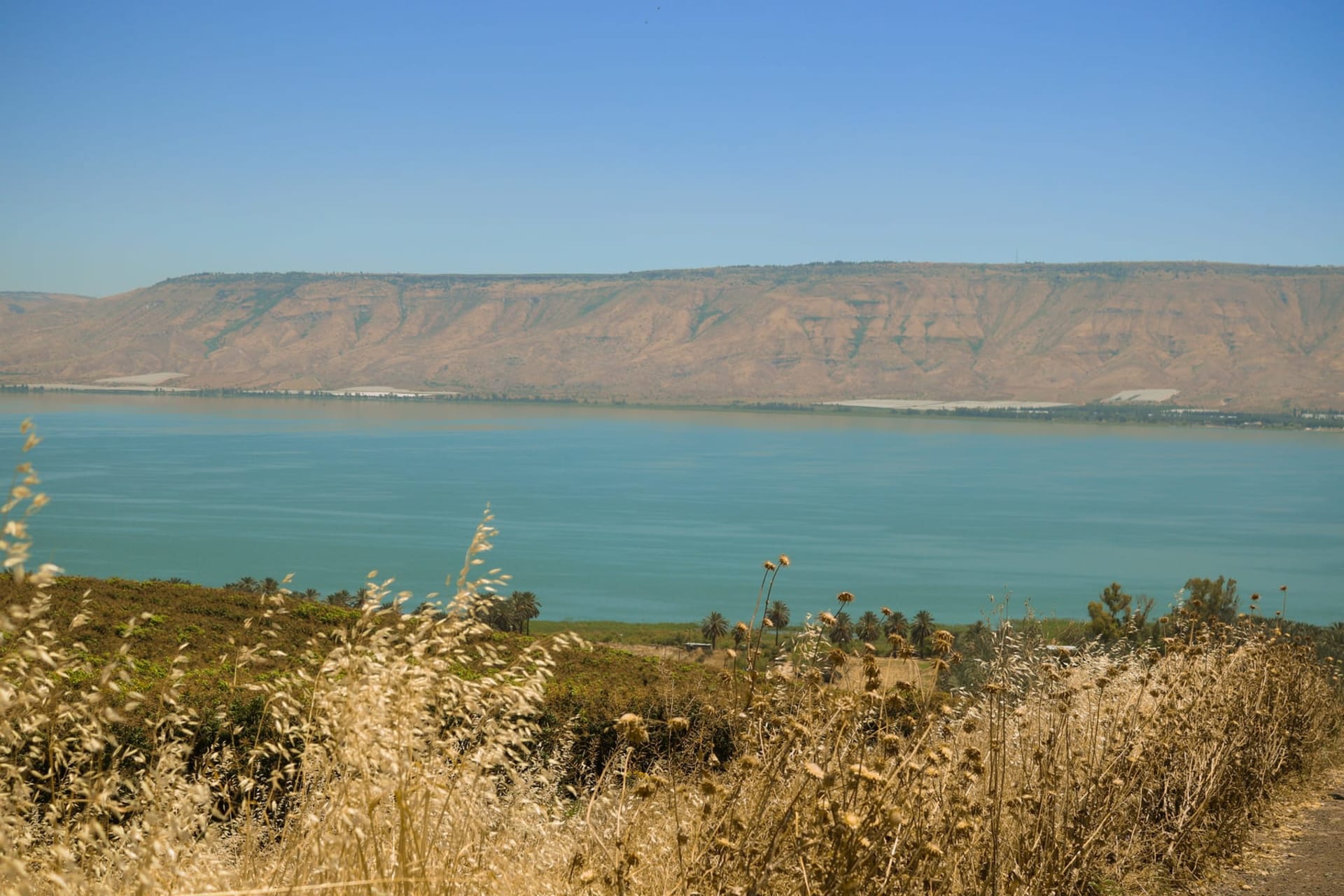
Rolling hills, ancient synagogues, and the Sea of Galilee — where spirituality and nature are inseparable.
I arrived at the Sea of Galilee — the Kinneret, as the Israelis call it — in the early hours, before the tour buses from Tiberias had filled the lakeside promenade. The light came in at that particular low angle that makes everything look slightly consecrated. Lia stood at the water’s edge, shoes off, and said nothing for a long time. There are places that earn their silence, and this was one of them.
The Weight of the Hills
The Galilee is not dramatic in the way of mountains or coastlines. It persuades you slowly. The hills above the lake roll in long, olive-covered swells, punctuated by the occasional white dome of a village mosque or the dark cypress sentinels flanking a Christian monastery. We drove the road north from Tiberias along the shore, past Magdala — where excavations in 2009 uncovered a first-century synagogue that stopped archaeologists cold — and up into the hill country toward Safed, the mystical city where Jewish Kabbalah took root in the sixteenth century.
In Safed, the old artists’ quarter smells of stone and dried lavender and something older underneath, something I can only describe as accumulated prayer. The alleyways are painted blue — against the evil eye, a shopkeeper told me — and the light bouncing off those walls in late afternoon turns everything the color of faded ink.
What the Table Holds
The food surprised me. I expected the standard Israeli spread, and I got something far more layered. At a small restaurant near the Tiberias market on HaGalil Street, we ate Saint Peter’s fish — musht, pulled from the Kinneret itself, grilled whole with za’atar and lemon — alongside a warm salad of roasted eggplant with pomegranate seeds that I still think about. The region’s basalt soil produces herbs of an almost aggressive fragrance. The local olive oil has a green, almost grassy sharpness that cuts through everything cleanly.
The unexpected discovery came at dusk on our second evening, when we wandered into Capernaum without a tour group, the site nearly empty, and found ourselves completely alone in the ruins of what is believed to be the apostle Peter’s house — an octagonal Byzantine church built directly over it. The scale of the ordinary stone rooms, the domesticity of it, hit harder than any grand cathedral ever has.
Moving Through the Region
Galilee rewards slowness. The ancient Via Maris trading route, sections of which are now walkable trail, passes through landscapes that have absorbed two thousand years of foot traffic and somehow look unhurried by all of it.
When to go: Spring (March to May) brings wildflowers across the hillsides and bearable temperatures before the summer heat settles over the lake. October and November offer clear skies, harvested vineyards, and far fewer visitors at the major sites.