Beit She'an
"An earthquake buried this entire street in one night. Fourteen centuries later, archaeologists just brushed the dirt back off."
The best-preserved Roman city in Israel, its colonnaded main street and 7,000-seat theater buried intact by a single catastrophic earthquake in 749 CE and excavated back into daylight.
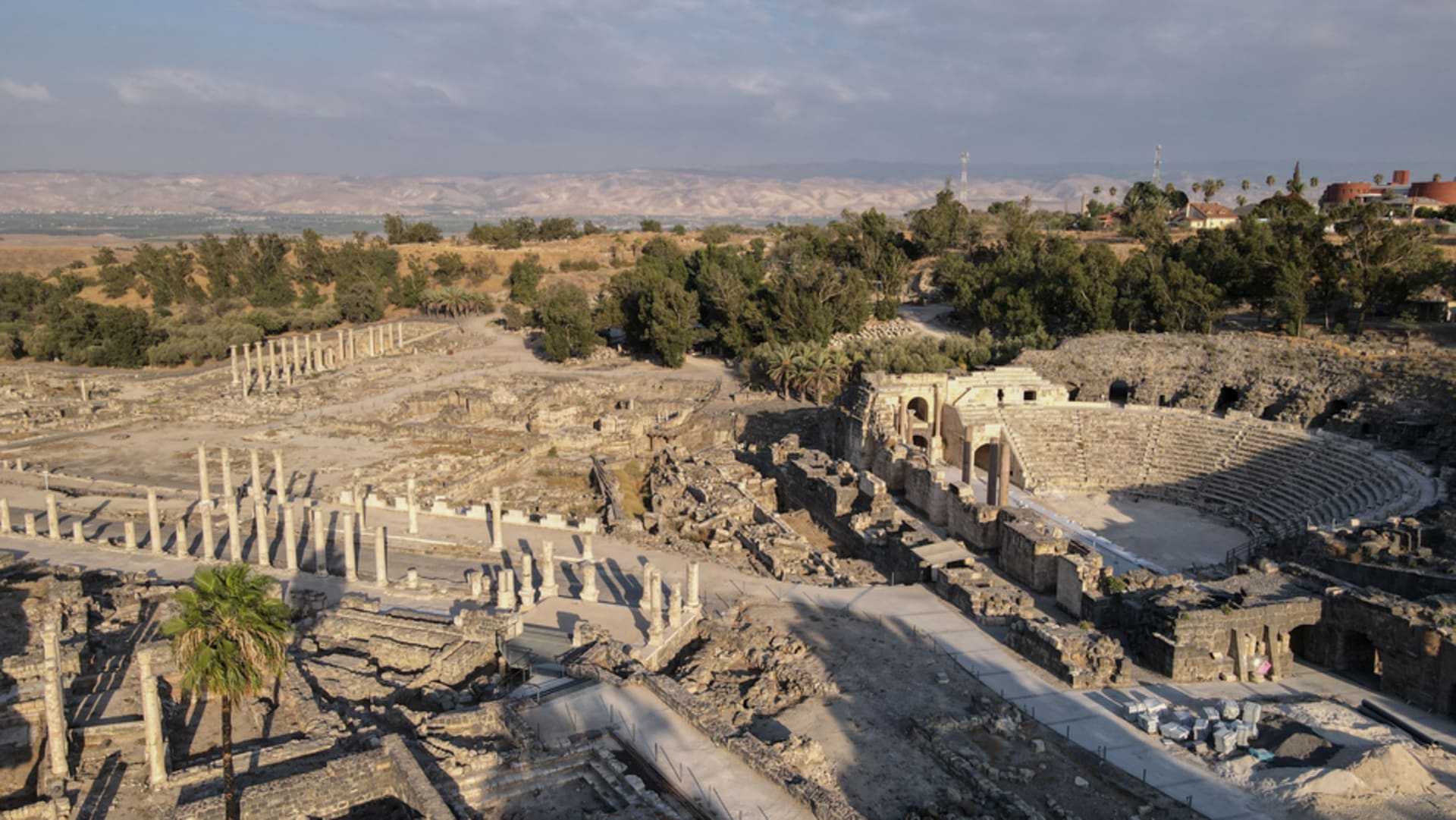
I nearly drove past Beit She’an without stopping, tired after a long day moving between the Galilee and the Jordan Valley, but a friend in Tiberias had specifically told me not to skip it, describing it as “the Roman city that time forgot to destroy properly.” That turned out to be an accurate, if slightly odd, summary. Nowhere else in Israel did I get such an immediate, walkable sense of what an actual Roman provincial city looked and felt like, mostly because so much of it survived in a single piece.
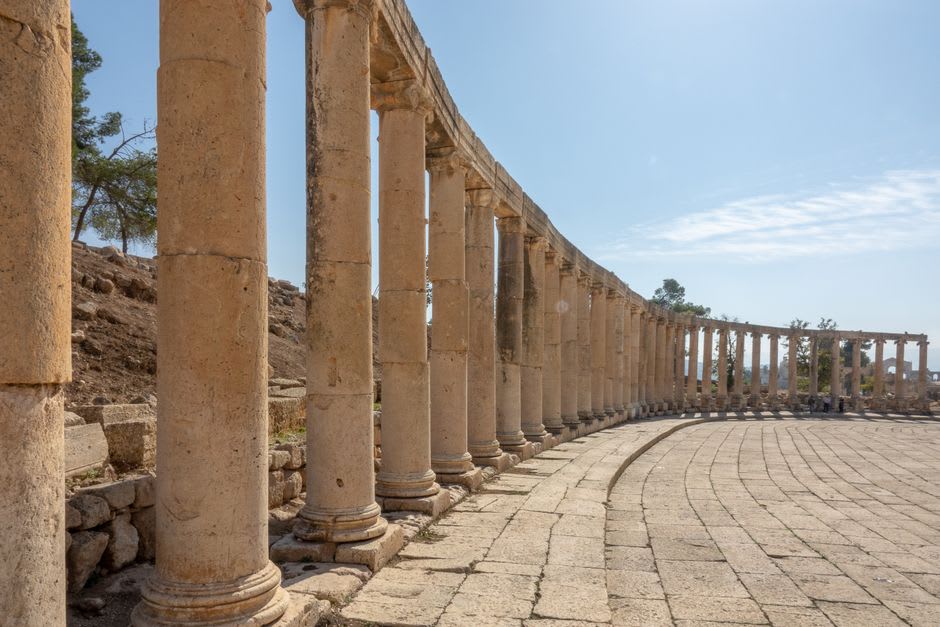
The reason is grim but archaeologically fortunate: a massive earthquake struck in 749 CE and toppled the entire city within seconds, burying colonnades, shops, and public buildings under rubble that essentially froze the site in place. Excavations beginning in the twentieth century uncovered a cardo — the main colonnaded street — with its columns still largely upright, flanking mosaic-floored bathhouses and public latrines that still have their original stone seating intact, which is exactly as strange and specific a detail as it sounds. I walked the length of the main street at midday, and the scale of it, storefronts still recognizable as storefronts two thousand years later, made the site feel less like ruins and more like an abandoned town.
The theater is the real showpiece — a 7,000-seat Roman amphitheater, one of the best preserved anywhere in the eastern Mediterranean, still used occasionally for concerts. I climbed to the top row and looked back down over the stage to the tell — the ancient mound built up over millennia of earlier settlements, Canaanite and Egyptian and Israelite layers stacked beneath the Roman city like a layer cake — rising just behind it. Few places make the sheer depth of time in this region so visually obvious in one frame.
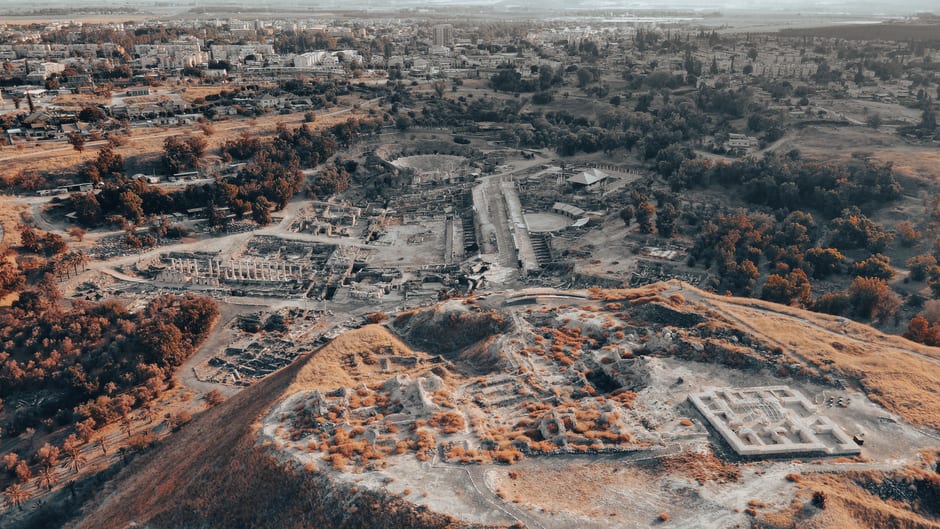
By late afternoon the site had emptied out almost entirely, and I sat on the theater’s stone steps as the light went long and gold across the columns, thinking about how casually devastating that single night in 749 must have been, and how strange it is that the devastation is the reason I got to see any of this at all.
When to go: Spring and autumn keep the exposed stone site comfortable — the Jordan Valley runs noticeably hotter than Jerusalem or the coast, and midday summer visits can be punishing with almost no shade across the main street.