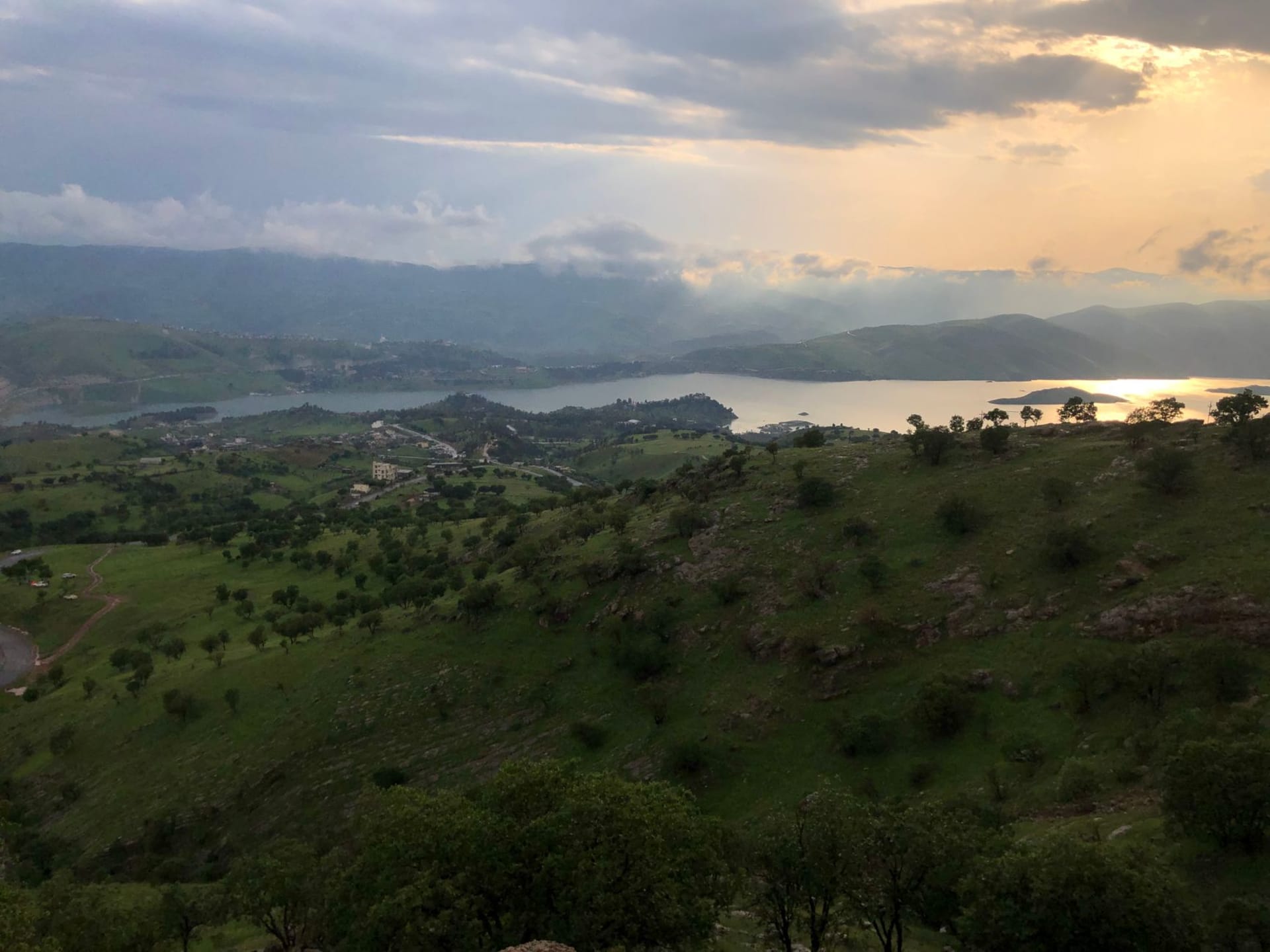
Sulaymaniyah
"Suli feels like what a city is supposed to feel like before it forgets itself."
Sulaymaniyah — Suli, everyone calls it Suli — came on me slowly, the way cities you are not expecting to love tend to do. I arrived from Erbil on a shared taxi that took two hours and involved one stop at a roadside place where the tea was better than at most establishments I have paid real money to enter. The road climbed into different air — cooler, carrying pine and something I could not immediately identify but that turned out to be the smell of the mountains beginning in earnest. By the time we descended into the Sulaymaniyah valley, I had already revised my expectations upward.
The city is Kurdish and specifically and deliberately different from Arab Iraq, but it is also different from Erbil in ways that matter. Sulaymaniyah has a reputation — deserved, I found — for being more artistically inclined, more politically vocal, more willing to argue. It has produced Kurdish poets and painters and musicians in numbers disproportionate to its size, and the culture of the teahouse is elevated here to something close to an institution of civic life. The Azadi Park teahouses stay full from mid-afternoon until late at night with men and some women engaged in conversations that sound, from a respectful distance, extremely serious about everything.
The Sulaymaniyah Museum deserves more attention than it receives in most accounts of Iraqi Kurdistan. Its collection includes Sumerian and Assyrian artifacts from excavations across the region, and one room contains cuneiform tablets that are among the oldest written documents in human existence — clay tablets pressed with a stylus to record grain transactions, trade debts, astronomical observations. The institution of writing, invented in Mesopotamia for the entirely practical purpose of keeping accounts, sits here in a somewhat underfunded museum in a city most of the world cannot locate on a map, and there is something clarifying about that proximity.
I spent a morning at the Amna Suraka — the Red Intelligence building — which was the Ba’ath secret police headquarters used to torture and execute Kurdish prisoners until 1991. It has been converted into a museum with an honesty that is almost painful. The cells have been preserved. The accounts of survivors are displayed in multiple languages. The upper floors have broken glass ceilings through which the sky is visible, one piece of broken glass for each Kurdish village destroyed in the Anfal campaign. Coming out into the Sulaymaniyah afternoon afterward, blinking, the city seemed both more ordinary and more miraculous than it had an hour before.
The food in Suli runs toward the substantial. Lamb is the dominant protein and it appears in every configuration — grilled over charcoal, slow-cooked with turmeric and dried lime, pressed into flat cakes and fired in the tandoor. The bread — freshly made, still hot, with a particular chewiness in the center — is so good that I ate more of it than was strictly advisable at every meal. The pomegranate juice, pressed to order in the bazaar, is extraordinary in October when the fruit is at its peak. And the mountain villages a short drive above the city produce a local cheese — similar to feta but more assertive — that I have been trying to replicate or find substitutes for ever since.
When to go: April through June for the green mountains and wildflowers; September and October for clear skies and harvest season in the surrounding valleys. The winters are genuinely cold and can bring snow, which has its own appeal if you are prepared for it. Avoid July and August in the city itself, though the mountain villages remain pleasant.