Najaf
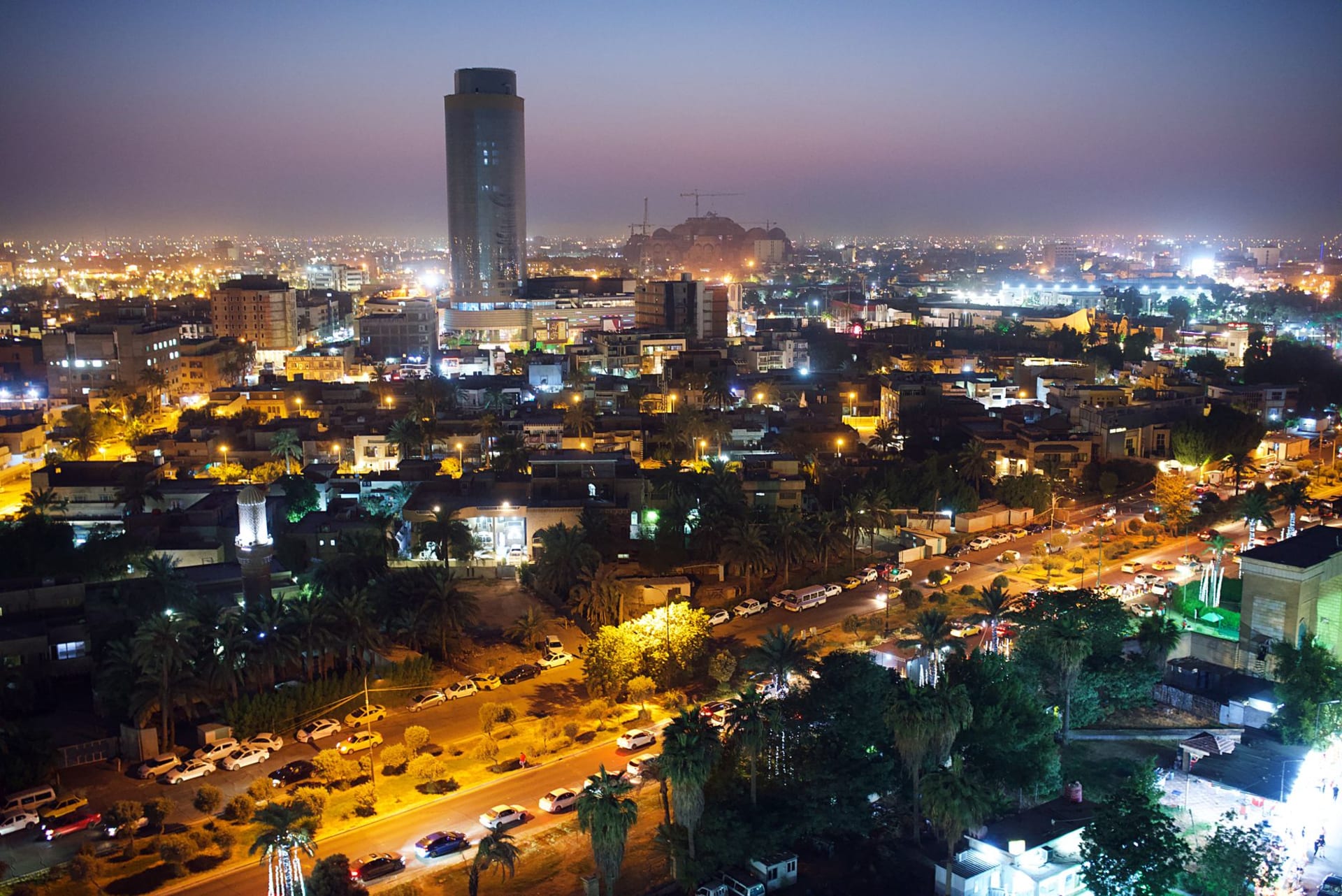
"The shrine at night, lit gold against the dark sky — I am not religious, and it still took my breath away."
I am not a religious man, but Najaf corrected something in my assumption that this mattered. The Imam Ali Shrine — the burial place of Ali ibn Abi Talib, the fourth caliph and the figure around whom Shia Islam is organized — is one of the most visually overwhelming sacred spaces I have ever entered, and it does its work on you regardless of whether you share the faith that created it. The golden dome catches the sun and holds it. The tilework in the interior courtyard is a geometry lesson in how to make the infinite feel intimate. And the devotion of the pilgrims who have traveled from Iran, from Pakistan, from East Africa, from everywhere the faith has spread, has a quality of intensity that is not frightening but genuinely moving.
The old city of Najaf surrounds the shrine in layers of history and commerce. The bazaar immediately adjacent to the shrine walls sells prayer beads and religious texts and the dried perfume petals that pilgrims carry home, and the scent of rosewater and incense in those lanes is overwhelming in the way of things that engage the entire sensory field simultaneously. I walked through it with a young seminary student named Karim who had grown up in Najaf and was studying Islamic jurisprudence and was also, it emerged over tea, an avid follower of European football. These things coexisted in him with complete ease.

The Wadi Al-Salam — the Valley of Peace — stretches for several kilometers to the north and west of the shrine and is the largest cemetery in the world. Five million or more people are buried there, the graves accumulating over fourteen centuries, and the scale of it is difficult to grasp from the ground. From a rooftop on the edge of the old city you can see it extending toward the horizon — an ocean of pale stone and mud-brick mausoleums and simple grave markers that makes you aware of how briefly you will be here relative to how long this place has been receiving the dead. Shia Muslims who can afford it are brought from anywhere to be buried here, in proximity to Ali. The funeral processions that pass through the old city several times a day carry the bodies in open coffins, the mourners walking behind with a grief that is public and unashamed.
The intellectual life of Najaf is something outsiders rarely hear about. The Hawza — the Shia Islamic seminary — is one of the oldest continuously operating universities in the world, and the tradition of Islamic jurisprudence and philosophy it has produced is sophisticated and vast and almost entirely unknown to most Westerners. Karim showed me one of the libraries and explained what the scholars there were working on with a pride that was not boastful but was very specifically the pride of someone who knows that their tradition is being underestimated. He was right that it was being underestimated.

The evenings in Najaf have their own rhythm. After sunset prayers, the shrine esplanade fills with families who spread picnic blankets on the marble and eat together in the illuminated courtyard, children running between the worshippers while the golden dome above them does what it does in every light — takes it and transforms it into something more than itself. I sat on the edge of that courtyard for an hour without moving, which is not something I am generally able to do, and found myself thinking about the relationship between beauty and belief without reaching any conclusions, which felt like exactly the right outcome.
When to go: October through April avoids the lethal summer heat. Ashura — the Shia commemoration of the martyrdom of Husayn — draws millions of pilgrims in the first month of the Islamic calendar and creates an atmosphere of extraordinary intensity, but also extreme crowds and logistical difficulty. Research the Islamic calendar before planning.