Vank Cathedral and the Jolfa Quarter
"Persian tile on the outside, the Last Judgment on the inside."
An Armenian Christian cathedral tiled like a mosque and painted like a Renaissance chapel, at the heart of the neighborhood Shah Abbas built for the community he deported here.
Jolfa doesn’t announce itself. You cross the Zayandeh River, the streets narrow, the call to prayer fades into ordinary traffic noise, and suddenly there are wooden crosses on doorways and a bell tower rising over rooftops that otherwise look like any other Isfahan neighborhood. This is the Armenian quarter, and its history is heavier than its cafés and courtyards let on.
A Forced Relocation That Became a Home
In 1606, Shah Abbas I relocated tens of thousands of Armenian merchants and craftsmen from the town of Jolfa on the Aras River border, resettling them here in a new district he named after their old one, in order to harness their trading networks and silk expertise. It was a deportation dressed as an opportunity — brutal in its origin, and yet the community he uprooted built something that outlasted the empire that moved them. Vank Cathedral, completed in 1664, is the physical proof: from the outside, a squat brick dome that could pass for a minor mosque, its exterior tiled in the same turquoise geometric patterns as the buildings across the river.
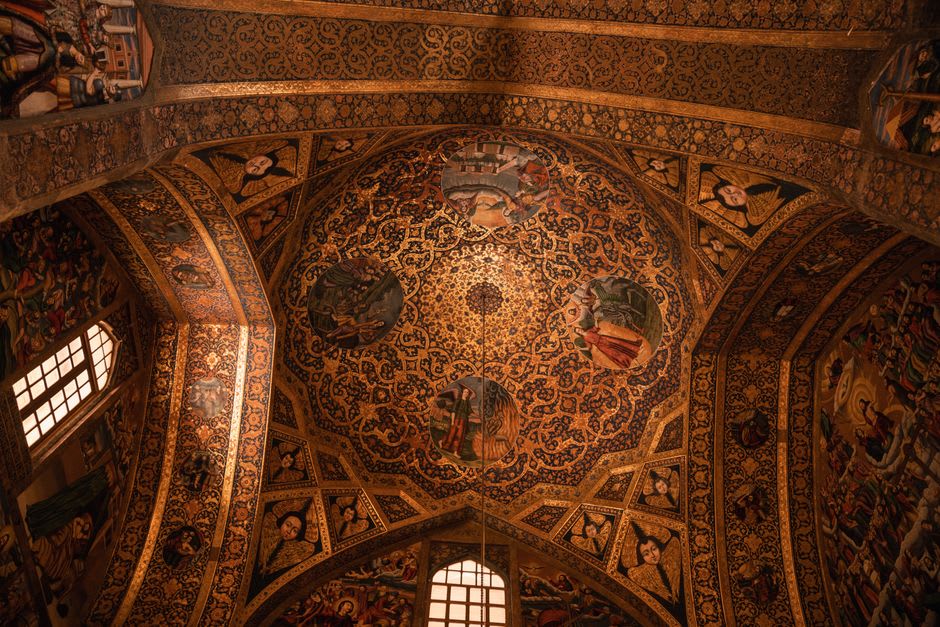
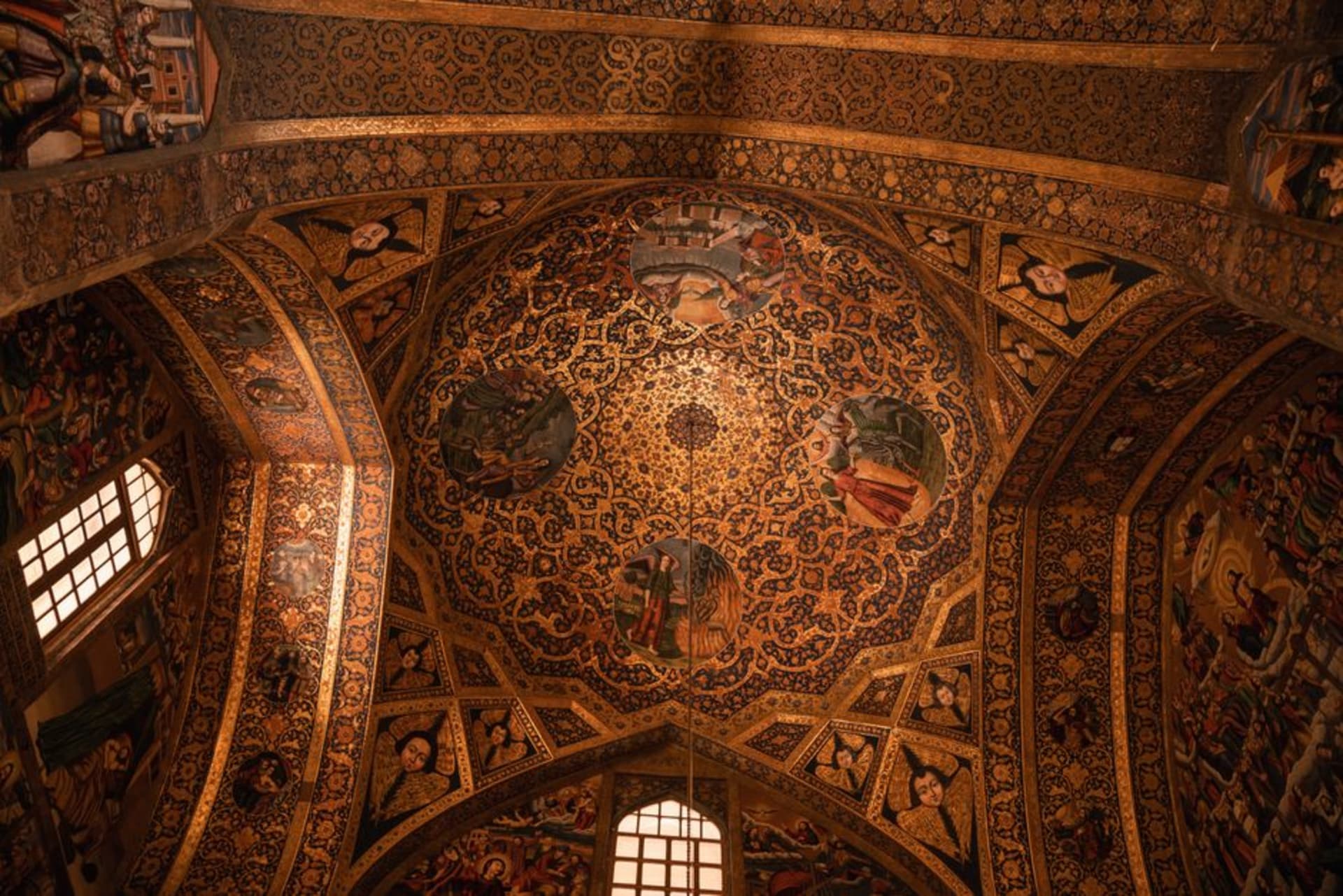
Step inside and the language changes completely. Every surface — walls, ceiling, dome — is covered in oil paintings depicting biblical scenes in a style closer to Italian Renaissance chapels than anything else I saw in Iran: a golden, almost gilded Last Judgment above the altar, angels rendered with European perspective and shading, gold leaf on carved wooden screens. Lia, who studied art history before we met, said it was the closest thing to a Sistine Chapel she expected to find east of Venice, and she wasn’t exaggerating by much.
The attached museum holds a grim, necessary counterweight: a small room documenting the Armenian genocide, along with a strand of hair reportedly preserved from a victim, and manuscripts and printing presses that made Jolfa the site of the first printing press in the Islamic world. We left quieter than we arrived. Afterward we found a café two streets over serving cardamom coffee and rosewater ice cream, and sat outside for an hour, the two things — the weight of the museum and the calm of the courtyard — somehow both true of the same neighborhood.
When to go: Any season works, since the cathedral and museum are indoors, but aim for a weekday morning to have the small interior largely to yourself. Evenings are best for the surrounding Jolfa cafés, which stay lively until late.