A mosque, a bathhouse, and a bazaar built by one ambitious regent — and still the working heart of Shiraz three centuries later.
Karim Khan Zand, who ruled southern Iran from Shiraz in the eighteenth century, refused the title of shah and insisted on being called vakil — “regent” or “advocate of the people” instead. Then he went and built a mosque, a bathhouse, and a covered bazaar so ambitious they’re still collectively called the Vakil Complex and still doing exactly the job he built them for. Humility with excellent taste in architecture, apparently.
A Mosque Held Up by Barley-Twist Columns
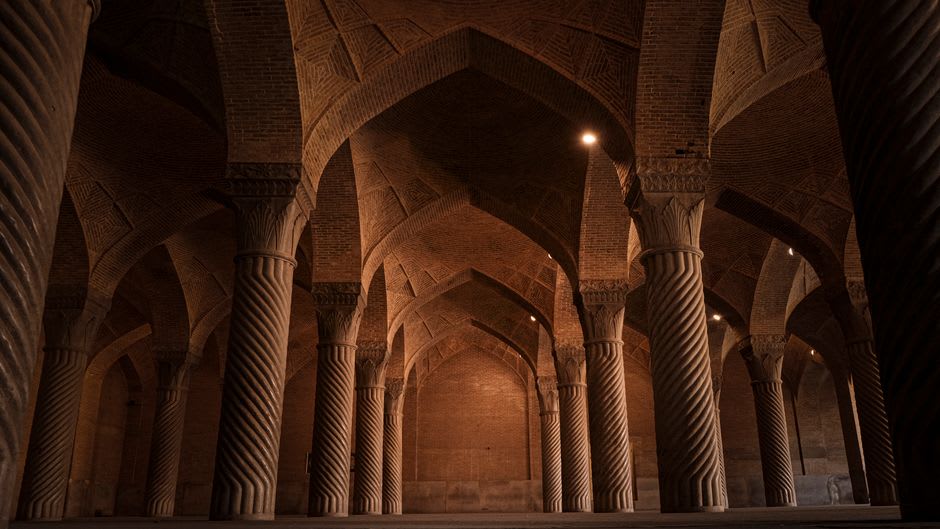
The Vakil Mosque’s prayer hall is the part that stopped me cold — forty-eight sandstone columns, each carved in a tight spiral like a barley-sugar twist, supporting a ceiling of tiled arches in the pink-and-yellow palette that shows up all over Zand-era Shiraz. Unlike the tourist-heavy Nasir al-Mulk mosque a few streets away, we had almost the entire hall to ourselves on a weekday afternoon, our footsteps the only sound against the stone.
The Bathhouse Turned Wax Museum, and a Bazaar That Never Stopped Working
Next door, the Vakil Bathhouse — Hammam-e Vakil — has been converted into a slightly kitsch but genuinely useful museum, with wax figures posed mid-scrub and mid-shave in the old changing rooms, steam rooms, and massage alcoves, giving a far clearer sense of how an eighteenth-century public bath actually functioned than any placard could. Lia found the barber diorama unreasonably funny and photographed it from four angles.
Out the other side sprawls the Vakil Bazaar itself, a network of brick, vaulted corridors that has been continuously trading since Karim Khan’s reign — carpet sellers unrolling rugs across the walkway with a practiced snap of the wrist, coppersmiths hammering trays in a corner that smells permanently of hot metal, and, if you know which unmarked doorway to duck through, a caravanserai courtyard converted into a quiet teahouse where merchants have taken their afternoon break for generations.
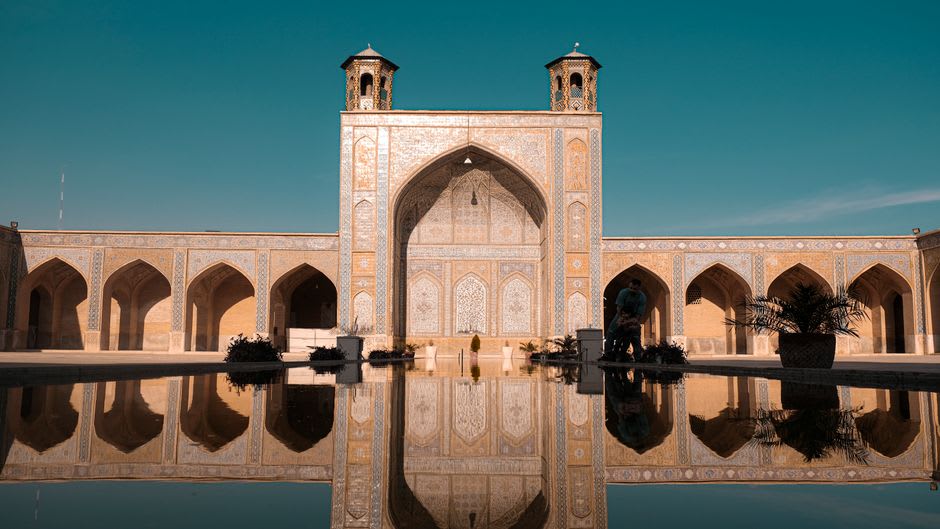
We spent an entire afternoon moving between the three buildings without ever leaving what felt like one continuous structure, and it occurred to me that this was probably exactly Karim Khan’s point — mosque, bath, and market as one civic organism, built to serve the same city on the same afternoon.
When to go: Weekday mornings for the mosque, when it’s quietest; the bazaar is liveliest in the late afternoon once the day’s heat breaks. Both are open year-round.
Keep exploring
More from Iran
 iran
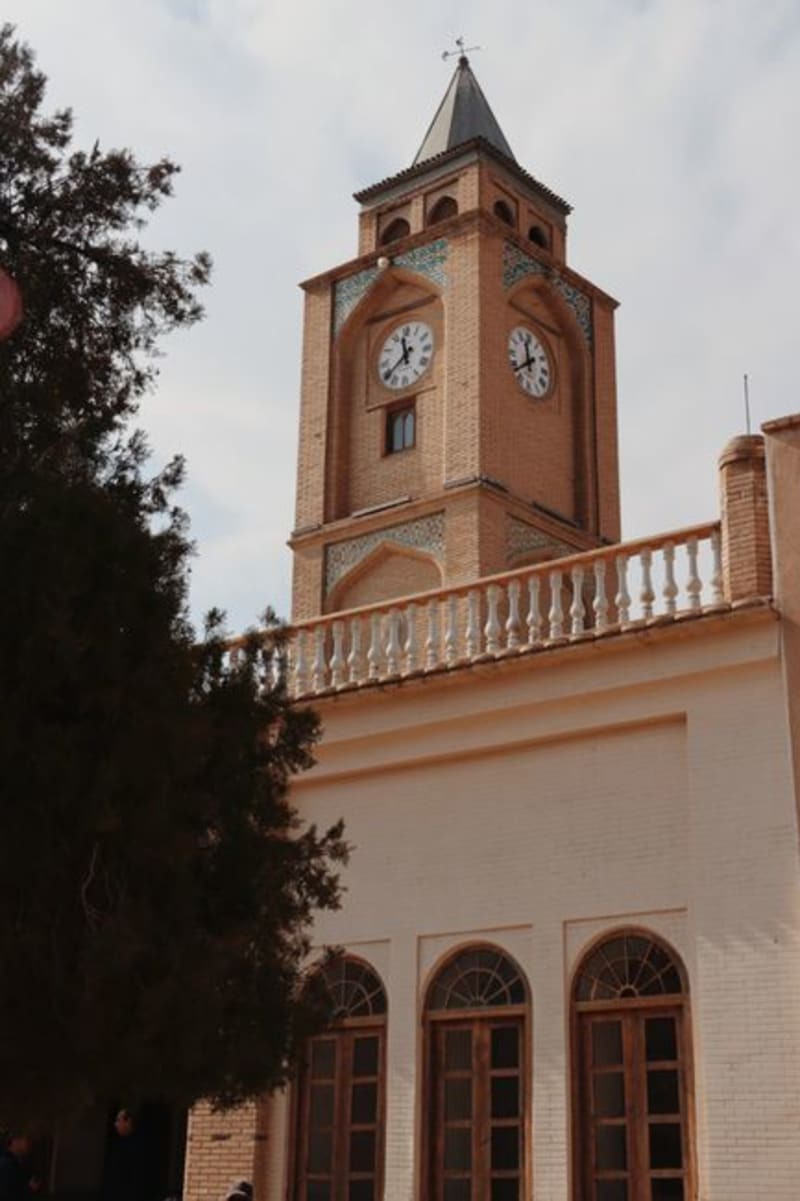
iran Vank Cathedral and the Jolfa Quarter
An Armenian Christian cathedral tiled like a mosque and painted like a Renaissance chapel, at the heart of the neighborhood Shah Abbas built for the community he deported here.
Explore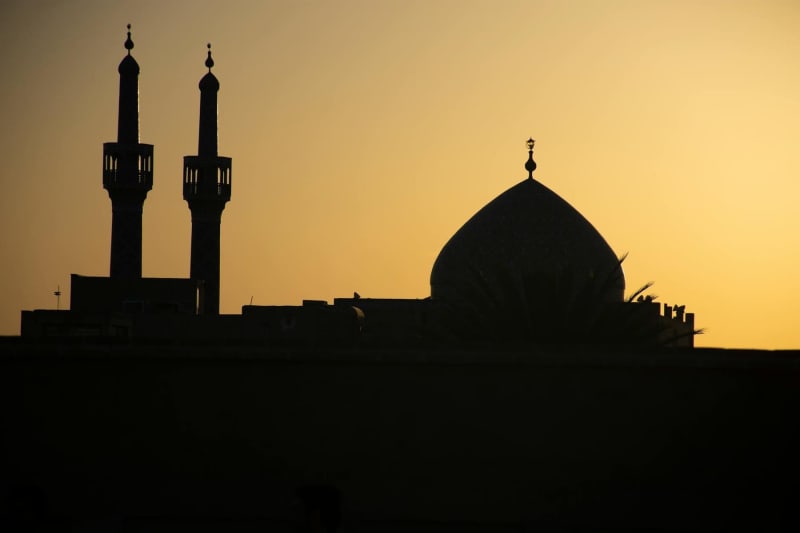 iran
iran Yazd
A living UNESCO mud-brick city where Zoroastrian fire temples and wind towers have endured for millennia.
Explore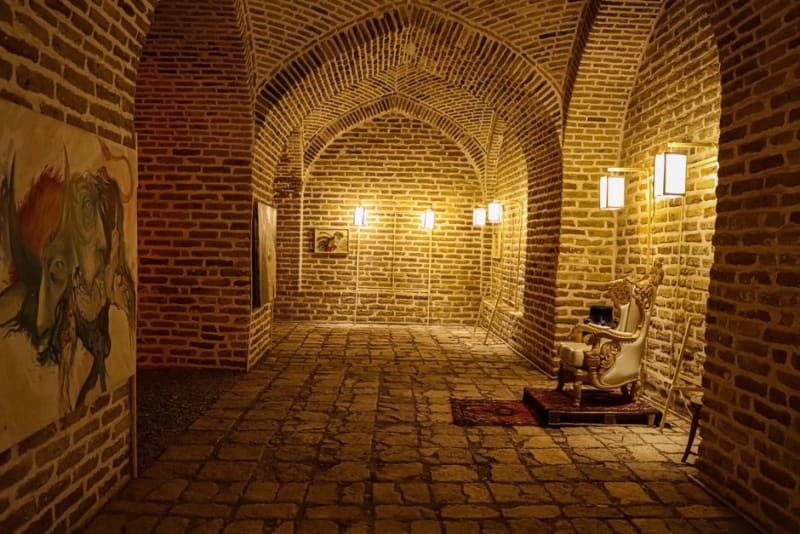 iran
iran Zeinodin Caravanserai
A perfectly circular Safavid-era caravanserai in open desert, restored into one of the most atmospheric places to sleep in Iran.
Explore iran
iran Abarkuh
A quiet desert town built around a four-thousand-year-old cypress tree that was already ancient when most of history happened.
Explore iran
iran Abu Musa Island
A small, quietly militarized Persian Gulf island at the center of a decades-long territorial dispute, with red volcanic hills and almost no visitors at all.
Explore iran
iran Abyaneh
A mountainside village built entirely of red clay, where old women in floral headscarves still speak a dialect closer to Middle Persian than Farsi.
Explore