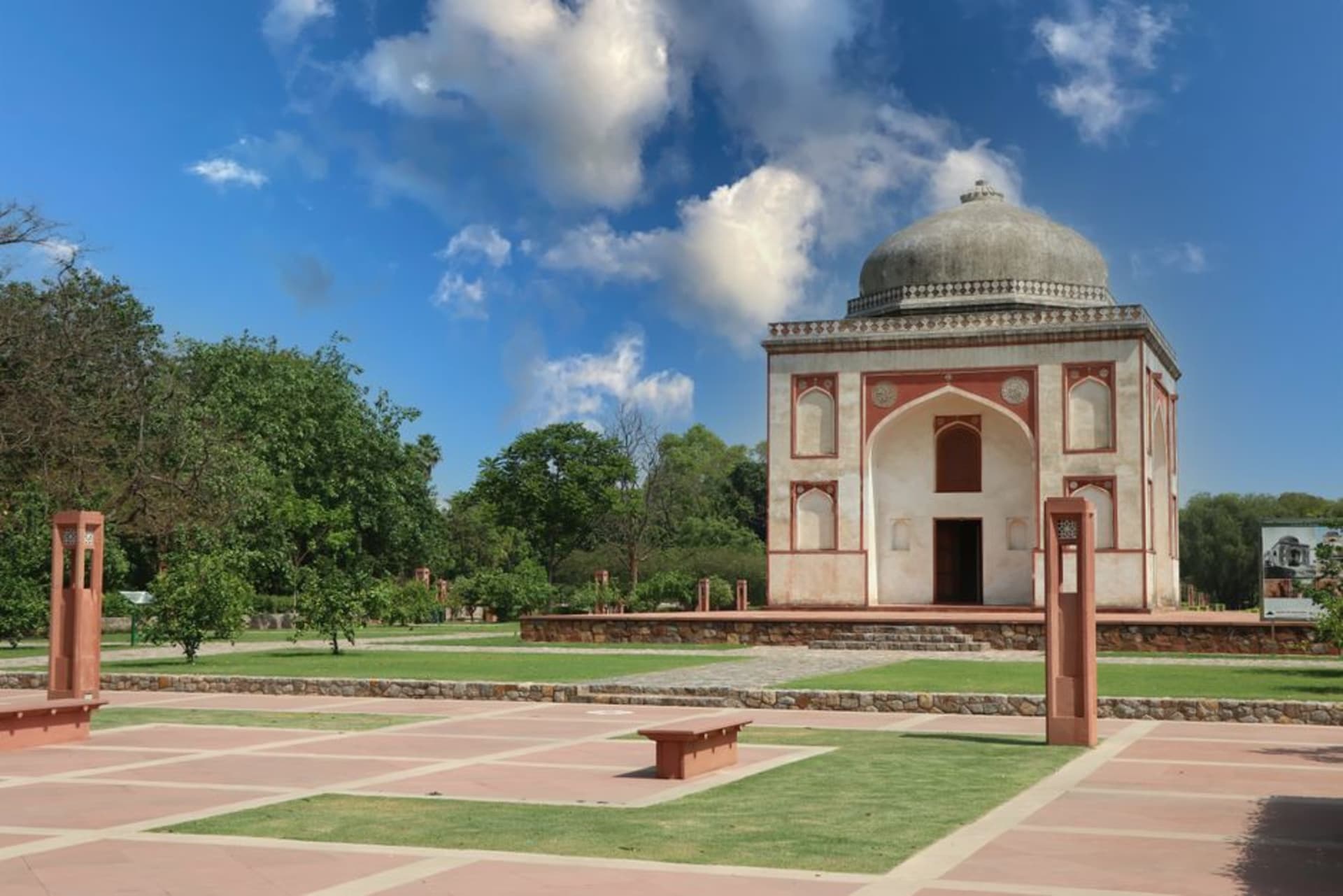
Tomb of Saadi
"Every UN building has his verse on the wall. Almost no visitor to Iran knows where he's buried."
A quieter, greener sibling to the Hafez shrine, built for the poet who wrote that all of humanity is one body.
I’ll admit it: I only knew Saadi as the poet quoted at the entrance of the United Nations building in New York — human beings are members of one body, having been created of one essence — and had no idea he had a hometown, let alone a tomb you could visit on the northeastern edge of Shiraz, past a busy roundabout that gives no hint of what waits behind it.
A Garden Built Around a Spring
The Saadieh is arranged around a natural spring that Saadi himself is said to have written about, now channeled into a long, narrow pool stocked with fat orange fish that locals feed from the colonnade above. The mausoleum sits at one end under a pale blue dome, its interior lined with a few of his most famous verses carved directly into the stone — the Gulistan and Bustan excerpted for pilgrims who already know them by heart.
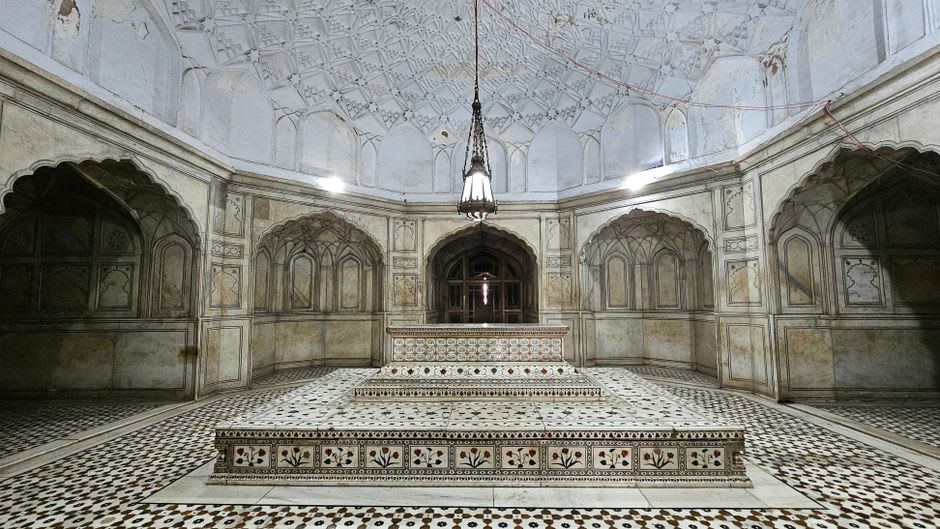
We came on a weekday morning and had the colonnade nearly to ourselves — a sharp contrast to the more crowded, more famous Hafez tomb across town. An old caretaker was sweeping fallen cypress needles off the marble with a straw broom in slow, unbothered strokes, and when Lia complimented the garden, he shrugged and said, “Saadi liked quiet. We try to keep it that way for him.”
Underground, a Surprise
Below the main garden there’s a small, dim cistern chamber, a leftover water reservoir now used as an odd, atmospheric teahouse — you descend a narrow stone stair and find yourself drinking tea inside what feels like a cave, water still audibly moving somewhere beneath the floor.
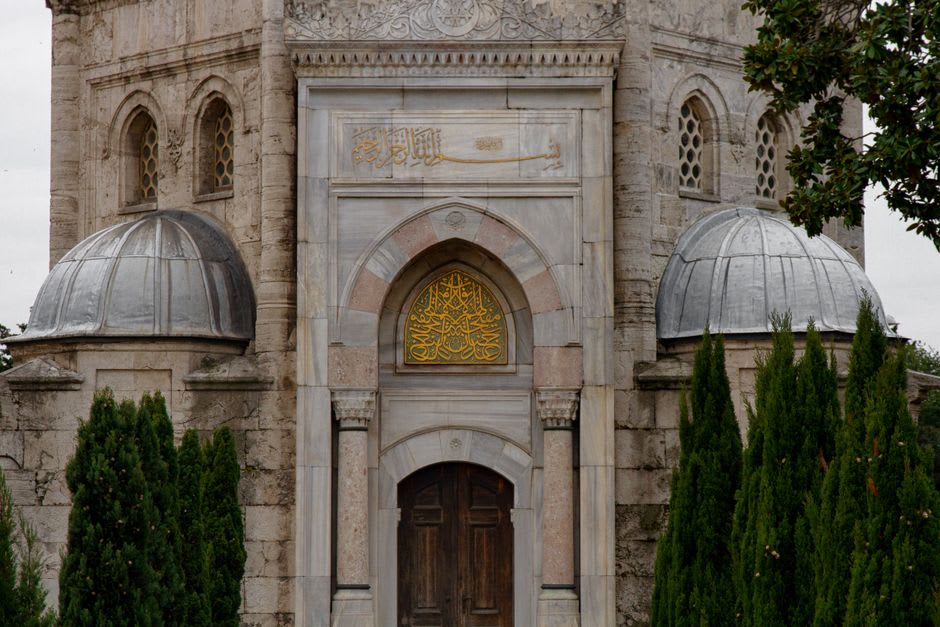
Saadi wrote across nearly every register — moral instruction, court flattery, plain-spoken humanism — and reading a line of the Gulistan on-site, next to a pool his poems mention directly, made the eight intervening centuries feel almost negotiable.
When to go: Spring or autumn mornings, when the garden is coolest and quietest. It pairs naturally with the Hafez tomb — both are a short taxi ride apart and easily done in one unhurried morning.