Tepe Sialk
"Everyone comes to Kashan for the Qajar mansions. I got distracted by something four thousand years older."
A seven-thousand-year-old mound on Kashan's outskirts, where a half-melted ziggurat quietly outdates almost everything else you'll see in Iran.
Tepe Sialk sits on the southwestern edge of Kashan, close enough to reach by taxi in fifteen minutes, and it is the kind of site that most visitors skip entirely because it doesn’t photograph the way a turquoise dome does. From a distance it just looks like an eroded dirt mound. Up close, once you understand what you’re looking at, it becomes one of the most important archaeological sites in the entire country.
A City Older Than Writing
Excavations here have uncovered continuous settlement going back roughly seven thousand years, making Sialk one of the earliest urban sites known in the Iranian plateau — painted pottery, early metalwork, and a burial ground that predates most of what’s taught about Mesopotamian civilization in school. A small on-site museum displays some of the pottery fragments, painted with geometric bands and animal motifs in a style distinct from anything I’d seen at the more famous sites further south. The French archaeologist who led the major excavations in the 1930s took most of the best finds to the Louvre, which the site’s caretaker mentioned to me with a controlled kind of bitterness I’ve heard more than once in Iran.
The Ziggurat That’s Barely Holding Its Shape
The site’s centerpiece is a stepped mudbrick ziggurat dating to around the third millennium BCE, a religious structure that would have towered over the surrounding settlement in its day. Millennia of erosion have reduced it to a rounded, half-melted shape that requires some imagination to read as architecture rather than geology, but the outline of the terraces is still visible if you walk the perimeter slowly. Climbing to the flattened top gives a view over the low sprawl of modern Kashan in one direction and open desert in the other — a genuinely strange vantage point, standing on something built before the pyramids of Giza, looking out at satellite dishes and minarets.
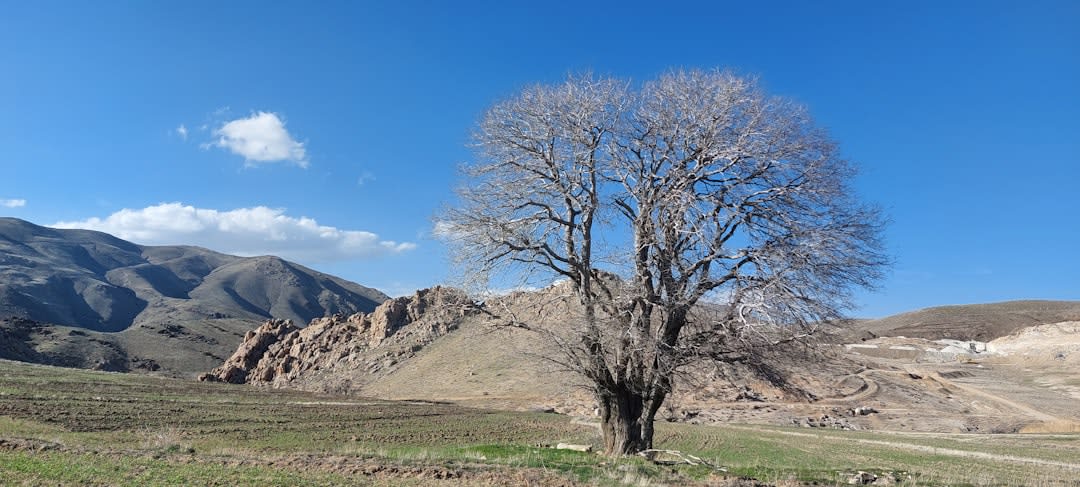
There were no other visitors the afternoon I went. Just the caretaker, a stray dog asleep in the shade of the museum building, and seven thousand years of quiet.
When to go: October through April, since the site is entirely exposed with no shade. Late afternoon light works best for making out the ziggurat’s stepped profile.