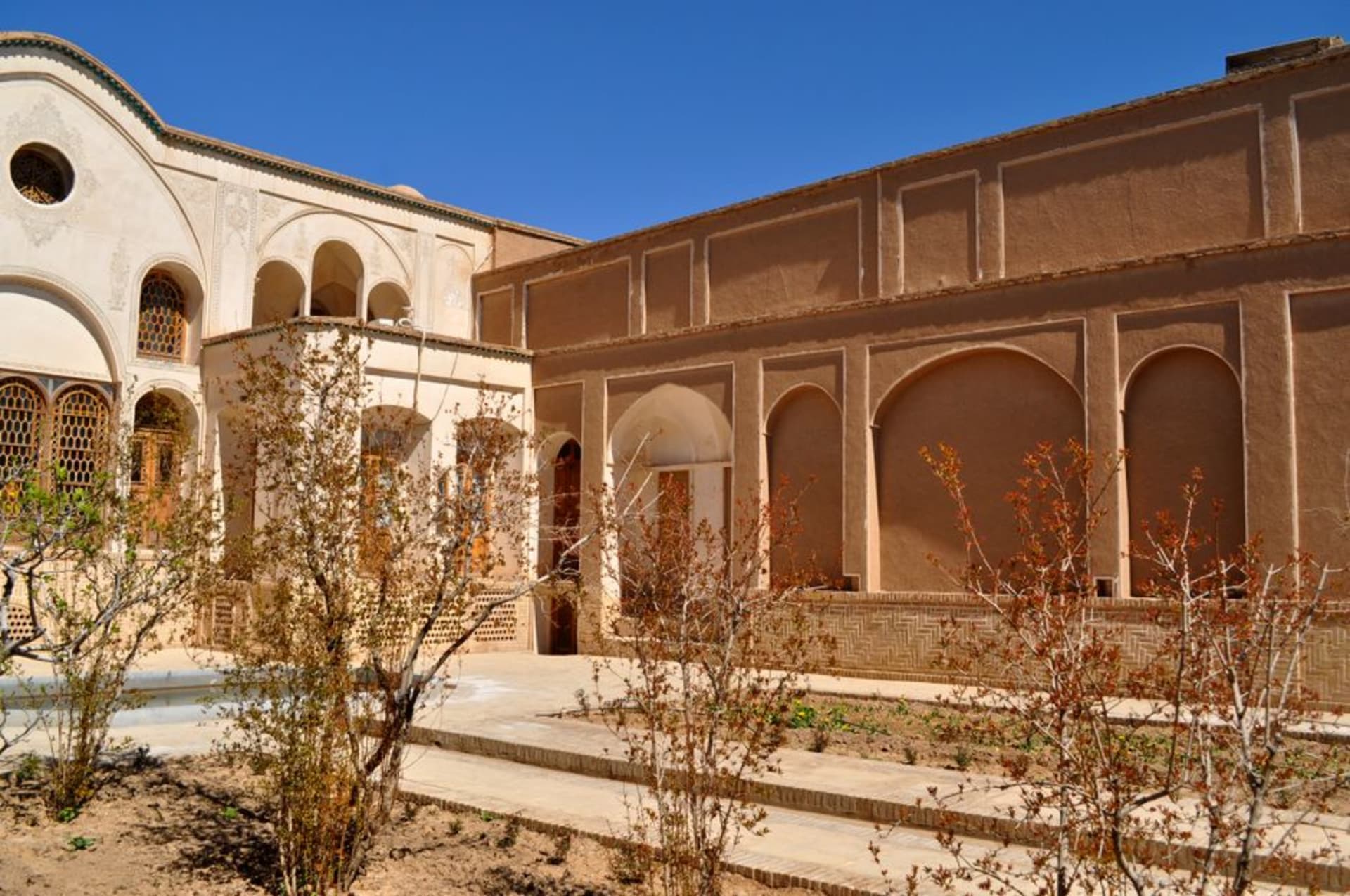
Tabatabaei House
"A carpet merchant built this to impress his in-laws. He did not undersell the point."
A merchant's mansion with a hundred rooms and three separate courtyards, built to keep summer heat and social hierarchy equally in their place.
Tabatabaei House was built in the 1880s by a carpet merchant named Seyyed Ja’far Tabatabaei for his daughter’s wedding, and the story alone tells you something about Qajar-era Kashan: merchants, not nobility, were commissioning buildings this ambitious. I’d read the number beforehand — around forty rooms across roughly 4,700 square meters — but the figure didn’t land until I was actually inside, losing track of which courtyard I was in for the third time.
Three Courtyards, Three Audiences
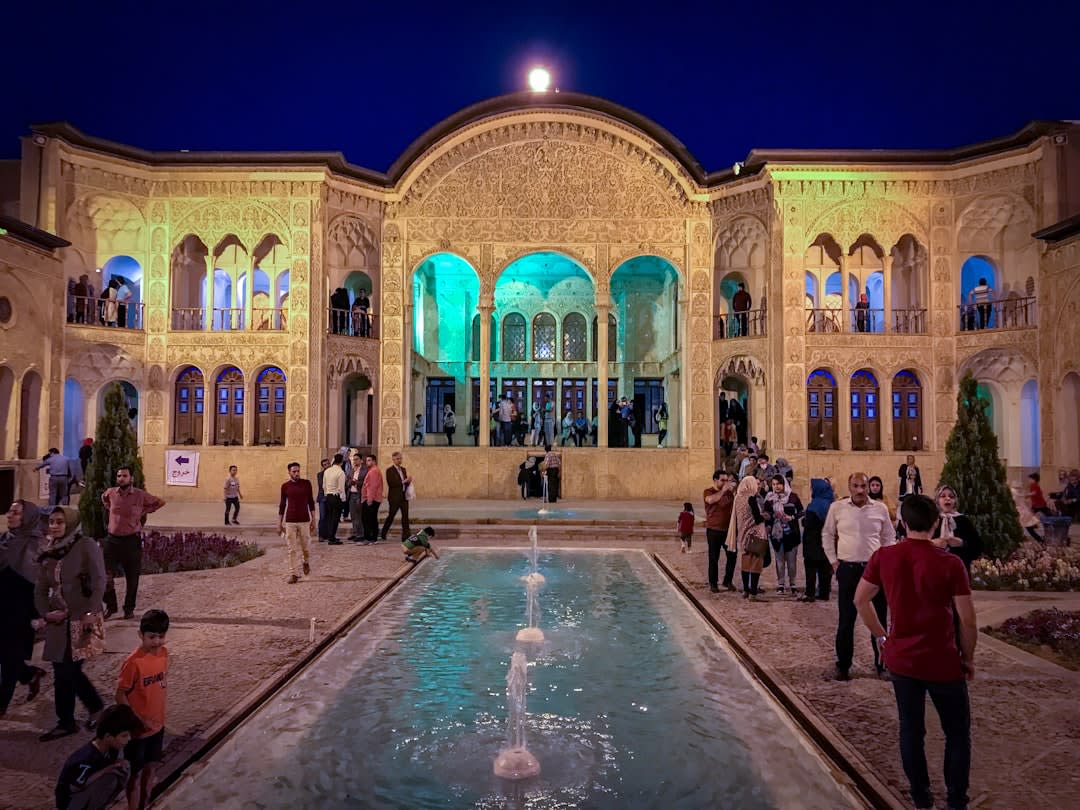
The house is organized around three distinct courtyards, and once it was explained to me, the logic clicked into place immediately. The birooni, or outer courtyard, is where the merchant received business guests and strangers — grand, formal, meant to project status. The andarooni, the inner courtyard, was the private family quarters, quieter and more intimate in scale. A third, smaller service courtyard handled the household staff and kitchens. Nobody who wasn’t family ever needed to see the private wing, and the architecture enforces that separation completely — you can walk the whole house and never accidentally wander from one social zone into another.
Windcatchers and Painted Glass
Four badgir wind towers pull air down through the house and across the courtyard pools, cooling it before it reaches the sunken basement rooms where families would retreat during the worst of the summer. Upstairs, the reception rooms have stained-glass windows in reds and ambers that throw colored light across hand-carved stucco reliefs of birds and flowering vines. I spent twenty minutes photographing the way the afternoon sun moved the color across the plaster, and Lia had to physically pull me toward the next room.
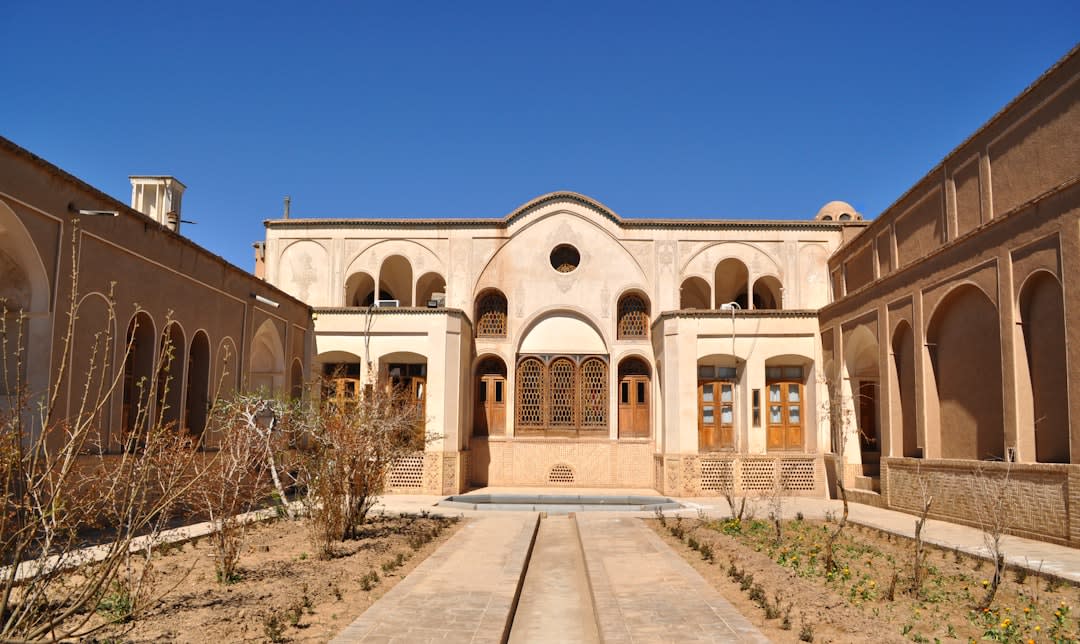
The mansion sits an easy walk from Borujerdi House — they were built by rival branches of the same extended family, connected by marriage and, apparently, by a fairly intense architectural competition. Seeing both in the same afternoon, back to back, is the best way to understand what Qajar-era Kashan money actually looked like.
When to go: Year-round, since most of the house is shaded courtyards and interior rooms, but late afternoon light through the stained glass is best from September to November when the sun sits lower.