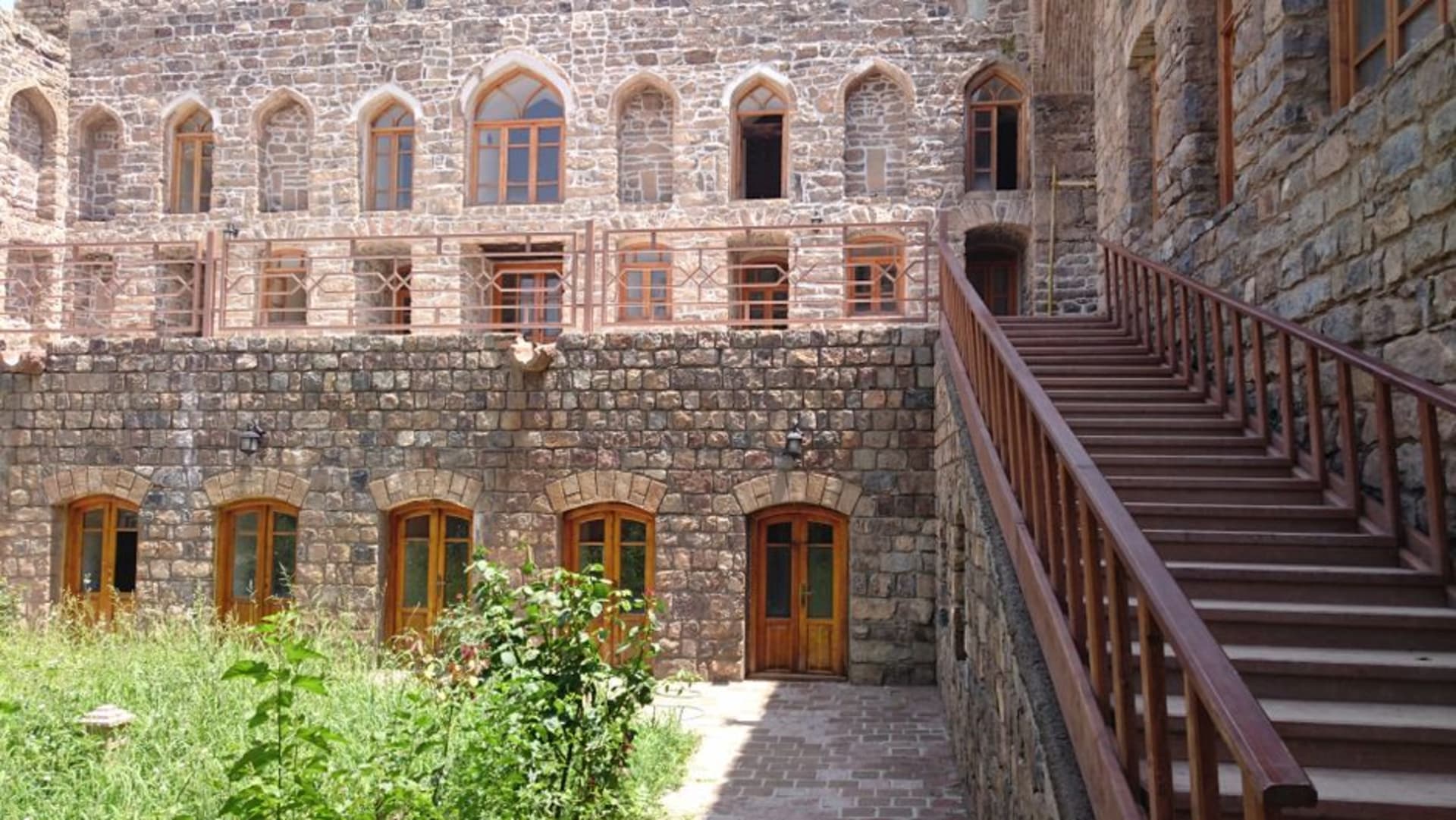
St. Stepanos Monastery
"I expected a ruin. I found a monastery still consecrated once a year, still sung in, still alive."
A black-and-white striped Armenian monastery wedged into a gorge on the Aras River, older than most European cathedrals and improbably still standing at the edge of the Azerbaijan border.
The road to St. Stepanos runs along the Aras River gorge so close to the Azerbaijan and Armenia borders that our driver pointed out watchtowers without slowing down, like landmarks you’re supposed to already know about. The monastery itself appears suddenly around a bend — a fortress-like compound in banded black and cream stone, its conical dome rising out of an otherwise empty canyon. Founded, according to Armenian tradition, in the first century by the apostle Bartholomew, the current structure dates mostly from the seventeenth century, rebuilt after repeated earthquakes and invasions. UNESCO listed it, along with Qareh Kelisa, as one of the Armenian Monastic Ensembles of Iran in 2008.
Stone That Still Sings
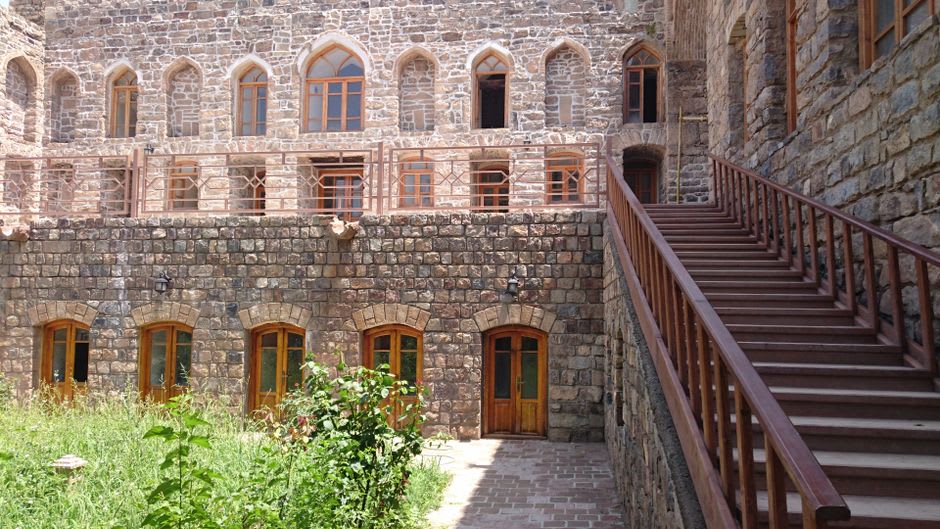
Inside, the sanctuary is cooler and darker than the harsh canyon light outside prepares you for. Khachkars — the ornately carved Armenian cross-stones — are set into the walls at intervals, some worn nearly smooth. A caretaker who lives on-site during the tourist season told Lia, through a mix of broken English and hand gestures, that Armenian pilgrims still travel here once a year for a liturgy that fills the courtyard with people camping in tents overnight. It was hard to picture, standing in near-total silence except for the wind moving through the gorge, but the stone floor showed centuries of foot traffic that made the claim entirely believable.
Getting There Matters
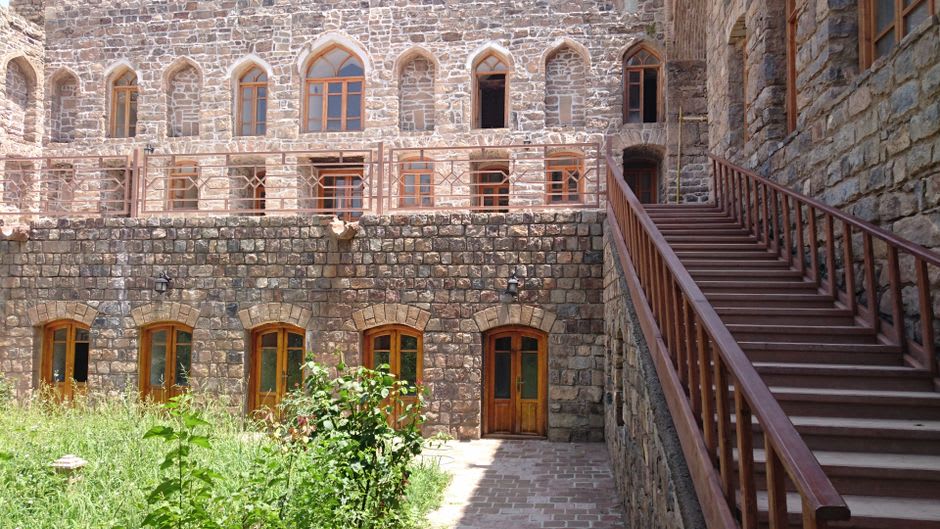
This is not a casual stop. The monastery sits close enough to the border that visiting requires planning around a permit-adjacent process — in practice, most travelers arrange the trip through a guesthouse in Jolfa or a driver in Tabriz who already knows the paperwork rhythm. The three-hour drive each way from Tabriz through increasingly stark, mountainous terrain is, honestly, half the experience. We stopped twice for tea at roadside stalls run out of shipping containers, each time serving farmers who treated the presence of two obviously foreign travelers as an opportunity for conversation rather than a novelty.
When to go: April through June or September through October — the canyon has no shade and summer heat here is severe. Confirm border-zone access rules with a local guesthouse before setting out, as they occasionally shift.