Naqsh-e Rustam
"They buried their kings where no one could reach them, then carved the reach anyway."
Four Achaemenid kings buried in a cliff face, carved twenty meters up — including Darius the Great, a short drive from Persepolis.
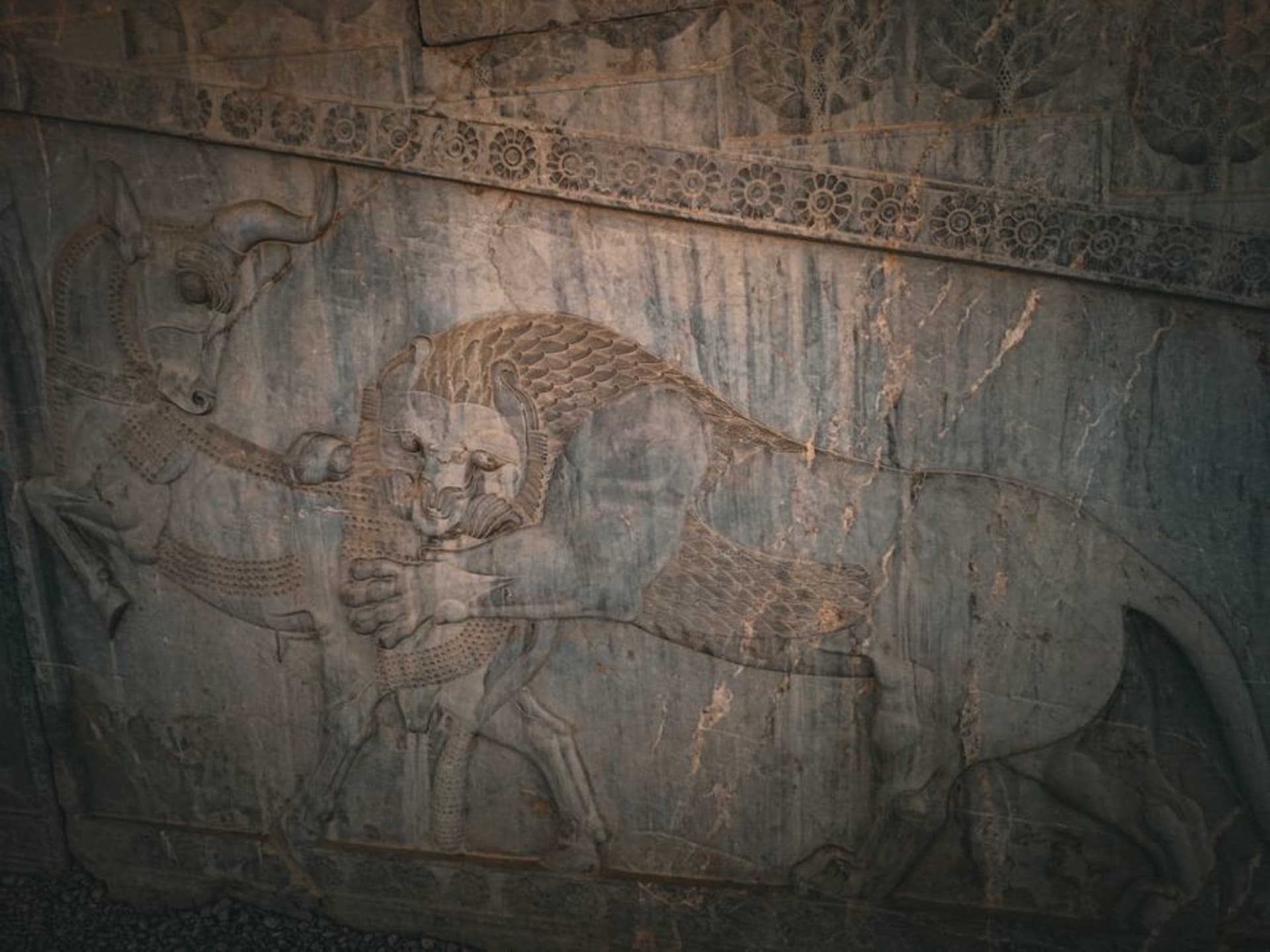
Everyone who visits Persepolis is told, correctly, to also make the short detour to Naqsh-e Rustam, and everyone underestimates how strange it will actually be. A sheer limestone cliff rises out of the plain, and cut directly into its face, twenty meters above the ground with no visible means of original access, are four cross-shaped tombs — Darius I, Xerxes, Artaxerxes I, and Darius II, though only the first is confidently identified by its own inscription.
A Cliff Face That Doubles as an Empire’s Résumé
The facades are carved to mimic the entrance of a grand palace, a false doorway framed by columns, with a relief above showing the king standing on a raised platform supported by representatives of every subject nation, facing a fire altar and a symbol of the god Ahura Mazda. It’s essentially propaganda carved in permanent stone, thirty centuries of imperial messaging aimed at anyone standing exactly where I was standing, neck craned back, squinting into the glare.
The Sassanians Added Their Own Layer, Centuries Later
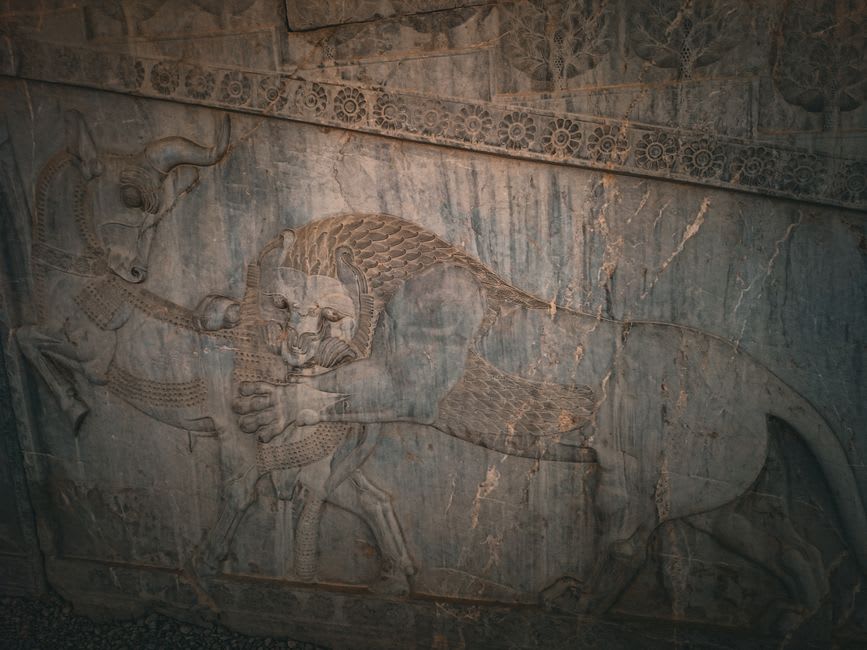
What I hadn’t expected were the seven large reliefs carved at ground level, added roughly seven hundred years after the tombs, by Sassanian kings who apparently found this cliff too symbolically important to leave alone. One shows Shapur I on horseback, triumphant, with a Roman emperor kneeling before him and another gripping his wrist in submission — a real historical event, the capture of Emperor Valerian in 260 CE, immortalized here in a level of gloating detail that felt almost contemporary in its pettiness.
Lia pointed out, correctly, that this one cliff face contains a working timeline of two entire Persian empires separated by seven centuries, each one choosing the same wall to make its case to eternity. Standing between the tombs above and the reliefs below, I understood the site less as a monument to any single dynasty and more as a very long, very patient conversation between them.
When to go: Early morning, ideally combined with Persepolis on the same day — it’s a fifteen-minute drive between them. The site is fully exposed with no shade, so avoid the midday sun in summer.