Khaju Bridge
"A dam, a bridge, a pavilion, and a stage. Nobody told the seventeenth century to pick one job."
A two-story Safavid bridge-dam that doubles as a pavilion, a floodgate, and — after dark, when Isfahanis gather in its arches to sing — the best free concert in the country.
Everyone in Isfahan sends you to Si-o-se-pol first, and it deserves the attention. But Khaju Bridge, a twenty-minute walk upstream, is the one I’d choose to see again if I only had one evening left in the city.
More Than a Crossing
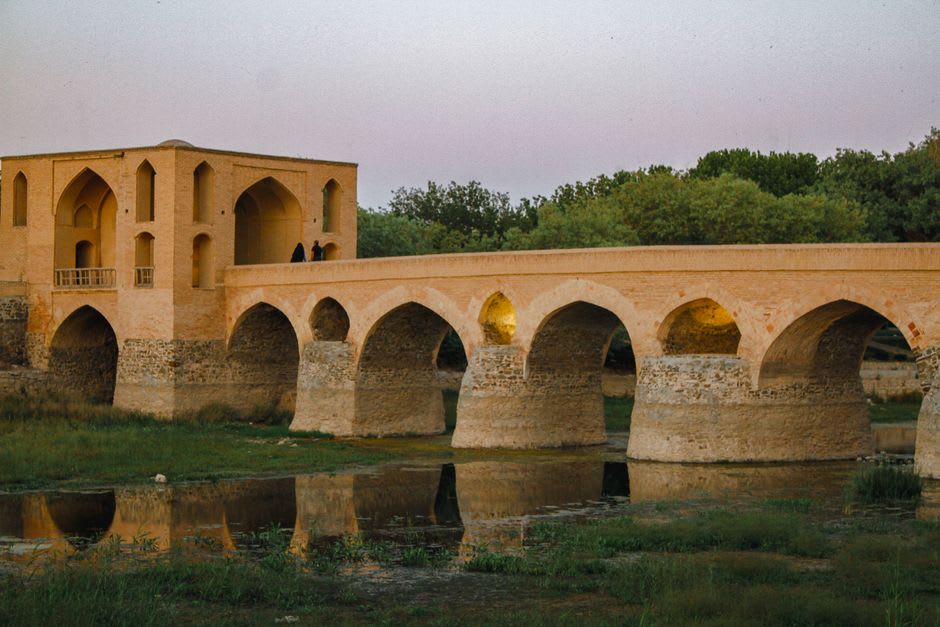
Built around 1650 under Shah Abbas II, Khaju was never just a way to cross the Zayandeh River. It’s a dam, a bridge, and a public pavilion stacked into one 133-metre structure, with two tiers of arched galleries and sluice gates that once regulated water flow to the gardens on the far bank. At its center, on the upper level, sits an octagonal pavilion that served as the shah’s seat for watching the river and, according to guides, the water ceremonies once held here. The stonework is carved with tilework and painted decoration that has faded into something softer and more atmospheric than the crisp mosque tiles across town — centuries of river spray have worn the edges gentle.
Where the City Sings
The real reason to come, though, is after dark. Isfahanis treat the lower arcaded level of Khaju as an informal amphitheater. On the evening we visited, small clusters of men had claimed different alcoves along the arches and were singing — old Persian ballads, one group answering another down the length of the bridge, their voices carrying strangely and beautifully off the stone vaulting. Nobody was performing for tips or cameras. It was just what people here do on a warm evening, the way people elsewhere might go for a walk.
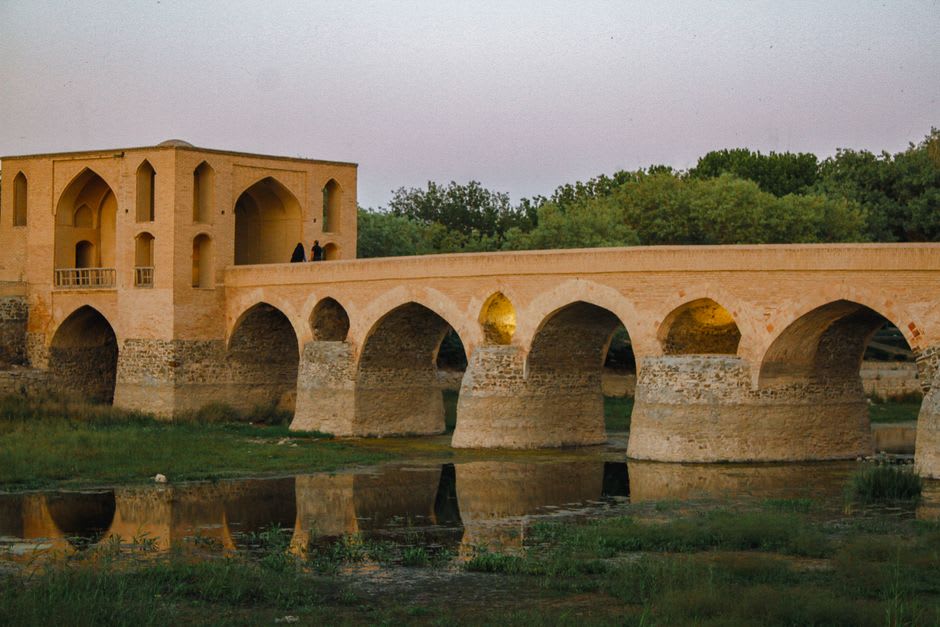
Lia and I sat on the steps near the water for close to two hours, past the point where my legs went numb from the stone, unwilling to be the ones who broke the mood by leaving. When the river was low, in late summer, we could see the exposed sluice gates below the bridge, a reminder that under all the romance, this was still functioning hydraulic engineering.
When to go: After sunset, any time from spring through autumn, when the informal singing sessions are most likely and the evening temperature makes lingering on the stone steps comfortable.
Keep exploring
More from Iran
 iran
iran Kharanaq
An abandoned mud-brick village on a cliff edge, left to the wind exactly as its last residents walked out of it decades ago.
Explore iran
iran Kharg Island
A small, heavily guarded oil terminal island in the northern Persian Gulf that also holds Sassanid rock tombs and a sunken Portuguese-era church.
Explore iran
iran Khorramabad
The Lorestan capital, where a Sassanid fortress rises from a lake island and waterfalls cut straight through the edge of town.
Explore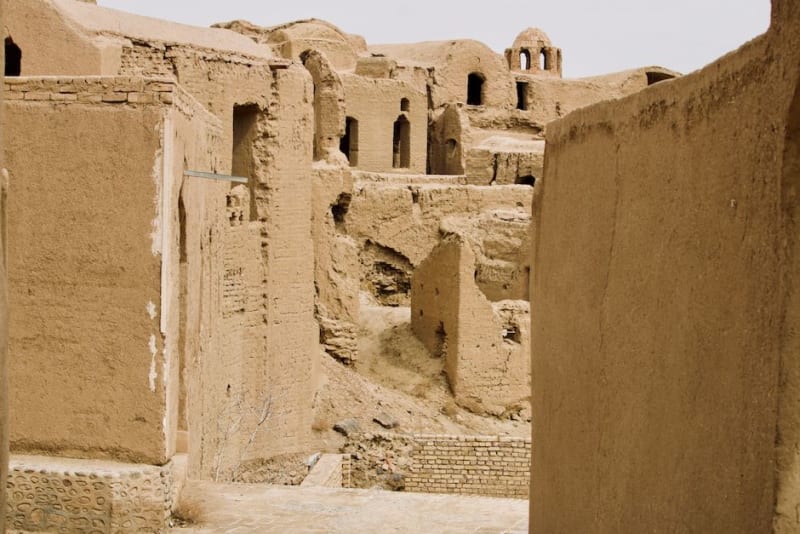 iran
iran Khoy
A weathered border-region town with a crumbling brick citadel, a bazaar that feels a century behind Tabriz's, and the kind of unhurried hospitality that only shows up once the tour buses stop coming.
Explore iran
iran Kish Island
Iran's duty-free resort island, where Tehranis come to relax on the beach and coral reefs sit just offshore from shopping malls.
Explore iran
iran Lahijan
Iran's tea capital, where hillsides of trimmed green tea bushes surround a lakeside town that has been growing and processing the country's entire domestic tea supply since the 1900s.
Explore