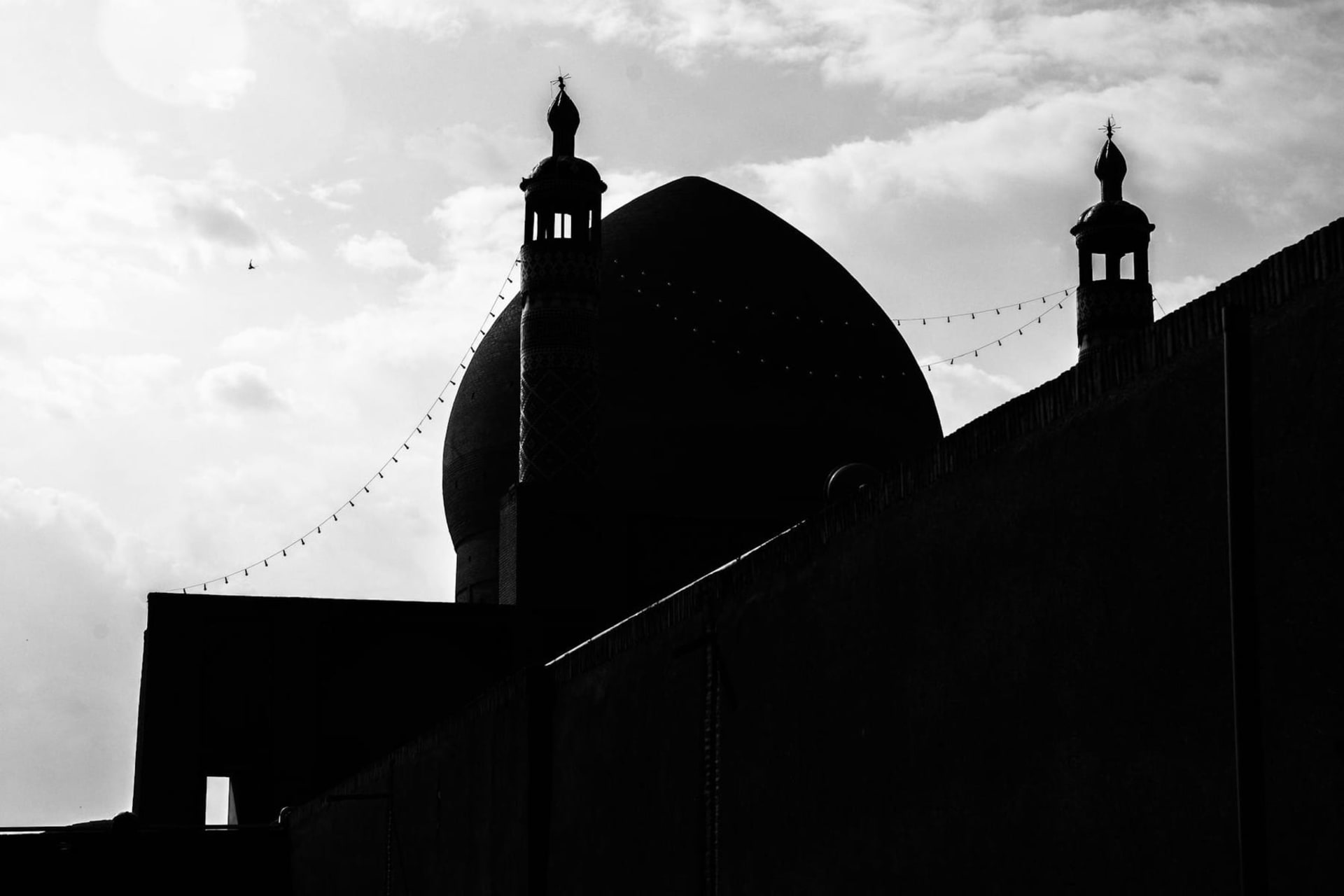
Exquisite Qajar mansions with courtyard gardens, and the world's finest rose-water distilleries in bloom each May.
There is a particular quality of light in Kashan in the late afternoon — amber and thick, as if the sun has been filtered through forty centuries of dust and rose petals before reaching you. It comes through the mashrabiyya screens of the old quarter and lands in patterns on the plaster walls, and you stop walking because the geometry of shadow alone is enough to make you late.
The Mansions of the Bāzāār Quarter
I spent a morning getting thoroughly lost between Alavi Street and the old bazaar, which turned out to be the best decision I made in Iran. Kashan’s great Qajar mansions — Tabatabaei, Borujerdi, Abbasi — are the kind of places that make you rethink what the word “house” means. Borujerdi House in particular undid me: five wind towers rising above a central courtyard, painted ceilings dense with pomegranate and peacock motifs, and a reflecting pool so still it looked painted. Lia stood at the edge of it for a long time without saying anything, which is how I know a place has worked on her.
What surprised me was the scale of intimacy. These were private family homes, not palaces. The proportions are human — doorways you duck through, rooms that hold maybe a dozen people comfortably — and yet every surface received the full attention of the craftsman. Muqarnas dripping from ceiling corners. Stucco grillwork fine as lace. A wooden door with brass knockers shaped differently for men and women, so the family inside could know the gender of the visitor by the sound alone.
The Rose Fields at Dawn
Kashan’s other obsession is roses — specifically the Damask rose, harvested in the villages of Qamsar and Niasar, a short drive into the surrounding hills. In early May, the distilleries run day and night. I drove out before sunrise and arrived to find the fields already full of women in patterned chadors moving between the rows, picking blooms before the heat opens them too far and loses the oil. The steam rising from the copper alembics in the distillery carried a scent so concentrated it felt almost edible.
A man named Hassan gave me a small glass bottle of golab — rose water — from the first press of the season. I still have it. I have no idea what I’m saving it for.
Getting Oriented
The city is compact and walkable from the bazaar district outward. Breakfast in the teahouses near Amin al-Dowleh caravanserai means sweet tea, fresh bread, and feta with walnuts. For lunch, the ash-e reshteh at a family restaurant on Mohtasham Street — a thick noodle soup with dried herbs and kashk — is the sort of thing that explains a cuisine in a single bowl.
When to go: Early May is the only time to catch the rose harvest in full bloom — the fields around Qamsar are at their peak for roughly two weeks. September through November offers cooler air and fewer crowds, with the mansions at their most peaceful.