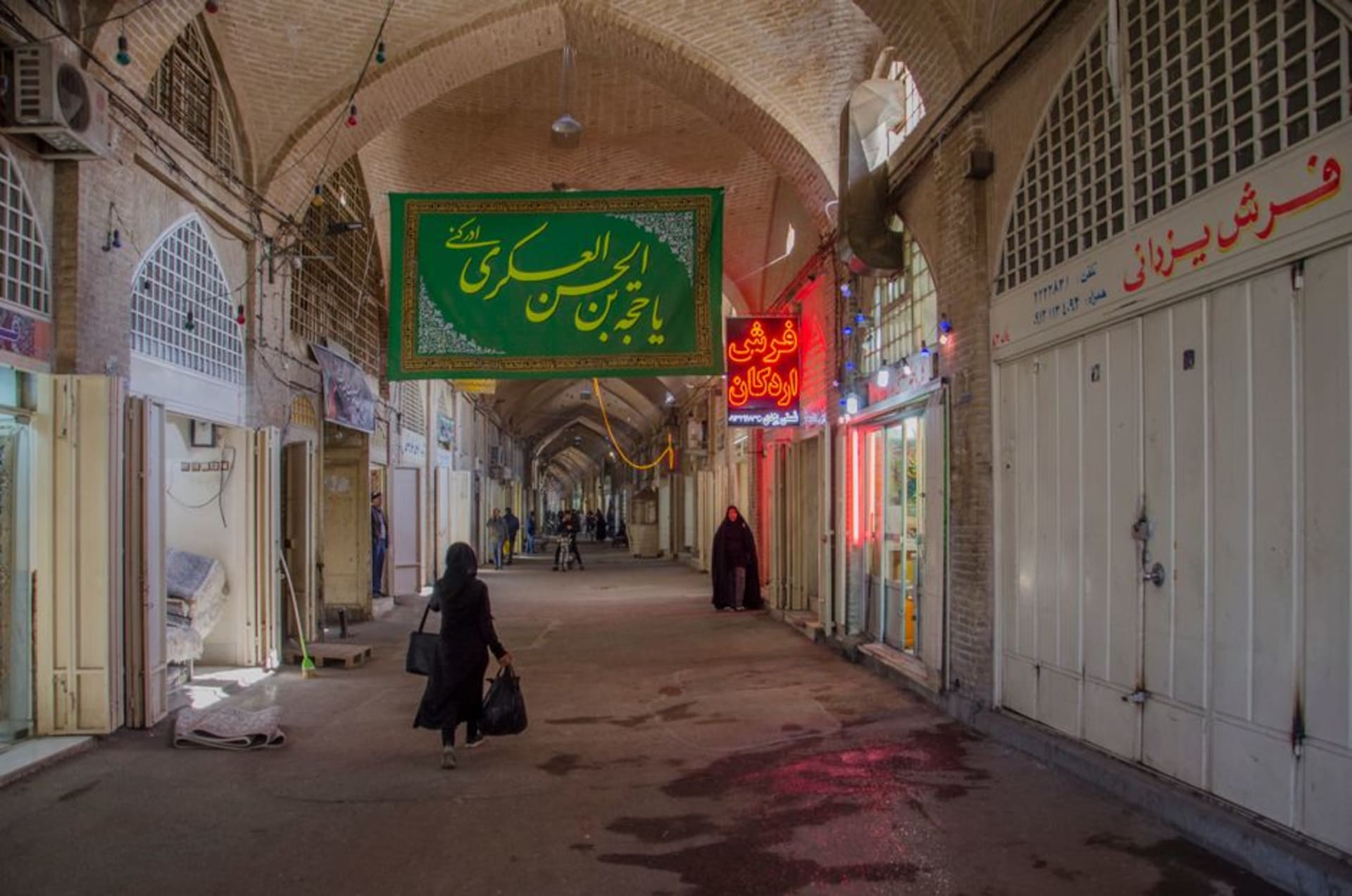
Isfahan Grand Bazaar
"Four hundred years of commerce, and the copper hammering never stopped."
A covered market corridor running from the seventeenth century into the present day, where hammered copper, hand-blocked textiles, and carpet dealers operate exactly as their grandfathers did.
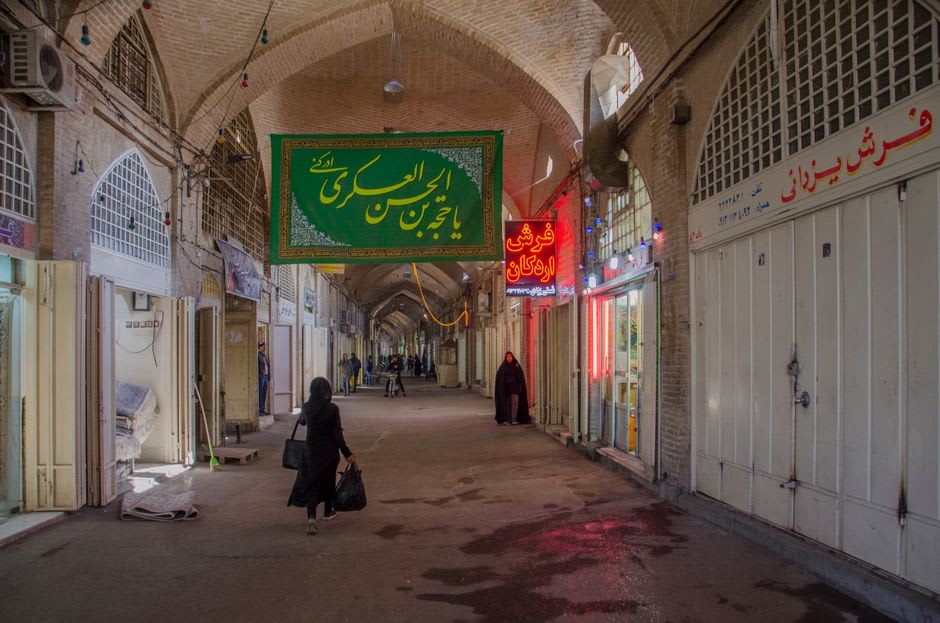
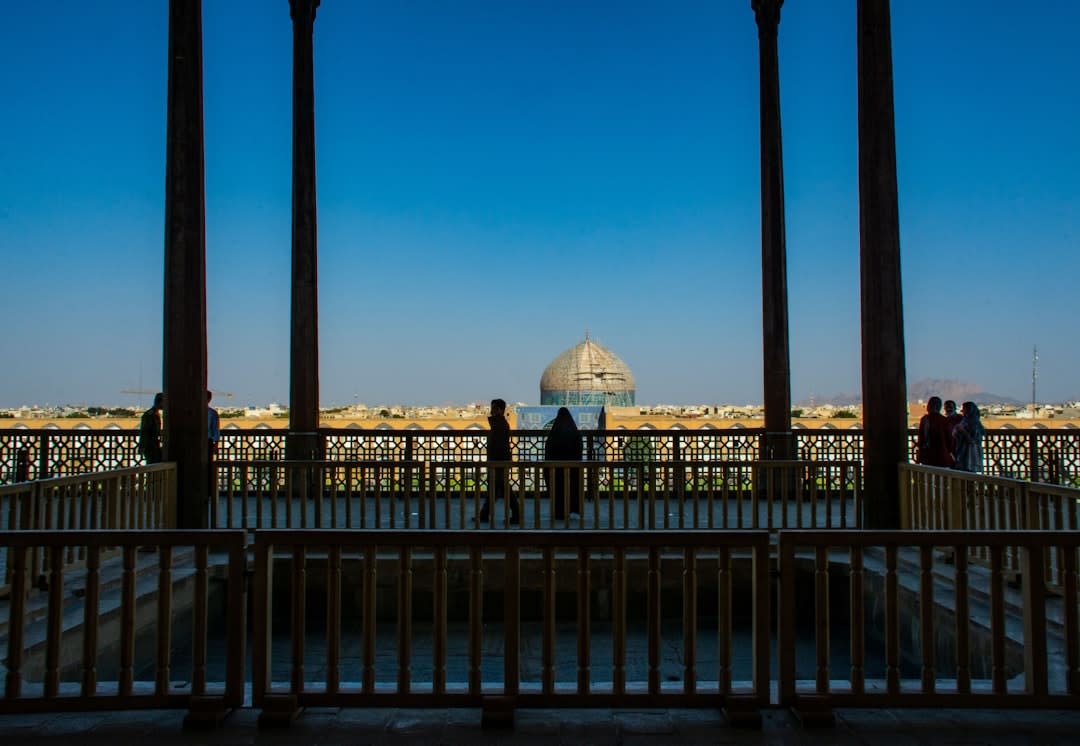
The Bazar-e Bozorg enters through the Qeysarieh Gate at the north end of Naqsh-e Jahan Square, and within thirty seconds the temperature drops, the light changes to shafts falling through small ceiling openings, and the square’s grandeur gives way to something more intimate and considerably more useful: a market that has been continuously operating, in some form, since the Safavid era.
A Living Market, Not a Museum Piece
What struck me first was how unstaged it all felt. This isn’t a tourist bazaar dressed up for foreign visitors — though there are certainly souvenir stalls near the entrance — it’s still a working supply chain for Isfahan itself. Deeper in, past the initial crush of miniature paintings and enamelware, entire corridors are given over to specific trades the way medieval European guild streets once were: one alley of coppersmiths, their hammers going in overlapping rhythms that you hear before you see them; another of textile merchants unrolling bolts of hand-blocked qalamkar cotton, the traditional Isfahani print done with hand-carved wooden stamps and natural dyes.
Carpets, Patience, and Tea
I went in with no intention of buying a carpet and came out having spent an hour and a half in one shop anyway, mostly because the owner, on realizing we weren’t going to be rushed into anything, brought out tea and simply started unrolling carpets for the pleasure of showing them — a Qashqai tribal piece with irregular, almost defiant geometry, then a fine Nain silk piece that took, he said, over a year for one weaver to complete. We didn’t buy the silk one. We did leave with a smaller Qashqai runner that now sits in our apartment in Mexico, and every time I walk over it I think about how little that transaction resembled a sale and how much it resembled an afternoon with a patient teacher.
Lia got separated from me for twenty minutes near the spice section and came back with a small paper twist of dried barberries and a story about a shopkeeper who insisted on teaching her the Farsi word for every spice on his table before letting her pay.
When to go: Weekday mornings for the quietest browsing and the freshest energy from vendors; the bazaar closes or thins out considerably on Friday mornings, the Islamic day of rest.