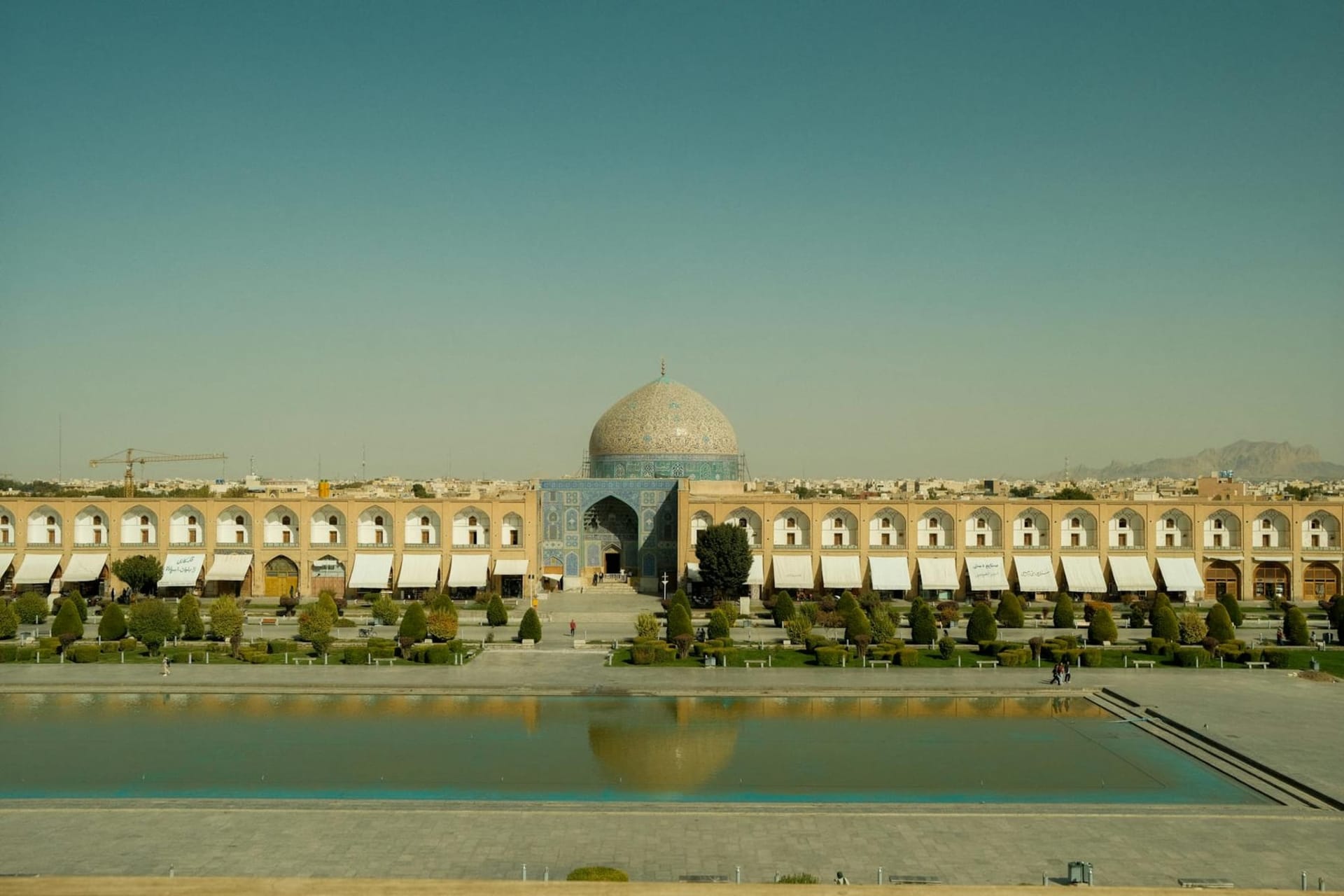
Naqsh-e Jahan Square — one of the world's largest plazas, ringed by dazzling turquoise-tiled Islamic monuments.
There is a moment, stepping from the covered bazaar into Naqsh-e Jahan Square for the first time, when the body simply stops. Not from heat or tiredness — it was October, the air mild and laced with saffron from a tea stall just inside Qeysarieh Gate — but from the sheer improbability of the thing. The square is 500 metres long. That number means nothing until you’re standing inside it and the monuments at the far end look like mirage.
The Square at Its Own Pace
Naqsh-e Jahan — Image of the World — was laid out by Shah Abbas I in the early 1600s, and it has been trying to live up to the name ever since. I arrived just after the morning call to prayer had faded, when the groundskeepers were still raking the gravel paths and the fountain was just beginning to stir. The Masjed-e Shah anchors the southern end: its entrance portal tilted forty-five degrees off-axis from the square so that the prayer hall faces Mecca, a geometric sleight of hand that somehow works, the way a sentence that shouldn’t scan still does. The tilework up close is not just blue — it is a whole argument about blue, cobalt shading into turquoise shading into the pale aquamarine of a winter sky.
Lia spent an entire afternoon inside the Sheikh Lotfollah Mosque on the eastern flank, which has no minarets and no courtyard, just an unbroken interior dome that shifts colour with the light — cream at midday, rose at four o’clock. She came out quieter than she went in.
Beyond the Square
The city doesn’t end at the square’s edge. I spent a morning getting deliberately lost in the lanes around Jolfa, the Armenian quarter in the south, where the Vank Cathedral keeps its frescoes behind low wooden doors and the neighbourhood cafés serve cardamom coffee with rose-water ice cream. On Chahar Bagh Abbasi Avenue the old Safavid plane trees throw shade wide enough to feel like shelter. I ate a bowl of ash reshteh — a thick noodle soup with kashk and fried onions, dark and restorative — at a place on Harun Vilayat Square that had no menu, only two options, and I chose correctly.
The unexpected discovery came at Si-o-se Pol, the Bridge of Thirty-Three Arches, at nine in the evening. I had expected tourists and phone screens. What I found were Isfahanis sitting in the brick alcoves beneath the arches, singing. Not performing — singing to each other, for the pleasure of the resonance the old stone gives back. I sat down on the Zayandeh riverbank and listened for an hour without understanding a word.
Getting the Light Right
Isfahan photographs best in the hour before sunset when the western sun strikes the tilework on the Masjed-e Imam and the blue deepens toward something almost violet. The square empties only slightly in the early morning, but the shadows are long and the crowds forgiving.
When to go: April and May bring mild temperatures and the rose gardens in full colour; late September through November offers the same gentleness with the added warmth of the harvest light. Avoid July and August, when the heat on open stone is serious and the square offers nowhere to hide.