Dowlat Abad Garden
"Thirty-three meters of brick built for the sole purpose of making a room feel cool."
A Persian paradise garden built around the tallest windcatcher on earth, where geometry and shade turn desert heat into something almost gentle.
I’ve been in a lot of hot places since moving to Mexico, and I’ve developed opinions about air conditioning I never expected to have. So when I stood under the windcatcher at Dowlat Abad Garden and felt actual cold air pouring down from a shaft built in the 1750s, with no electricity involved anywhere in the process, I understood engineering respect in a way no museum plaque had managed before.
The Tallest Windcatcher on Earth
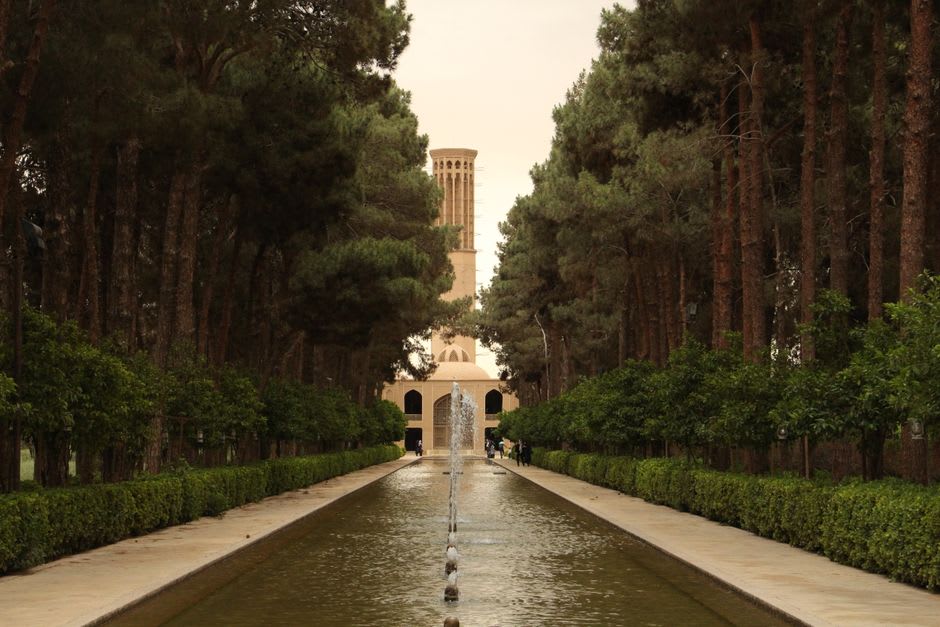
The badgir at Dowlat Abad rises just over thirty-three meters, the tallest of its kind anywhere, an octagonal brick tower that catches wind from any direction and channels it down through the building over a small pool of water, cooling it before it reaches the room below. I stood directly under the shaft for nearly ten minutes, and the sensation is closer to standing near a running river than to anything mechanical — a steady, mineral coolness with a faint smell of wet clay. Outside, the summer heat sat somewhere past 38°C. Inside that one room, it was comfortable enough that I stopped wanting to leave.
Geometry as Comfort
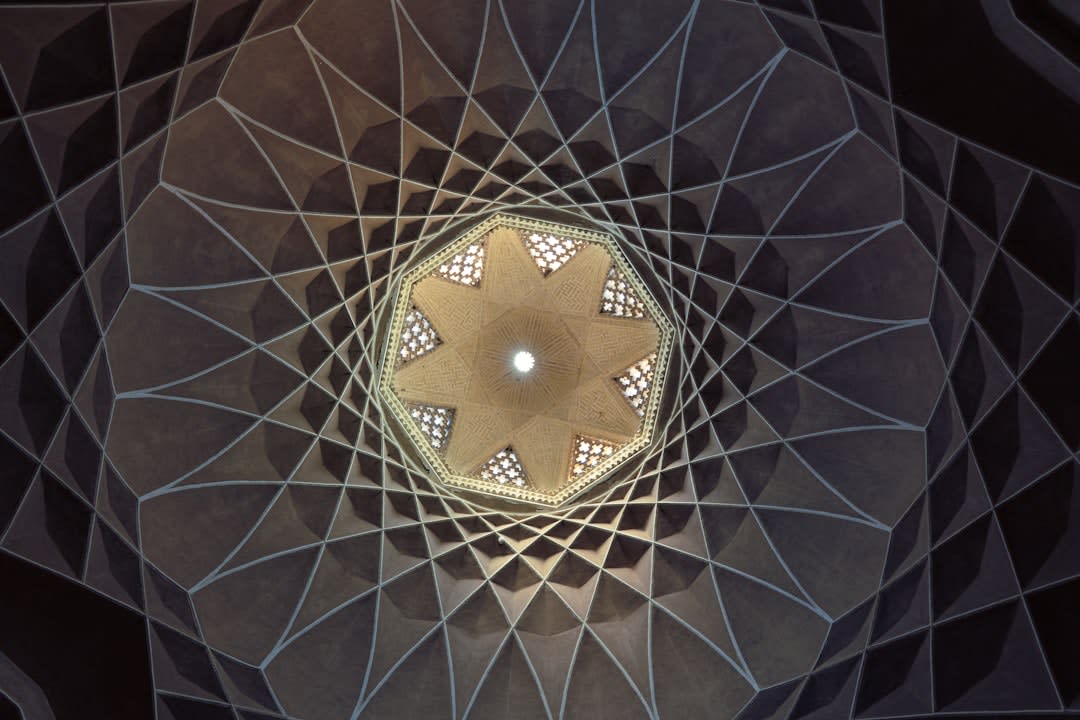
The garden itself follows the classic Persian chahar bagh layout — a central axis of water running through symmetrical quadrants of cypress, pomegranate, and pine, with a narrow reflecting channel that doubles the length of the pavilion in the water’s surface. Stained glass windows in warm reds and ambers throw colored light across the floor in the late afternoon, and I spent longer than I meant to just watching the pattern shift as the sun dropped. It’s a small site as Persian gardens go, easily covered in ninety minutes, but it’s built for lingering rather than touring.
A Governor’s Private Comfort
The garden was commissioned by Mohammad Taqi Khan, an eighteenth-century governor of Yazd, as his private residence — a reminder that in a city where the desert presses right up against the walls, comfort was historically a form of power. Only someone with real resources could commission an engineering feat purely to make one room bearable in August. Walking from the blistering street outside into that cooled pavilion, the class logic of the place became instantly legible.
When to go: Any time of day works, but the windcatcher’s cooling effect is most dramatic — and most appreciated — during the hottest hours of a summer afternoon, between roughly 1pm and 4pm.
Keep exploring
More from Iran
 iran
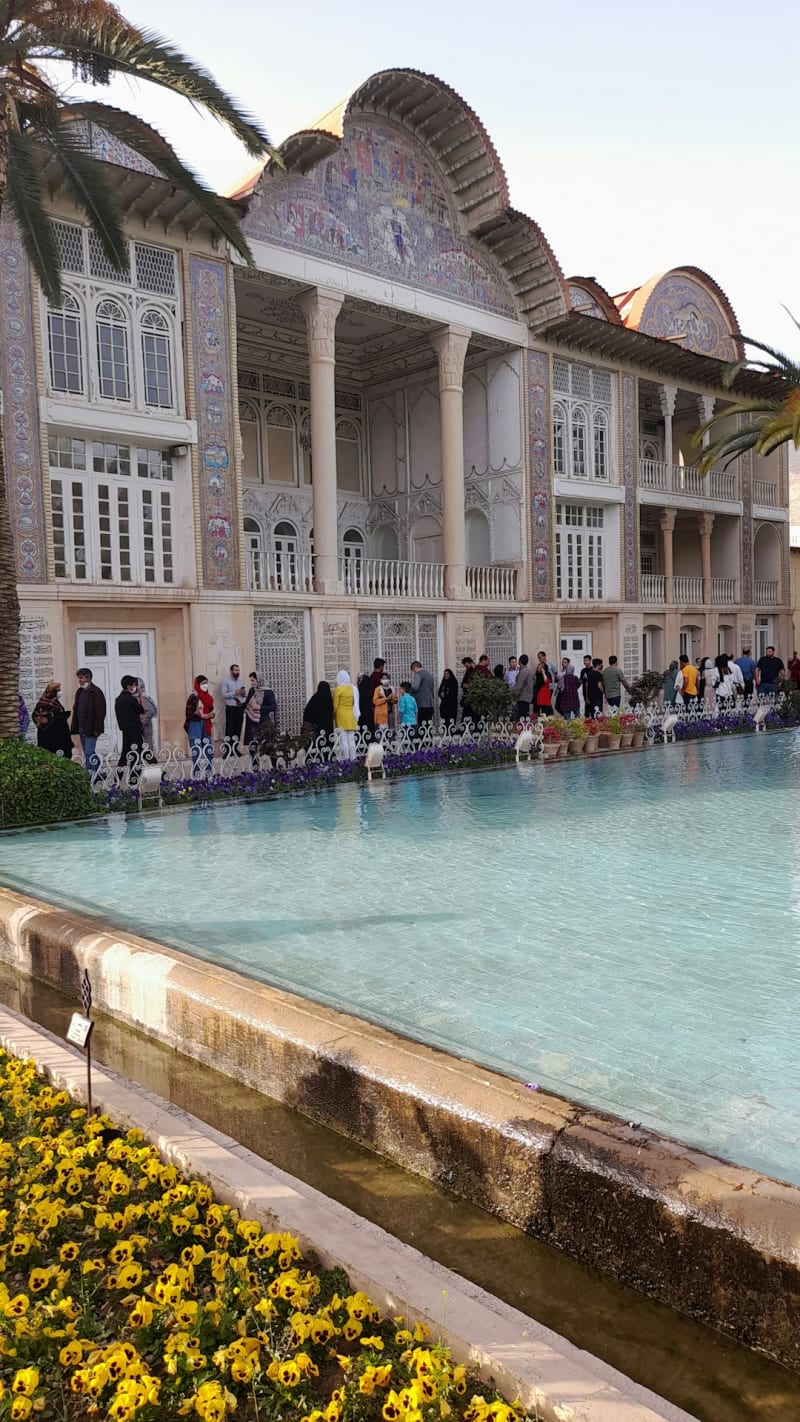
iran Eram Garden
A UNESCO-listed Persian paradise garden where roses, cypress, and a Qajar mansion argue about which one is the real attraction.
Explore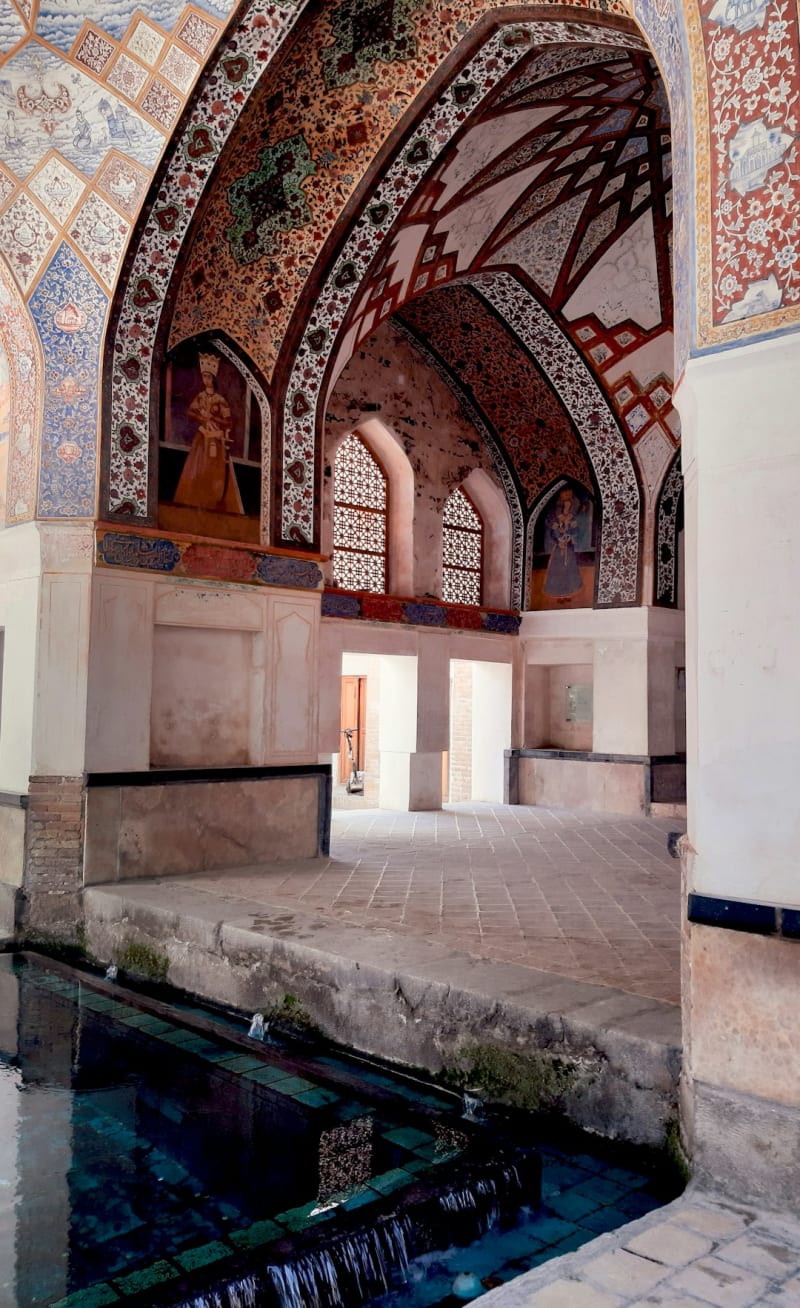 iran
iran Fin Garden
A Persian paradise garden of turquoise pools and cypress avenues, where an assassinated statesman's bathhouse still stains the marble.
Explore iran
iran Gorgan
The gateway to Turkmen Sahra at the eastern edge of the Caspian region, where Persian, Turkmen, and steppe cultures overlap in a way found nowhere else on Iran's northern coast.
Explore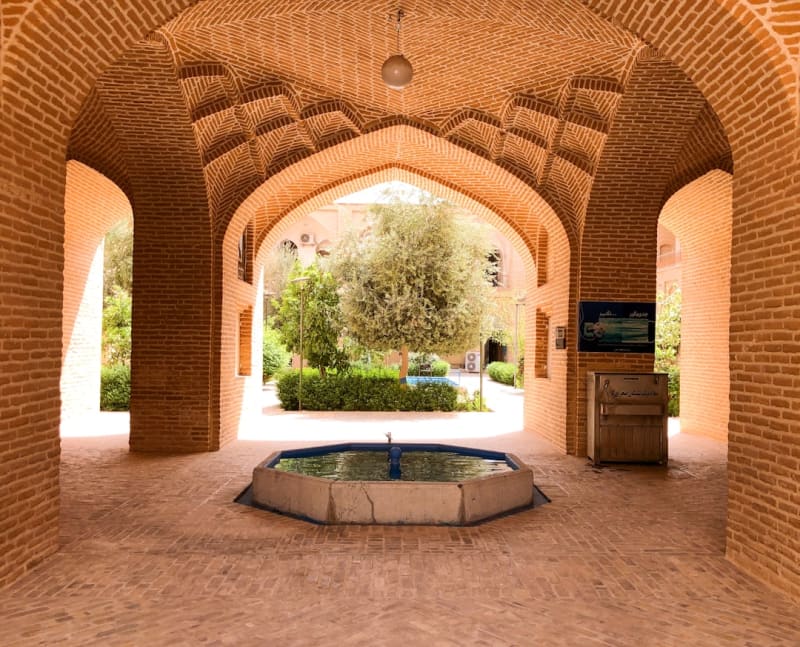 iran
iran Hasht Behesht Palace
The Eight Paradises pavilion — a small, half-forgotten Safavid summer palace hidden inside a public garden, with almost none of the square's crowds and all of its craftsmanship.
Explore iran
iran Hawraman Valley
A UNESCO-listed valley of terraced Kurdish villages clinging to the Zagros, where houses are stacked so tightly the roofs double as the street above.
Explore iran
iran Hengam Island
A small island south of Qeshm where dolphins gather in the strait most mornings and the only sounds at night are waves and generators.
Explore