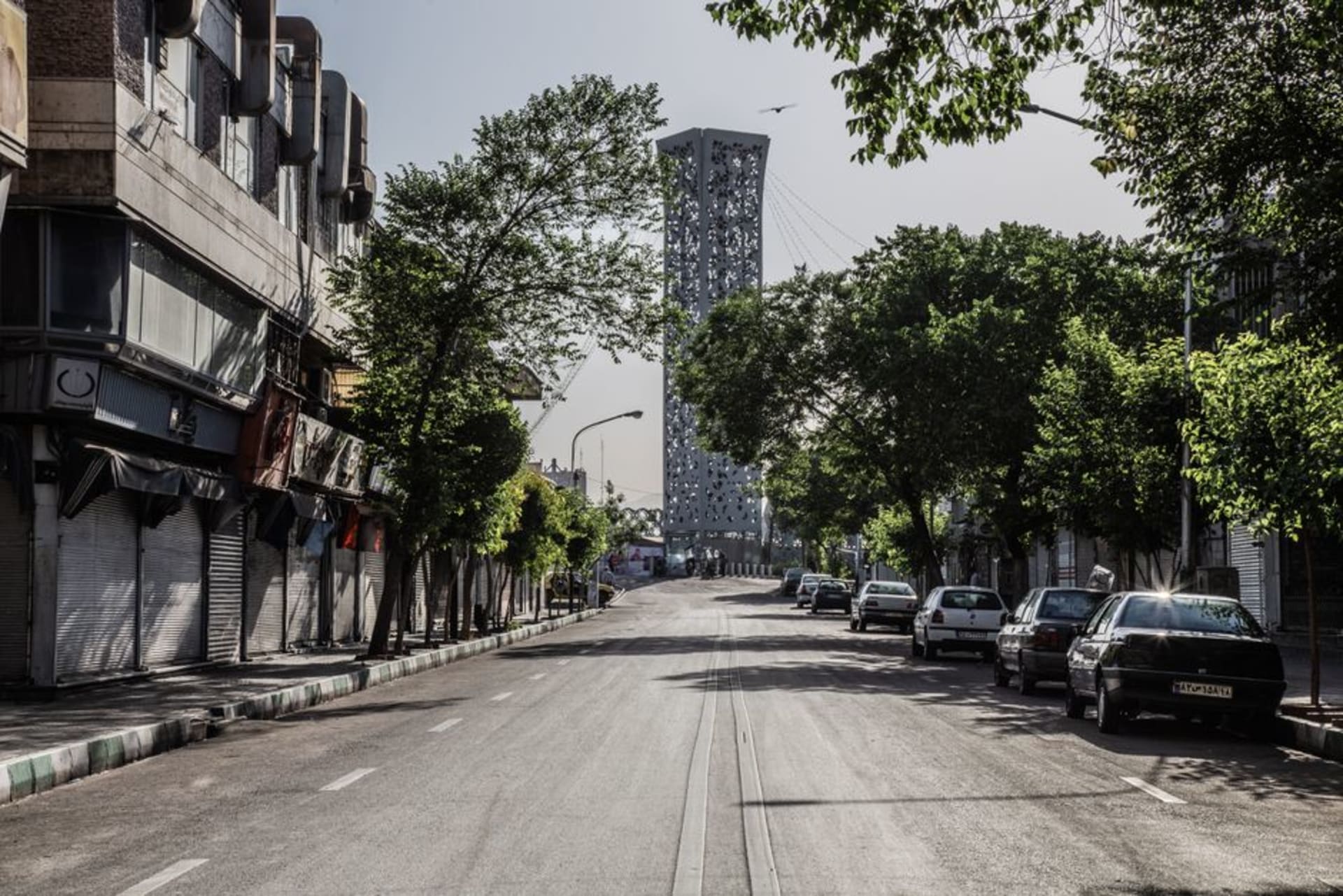
Bandar Lengeh
"It looked more like a town from the Arabian side of the Gulf than anywhere else I saw in Iran."
A quiet Persian Gulf port with whitewashed wind-catcher architecture and a history as a pearling and smuggling hub tied more to the Arab shore than to Tehran.
Bandar Lengeh sits on the Iranian coast almost directly across from the UAE, and the geography shows in everything about it. The old quarter’s whitewashed houses, flat roofs, and wind-catcher towers look closer kin to Dubai’s historic Bastakiya district than to anything in Isfahan or Shiraz, which makes sense once you learn that Lengeh was ruled by Arab sheikhs from Oman’s Qawasim dynasty for much of the nineteenth century, before Persia formally reasserted control.
The Old Town and Wind Catchers
We wandered the old quarter for most of a morning without a fixed plan, which is really the only way to see it — narrow lanes between coral-stone houses, badgirs, the traditional wind-catcher towers, angled to funnel Gulf breeze down into rooms below in the era before air conditioning. Many of the old merchant houses are crumbling and unrestored, which gave the walk a slightly melancholic feel compared to the more polished old towns further north, but a few have been kept up by families still living in them, and one elderly man invited us in to see his courtyard, cooled almost supernaturally well by his badgir despite the heat outside.
Pearls, Smuggling, and the Free Zone
Lengeh’s economic history is a story of pearls first, then decades of an open, semi-legal smuggling trade with the Emirates after the pearl industry collapsed in the 1930s. Much of that traffic — electronics, textiles, and less official cargo — still crosses through a free trade zone nearby, and the port retains a slightly frontier feel, boats loading unmarked crates alongside fishing vessels bringing in the day’s catch. A shopkeeper selling pirated DVDs and imported perfume alongside dates and saffron summed up the town’s whole economic identity in one stall.
The Fish Market at Dusk
The fish market by the harbor comes alive in the last hour before sunset, when boats return and buyers haggle loudly over kingfish, grouper, and enormous prawns laid out on plastic sheets. We bought a kilo of prawns for almost nothing and had a nearby stall grill them with garlic and lime while we watched the light go orange over the water and, just barely visible on a clear evening, the faint outline of the Arabian coast across the strait.
When to go: November through March. Like the rest of Iran’s southern coast, summer humidity is oppressive, and the old town’s unshaded lanes are far more pleasant to wander in cooler months.