Badab-e Surt
"Nobody I mentioned this place to before the trip had heard of it. Everyone I showed the photos to afterward asked where it was."
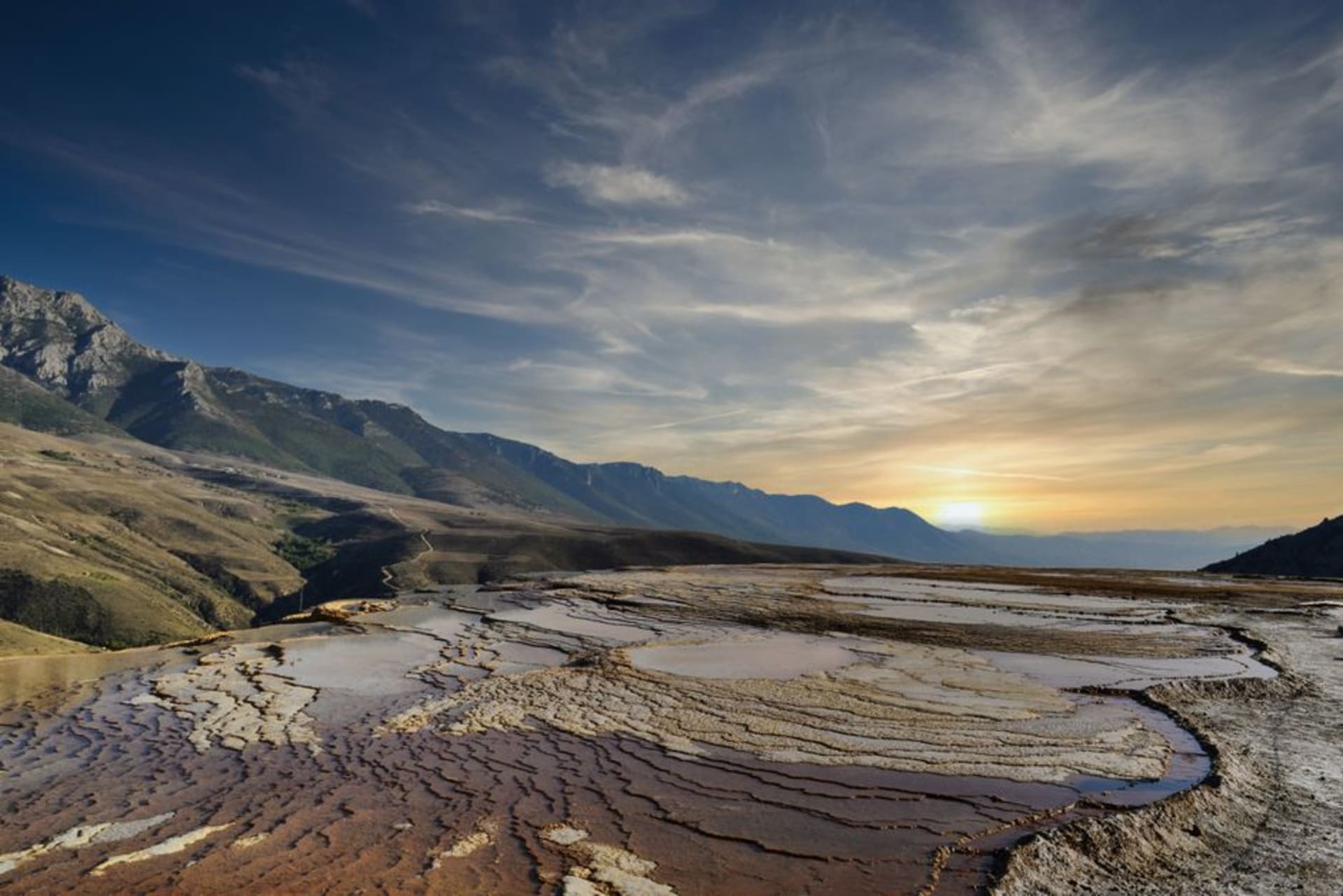
A staircase of orange and cream travertine terraces built by two mineral springs over thousands of years, in a remote corner of Mazandaran that most visitors to Iran never hear about.
Badab-e Surt sits in a dry, hilly stretch of Mazandaran province, far enough off the main Caspian routes that reaching it means a genuinely rough final approach on unpaved road. The reward is a formation I hadn’t seen anywhere else on the trip: dozens of stepped travertine terraces, ranging from rust-orange to pale cream, formed over centuries by two adjacent mineral springs — one carbonated and iron-rich, the other sulfuric — depositing mineral layers as the water cascades downhill.
Two Springs, One Staircase
The color variation across the terraces comes directly from the mineral content of each spring. The iron-rich spring produces the deep orange-red pools near the top, while sections fed more by the sulfuric spring shift toward paler, almost bone-white tones lower down. Walking the terraces means picking a careful path along dried mineral crust that in places looks and feels almost like coral — brittle, ridged, entirely unlike any rock formation elsewhere in Iran. Locals told us the pools were traditionally believed to have healing properties for skin and joint conditions, and some visitors still travel here specifically to bathe in the lower pools when water levels allow it.
Getting There Is Part of the Story
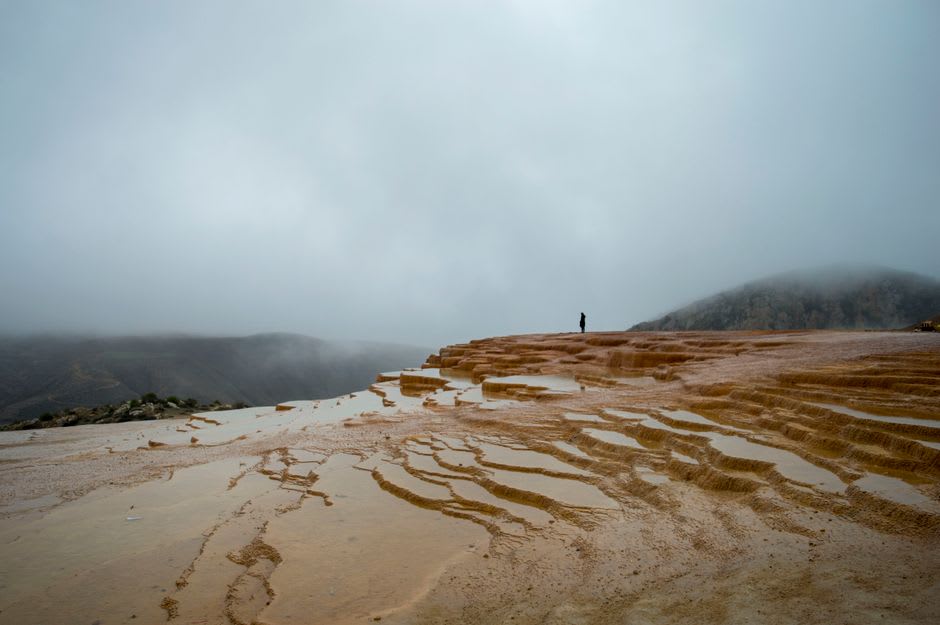
The drive from the nearest town, Kiasar, covers rough unpaved switchbacks through dry, sparsely vegetated hills that look almost nothing like the lush Caspian coast an hour or two away — a reminder of how quickly terrain changes across Mazandaran’s interior. A local driver with a proper 4x4 is worth the money; we saw at least one sedan stuck axle-deep in a dry riverbed crossing that our truck handled without slowing down.
Best Seen, Not Bathed
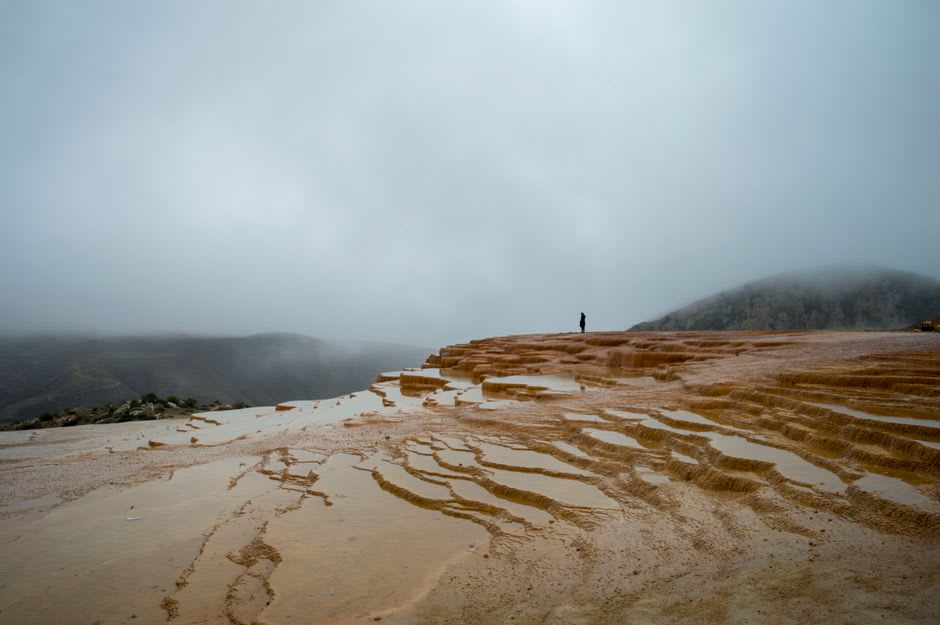
Water levels vary heavily by season, and by late summer several of the upper terraces can run close to dry, leaving the mineral crust exposed rather than filled. We visited in early June and found most pools holding water at a level that made the color contrast dramatic without turning the site into a crowded swimming spot — a balance that apparently doesn’t hold in peak August, when domestic tourist numbers climb and water levels drop simultaneously.
When to go: Late spring, roughly May into June, for the fullest pools and the most vivid color contrast between terraces, before summer heat and evaporation thin the water out.