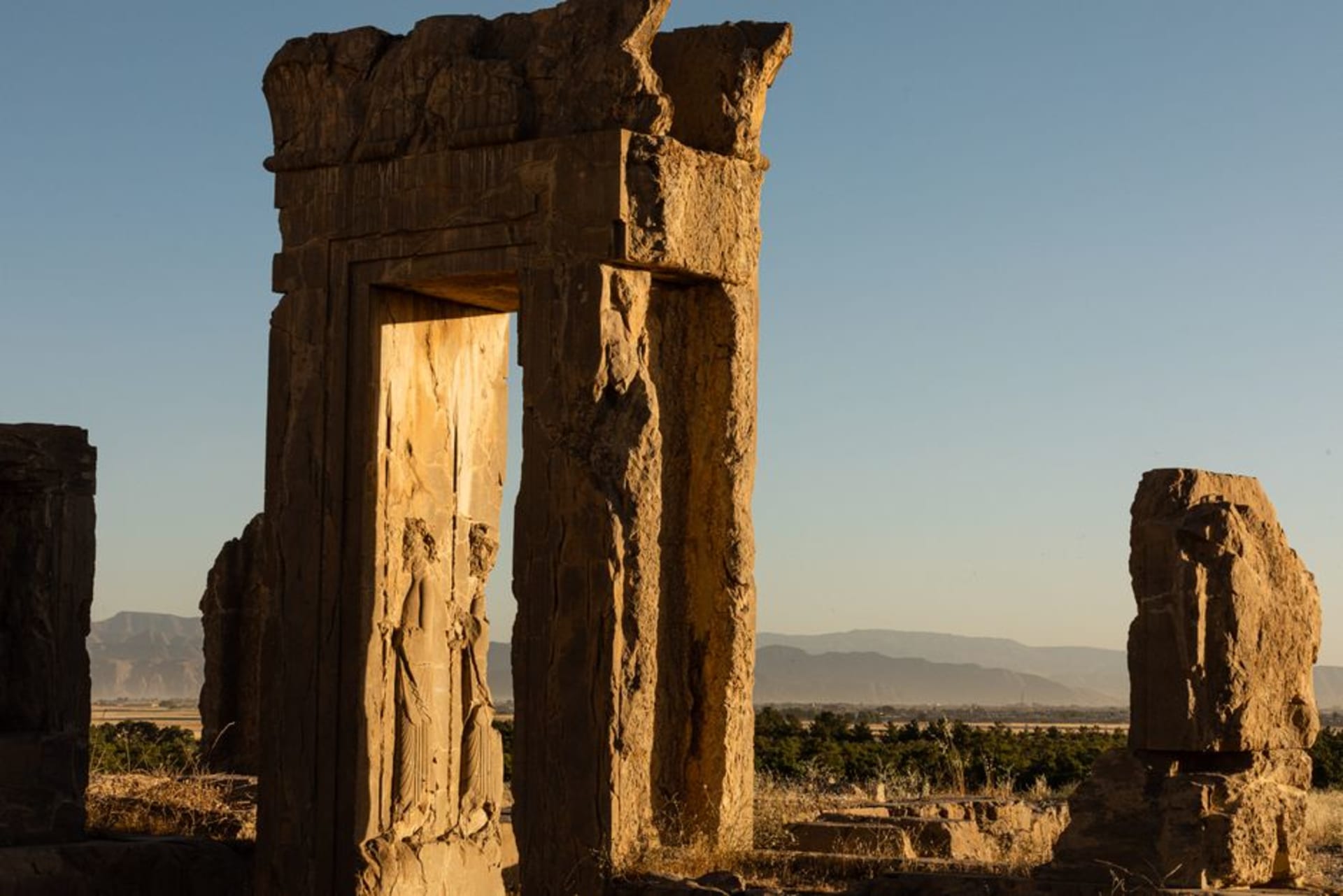
Atashgah Fire Temple
"Isfahan's oldest monument isn't a mosque. It's a hill and a fire that went out a very long time ago."
A crumbling Zoroastrian hilltop ruin on Isfahan's western edge, older than the mosques by centuries, where a single fire once burned as a beacon across the plain.
Every other stop on this list dates from the Safavid golden age, roughly the 1600s. Atashgah predates all of it by close to a thousand years, and it looks like it. There is no tilework here, no dome, barely a wall taller than my shoulder in most places — just a steep, dusty hill on the western outskirts of Isfahan, crowned by the eroded mudbrick remains of a Zoroastrian fire temple.
Climbing to Almost Nothing, and Feeling Everything
The climb itself takes about twenty minutes on a rough switchback path, no shade, loose gravel underfoot, and I nearly turned around halfway up assuming there’d be little to see at the top. What’s there is a roughly circular structure, largely collapsed, that once held a sacred flame tended by Zoroastrian priests, possibly as early as the Sassanid era before Islam arrived in Iran, though some archaeologists argue for an even earlier origin. Zoroastrianism was Iran’s dominant religion for over a thousand years before the Arab conquest, and Atashgah is one of the few physical reminders in Isfahan that the country’s spiritual history didn’t start with Islam.
What You Actually Go For
Honestly, the ruin itself is modest enough that it isn’t really the point. The point is the view: from the summit, the whole flat expanse of the Isfahan basin opens up, the Zayandeh River a thin green ribbon through otherwise brown plain, the city’s domes just visible as small blue specks in the haze to the east. I went up an hour before sunset, and Lia and I sat on a low wall of collapsed mudbrick passing a bottle of water back and forth as the light went orange, then pink, then that particular purple that only shows up briefly at altitude in dry climates.
There’s no ticket booth, no gift shop, and almost no infrastructure — bring your own water, and expect to share the hill with maybe a handful of other visitors, mostly local families out for an evening walk rather than tour groups.
When to go: Late afternoon into sunset, avoiding midday heat on the exposed, shadeless climb. Skip it entirely after rain, when the path turns to slick clay.