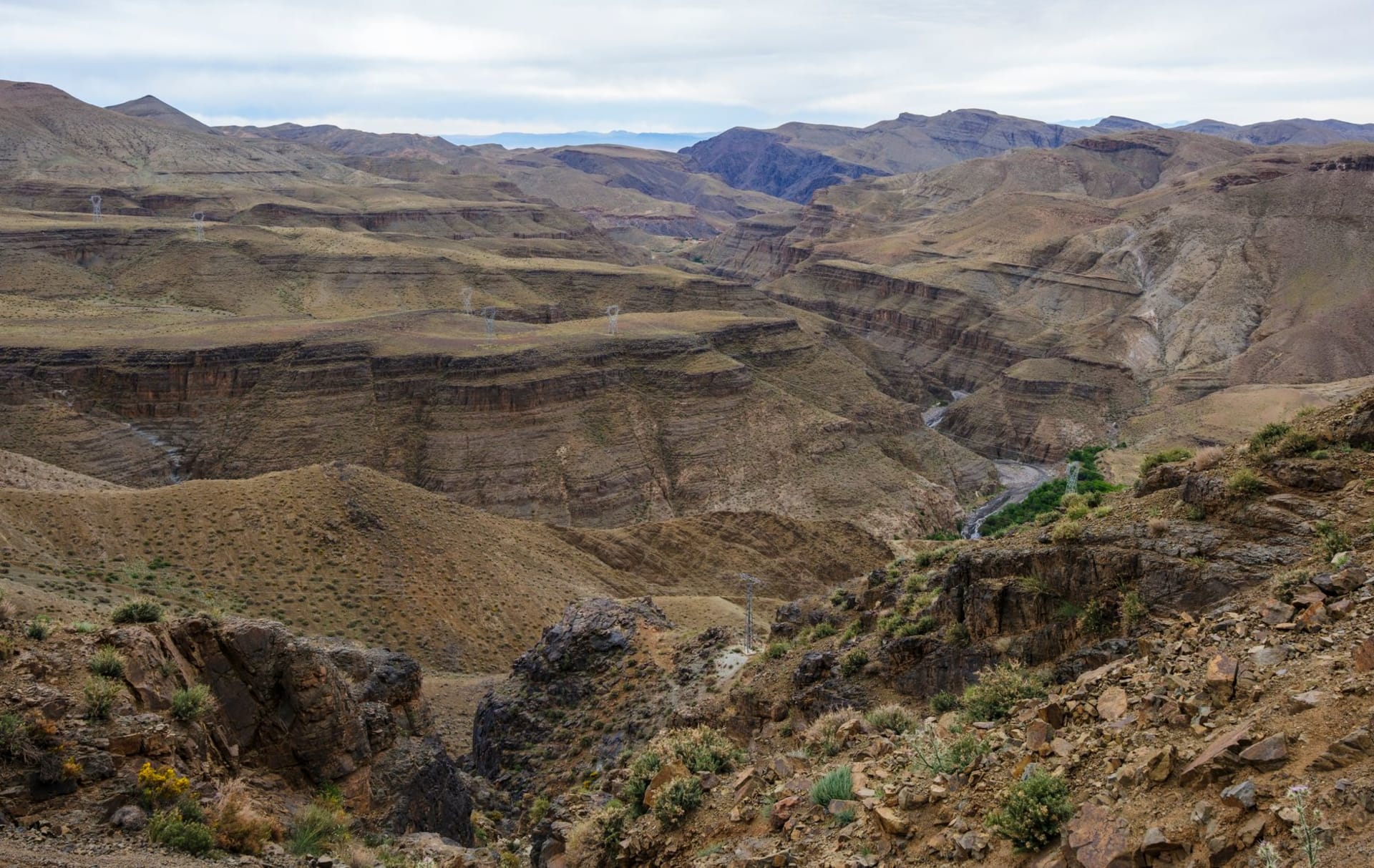
Alamut Valley
"The castle is unassailable. The valley below it is the most peaceful place I've been in Iran."
The name Alamut means Eagle’s Nest in the local dialect, and from the base of the valley looking up at the ruined castle on its impossible ridge, the name earns itself completely. The Hashashin — the Assassins, as the Crusaders named them — chose this place with precise tactical logic. The valley is narrow, the approaches treacherous on multiple sides, and the fortress at the top was essentially unassailable by medieval military standards. Standing below it on a clear morning, I found the strategic thinking completely legible across nine centuries.
Climbing to the Castle
The path from the village of Gazor Khan to Alamut Castle takes about forty-five minutes on a trail that switchbacks up through dry scrub and loose pale rock. It’s not technical — no equipment needed, no ropes, just your legs — but the altitude and exposure mean you feel the climb properly. The views from the top justify the effort several times over: the valley below threaded with a river and rows of apple orchards, the Alborz peaks closing in on all sides, the quality of silence that comes when there’s no road noise and no one else around. I went on a Tuesday morning and had the ruins entirely to myself for two hours. The castle itself is largely collapsed — earthquakes and time — but the scale of the original structure is still legible in the remaining walls and the platform that was once the main courtyard.
The Valley Floor
The floor of the Alamut Valley is a different experience from the castle above it — greener, more inhabited, with small villages connected by a single road that follows the Shahrud River through walnut and apple orchards. The villages have traditional houses built directly into the hillside using timber and the local pale stone, with balconies that look out over the valley. A few guesthouses have opened in recent years, mostly offering a spare room and a home-cooked dinner, which is exactly the right way to stay here. I ate with a family two nights running — lamb stew the first night, a walnut and herb frittata the second — and paid roughly nothing for accommodation that included breakfast.
Trekking Context
Alamut sits in Qazvin province, about four hours from Tehran on mountain roads that climb through increasingly dramatic scenery before descending into the valley. Serious trekkers use the region as a staging point for multi-day crossings through the Alborz toward Gilan and the Caspian coast — routes that require a guide and several days. I’m not that kind of traveler, but I spent two days walking between villages along the valley floor and found that more than sufficient: enough climbing to feel the altitude, enough flat walking to actually look at things, enough variation in the landscape to stay interested from morning to afternoon.
The Surrounding Fortresses
Alamut Castle is the most famous, but the valley and its neighboring ridges hold several other Assassin-era fortresses in varying states of ruin. Lambsar Castle, a two-hour drive further into the mountains, sits even more dramatically than Alamut and sees almost no visitors. A driver from Gazor Khan can take you there for a half-day; the road is rough and the last section requires walking, but the payoff is a ruined castle with a view and not another tourist in sight.
When to go: Late spring (May–June) and early autumn (September–October) are the windows. Summer weekends bring Tehrani families escaping the city heat — pleasant company, but the guesthouses fill quickly and the road gets crowded. Winter closes most access roads with snow. Mid-week in September is close to ideal: cool air, golden light cutting across the walnut orchards, and the strong sense that you’ve found somewhere that most people don’t bother to find.