Genghis Khan Mausoleum
"Nobody actually knows where Genghis Khan is buried. That's kind of the point of this place."
A white-domed memorial on the Ordos grasslands where Mongols have honored their Khan's spirit for eight centuries.
Lia and I drove down from Ordos city on a flat gray road that seemed to just dissolve into grassland, and I remember thinking we’d taken a wrong turn — there was nothing out there but wind and low hills — until the white domes of the mausoleum rose up out of nowhere, almost theatrical against the sky. It’s about 185 kilometers south of the city, in Ejin Horo Banner, and the drive alone tells you something: this was never meant to be convenient to reach. The first thing I had to get my head around, and that our driver made a point of explaining twice, is that this isn’t actually a tomb. Genghis Khan’s real burial site has never been found, deliberately so, according to legend. What stands here is a memorial, a place where the Ordos Mongols have carried out rituals in his honor since the 13th century, tending a kind of eternal flame of memory rather than a grave.
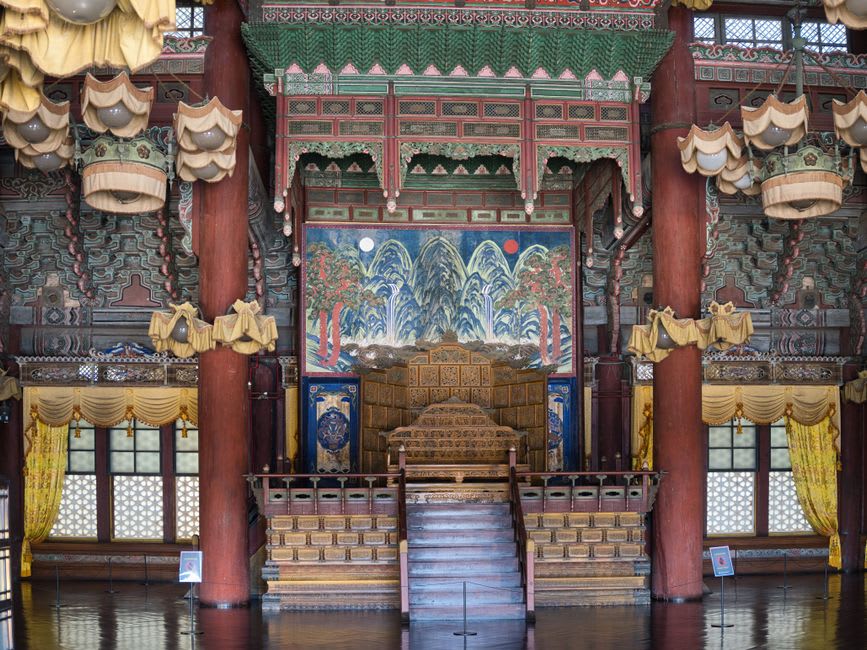
The building itself has its own quietly dramatic history. What we walked through was rebuilt in 1954, but the relics inside — the items attributed to Genghis Khan that the guardians here consider sacred — were moved during WWII to keep them out of Japanese hands, carried west for safekeeping before eventually coming home. Standing inside, I kept thinking about how much effort generations of people had put into protecting objects tied to a man whose actual grave they’d let vanish on purpose. Lia pointed out that the two facts aren’t really a contradiction: the objects are something you can touch and pass down, while the burial site was always meant to belong to nobody, hidden so it could never be disturbed.
We got lucky, or maybe I should say we planned it — we came through in early May and caught the tail end of the Spring Sacrifice, performed by the Darkhad, a lineage of hereditary guardians who’ve kept these rites going for the mausoleum’s entire existence. I watched an older Darkhad man lead a procession with a kind of unhurried gravity that felt completely untouched by the tour groups snapping photos around him. It wasn’t a show for us. We were just allowed to be there.

Afterward we sat outside on the mausoleum’s stone steps eating sunflower seeds we’d bought from a woman with a cart near the parking lot, watching the light go gold over the grassland, and I felt none of the rush I usually associate with monument-hopping. This place asks you to slow down.
When to go: Time your visit for spring, ideally April or May, if you want a shot at the Spring Sacrifice — it’s the kind of ceremony that reframes the entire site. If ritual isn’t the draw, autumn gives you softer light, cooler air, and a fraction of the crowds.
Keep exploring
More from Inner Mongolia
 inner-mongolia
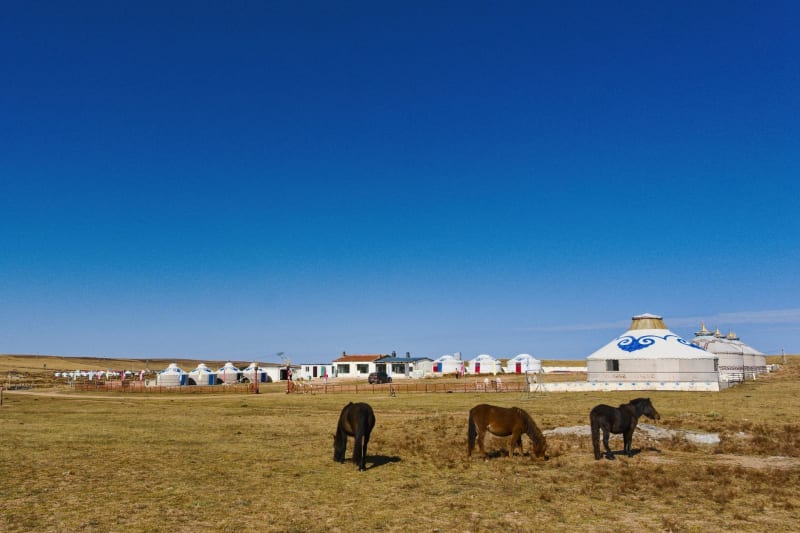
 Hohhot
Inner Mongolia's capital hides Tibetan temples and hand-pulled noodle joints behind an unremarkable industrial skyline.
Explore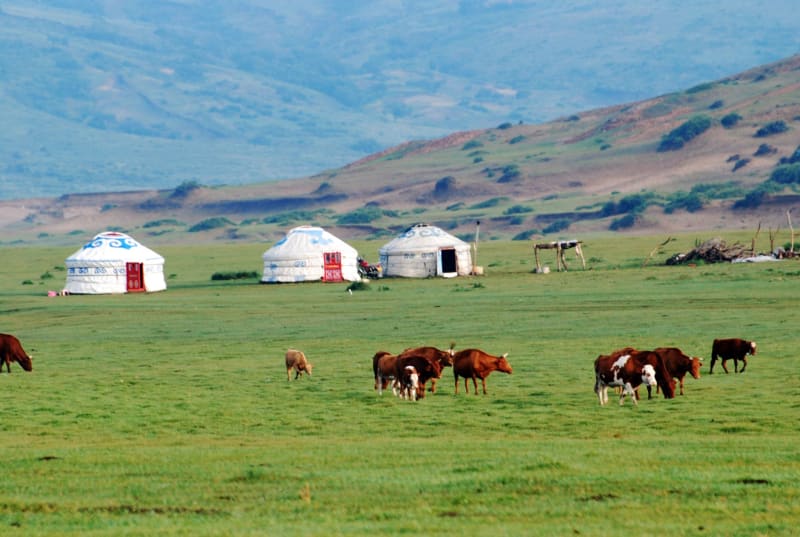 inner-mongolia
 Hulunbuir Steppe
The greenest grassland on Earth in summer — a place where the horizon runs so far it starts to feel like a question about scale.
Explore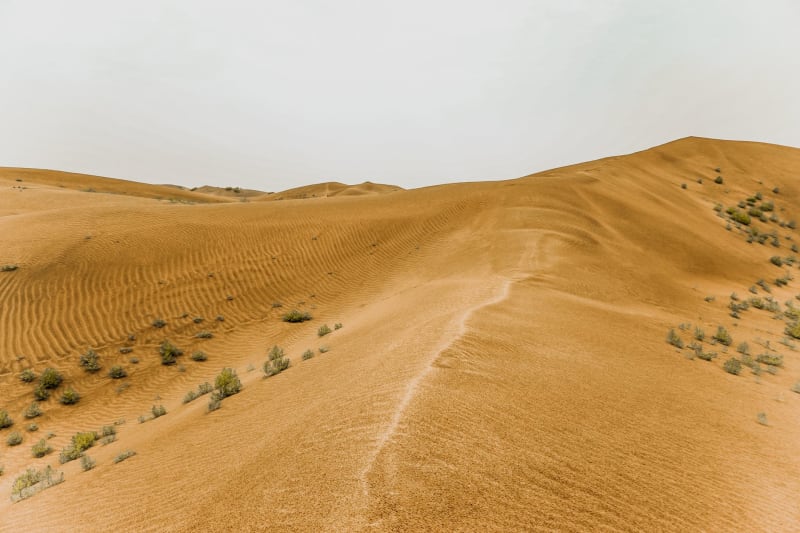 inner-mongolia
 Kubuqi Desert
Where China's seventh-largest desert presses orange dunes right up to the edge of irrigated farmland and neither side appears to notice.
Explore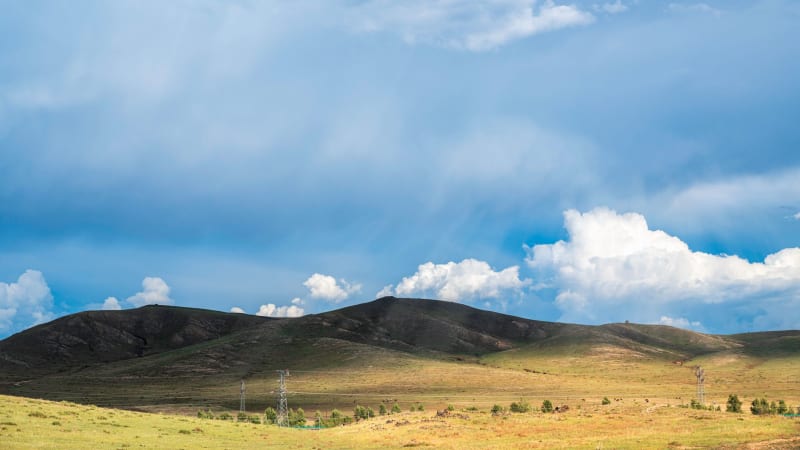 inner-mongolia
 Manzhouli
A border town where Russian nesting dolls the size of buildings stand on Chinese streets and nobody thinks this is strange.
Explore inner-mongolia
 Ordos
A plateau city famous for a contested mausoleum, a ghost district built for a million people, and coal money that arrived faster than inhabitants.
Explore inner-mongolia
 Xanadu
The grass-covered ruins of Kublai Khan's summer capital on the Mongolian steppe, where the most famous poem in English began and almost nothing now remains.
Explore