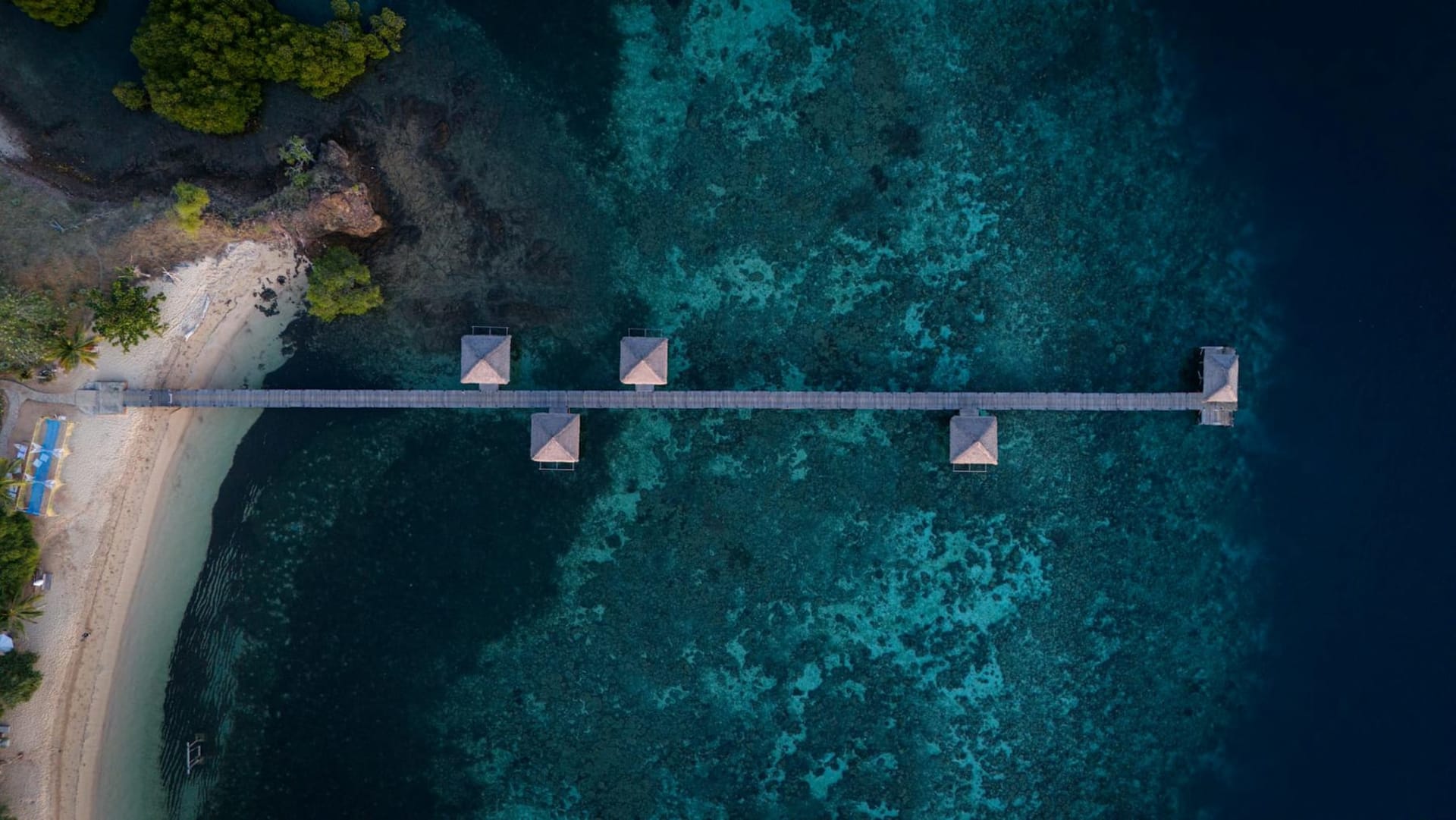
Wakatobi
"Wakatobi reminds you what a coral reef is supposed to look like before the bleaching years arrived."
Four remote atolls in the Coral Triangle with arguably the healthiest reef ecosystems on Earth.
The name is an acronym — Wangi-Wangi, Kaledupa, Tomia, Binongko, four atolls strung across the Banda Sea in Southeast Sulawesi — and learning that felt like finding a key to a locked door. This is not a place that announces itself. There are no direct international flights, no famous beach clubs, no queues for sunset selfie spots. Getting here means a domestic connection to Wangi-Wangi’s small airport or a slow overnight ferry from Bau-Bau, and that friction is precisely what has kept the reefs intact.
What Happens Underwater
I have dived in the Coral Triangle before — Raja Ampat, Komodo, the Banda Sea — and I came to Wakatobi expecting the familiar sensation of managed wonder, of a reef system that is impressive but carrying the weight of years of pressure. What I found instead was something closer to disbelief. The Tomia dive sites, particularly around the outer wall at Blade, descend through coral so dense and structurally complete that it looks less like a reef and more like an architectural decision. Hard corals in forms I could not name, sea fans the width of mattresses, thickets of staghorn that have clearly been growing undisturbed for decades. The fish populations move through this structure with the casual indifference of animals that have never learned to fear a speargun.
The visibility on a calm morning runs past thirty meters. Lia surfaced after our second dive at Fan 38 — a site named for the concentration of sea fans along the wall — and just floated on her back without speaking for a minute. That silence said everything.
The Villages Above the Water
What surprised me most about Wakatobi was the Bajo people, the sea nomads who have lived on and around these atolls for generations. On Kaledupa, entire villages are built on stilts directly over the lagoon — houses connected by wooden walkways, small outrigger boats moored at each front door like cars in a driveway. Children swim before they walk here. The morning light at around six o’clock comes sideways across the water and turns the whole settlement into something from a painting I had no reference for. We ate grilled ikan bakar wrapped in banana leaf, bought from a woman who cooked over a clay pot on a platform that swayed gently with the tide. The fish had been in the water two hours before.
The relationship between the Bajo communities and the reef is not incidental to Wakatobi’s health — it is the explanation for it. Traditional sasi fishing regulations, which restrict harvesting in certain areas during certain seasons, have operated here for longer than the national park designation that came in 1996. Conservation organizations working in Wakatobi have been smart enough to build on that tradition rather than replace it.

Getting the Timing Right
The dive resorts on Tomia — particularly the well-known operation at Hoga Island — cater to a specific kind of traveler: one who has already seen the obvious places and wants something the dive industry has not yet industrialized. The pace is slow, the boat rides long, the connections expensive. None of that felt like a complaint once I was in the water.

When to go: April through November offers the calmest seas and strongest visibility, with April to June being the sweet spot before the southeast winds pick up. December through March brings rougher conditions and reduced dive access to the outer walls.