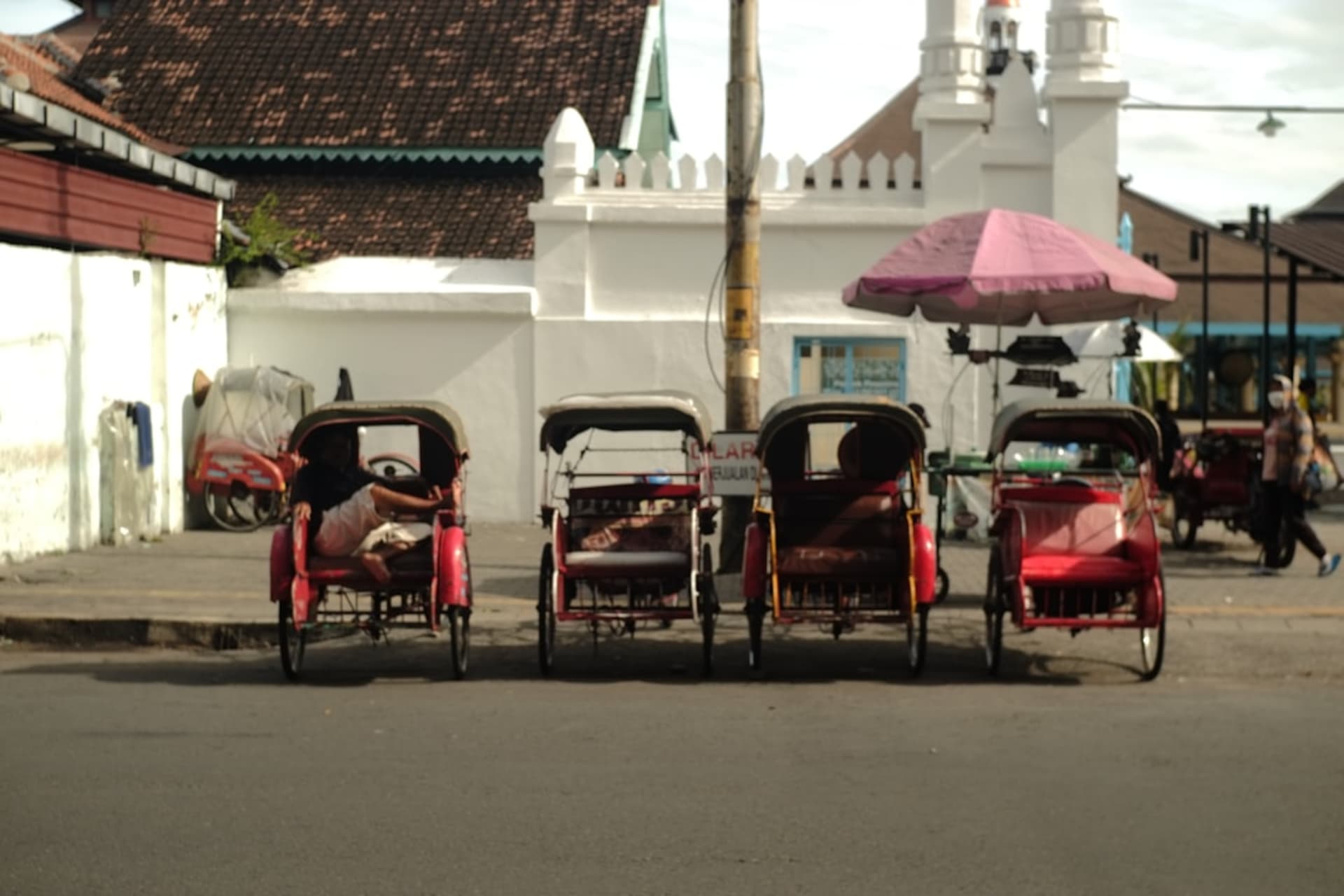
The Javanese court city that never bothered to perform for tourists — batik dries on every fence and the gamelan starts before you're awake.
Everyone told me to skip Solo on my way to Yogyakarta, and everyone was wrong. Surakarta — Solo to nearly everyone who lives there — is the other Javanese royal city, the one that split from the Mataram Sultanate in 1755 under the Treaty of Giyanti and quietly kept building its own version of court culture ever since. Where Yogyakarta leaned into tourism decades ago, Solo just kept being Solo: a mid-sized city on the Bengawan Solo river where the two royal houses, the Kasunanan and the Mangkunegaran, still hold ceremonies that have nothing to do with anyone watching.
I stayed three nights and could have stayed a week. The Kasunanan Palace, seat of the Susuhunan, is a working court, not a museum diorama — the pavilions of teak and marble open onto courtyards where royal abdi dalem, the palace retainers, still move through daily rituals in traditional dress, batik wrapped low and blangkon caps set at that particular tilt. I got scolded gently by an old woman for pointing my feet toward a shrine, which felt like the correct way to be corrected. Nearby, the Mangkunegaran palace runs its own gamelan orchestra, and if you’re lucky enough to be there on a rehearsal evening, the bronze instruments — saron, gender, kenong — build a sound so unhurried it rearranges your sense of time.
The market that taught me batik
Solo calls itself the batik capital of Java, and it earns the title with less ceremony than you’d expect. Kampung Batik Laweyan, on the western edge of the city, is a neighborhood of narrow lanes where the craft has been passed down since the sultanate era — some workshops trace their families back to the 1546 founding of the settlement by Ki Ageng Henis. I wandered in without a plan and ended up in someone’s back room watching a woman apply hot wax to cotton with a canting, the little copper-spouted pen tool, drawing parang and kawung patterns from memory, no stencil in sight. She let me try. My line wobbled. Hers didn’t.

Pasar Klewer, the sprawling textile market that sits beside the Kasunanan Palace, is the louder, cheaper counterpart — stall after stall of batik in every technique, from hand-drawn tulis to the faster stamped cap method, with vendors who will absolutely out-negotiate you and seem to enjoy it. I bought more sarongs than I needed. I regret nothing.
Night market food and a river with a poem’s name
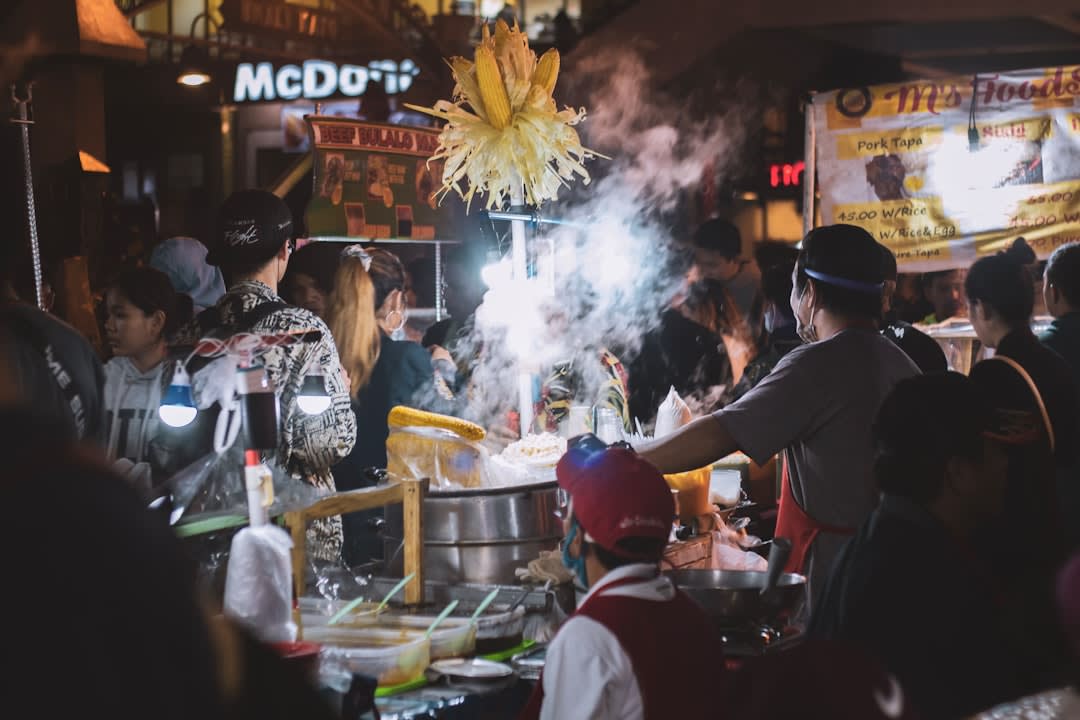
The Bengawan Solo — the longest river on Java, immortalized in the 1940 kroncong song that Indonesians of a certain generation can still sing from memory — cuts through the edge of the city, unglamorous and working, lined with kampung houses rather than promenades. It’s not a scenic river so much as an honest one. What I actually loved eating my way through was Galabo, the night market strip that turns a stretch of Jalan Mayor Sunaryo into a corridor of smoke and plastic stools after dark. I ate nasi liwet — rice cooked in coconut milk, served with chicken, egg, and a broth called areh, ladled onto a banana leaf by a woman who’d clearly done this ten thousand times — and sate buntel, minced lamb wrapped in caul fat and grilled, a Solo specialty you won’t find done quite the same anywhere else in Java.
What stayed with me wasn’t any single sight but the pace — a city that has real royal weight, real craft tradition, real river-town grit, and absolutely no interest in dressing any of it up for you. You come to Solo and you meet it on its terms.
When to go: May through September for the driest weather; if you can time it around Sekaten, the week-long festival marking the Prophet’s birthday held in the Kasunanan Palace grounds, you’ll see Solo’s court culture at full volume.