
Riung
"You reach Riung by a road that seems to be actively trying to talk you out of it, which is precisely why it's still worth the trip."
A one-street fishing village that happens to guard the door to seventeen uninhabited islands, and has somehow stayed too small and too far off the main road to ruin them.
The road to Riung is the story before the story. It branches off the Trans-Flores Highway and drops through about 60 kilometers of hairpin turns, teak forest, and villages where kids sprint alongside the car just to wave, before finally spilling out onto Flores’s north coast. I did it by bemo, wedged between sacks of rice and a woman transporting three chickens, and by the time we rolled into Riung proper I understood why this stretch of coast has stayed so quiet compared to Labuan Bajo four hours to the west.
Riung’s real draw is the Seventeen Islands Marine Park — Taman Nasional 17 Pulau Riung, though there are technically closer to two dozen islets scattered across the bay depending on how you count them at low tide. The name is a bit of Sukarno-era nationalism (seventeen for Indonesia’s independence date, August 17th) rather than a precise inventory, and I liked that the numbers didn’t quite add up. It felt like the kind of place that resisted being pinned down on paper.
A morning on the water
I chartered a small wooden boat from the harbor — the going arrangement is simple and informal, you just ask around near the jetty and someone’s cousin has a boat — and spent a full day threading between islands with names like Pulau Ontoloe and Pulau Kalong. That last one, Kalong, means “flying fox” in Indonesian, and it earns the name at dusk: thousands of fruit bats erupt from the mangroves in a slow-motion black river against the orange sky, wheeling out toward the mainland to feed. I’ve seen a lot of wildlife spectacles in this job. That one stopped the conversation on the boat completely.

The snorkeling between islands is patchy — some reefs were damaged by dynamite fishing decades ago and are still recovering, a scar you’ll notice if you look closely at the coral structure. But the patches that survived are genuinely gorgeous, and the complete absence of other boats gave the whole day a castaway quality that Komodo, for all its grandeur, simply can’t offer anymore. We beached on a nameless sandbar for lunch, grilled fish someone had bought that morning at the Riung market, and had the entire island to ourselves.
The village itself
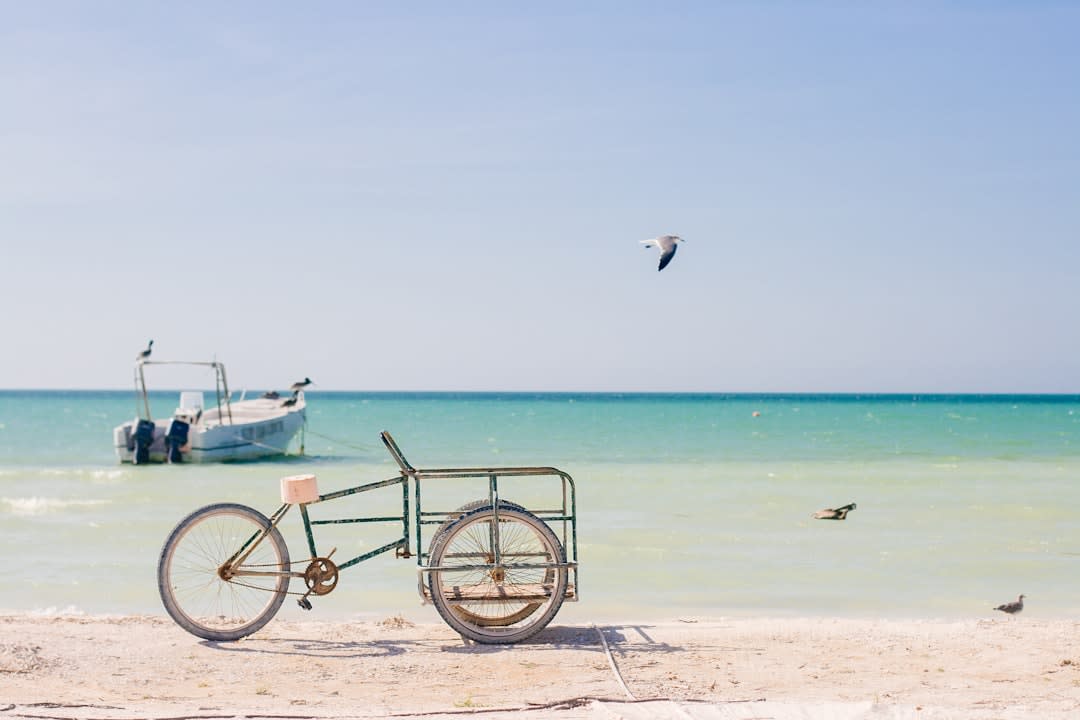
Riung town won’t hold you for long — a few streets, a mosque, a harbor, houses built on stilts over the tidal flats at its edges. But there’s a genuine warmth to it that comes from a place that gets visitors without depending on them. Nobody hassled me to book anything. A man mending nets by the water spent twenty minutes trying to teach me the Manggarai word for “tide” and gave up laughing at my pronunciation. That’s Riung’s whole appeal, really: it hasn’t yet had to decide what kind of destination it wants to be.
When to go: June through September offers the calmest seas for island-hopping and the clearest water for snorkeling. Try to time a boat trip for late afternoon so you’re near Kalong island at dusk for the bat flight.