Jatiluwih
"I'd read about subak for years before I understood it. Then I stood at the top of Jatiluwih and just watched the water move."
The rice terraces UNESCO chose to represent an entire irrigation philosophy — and the ones that made me finally understand what subak actually means.
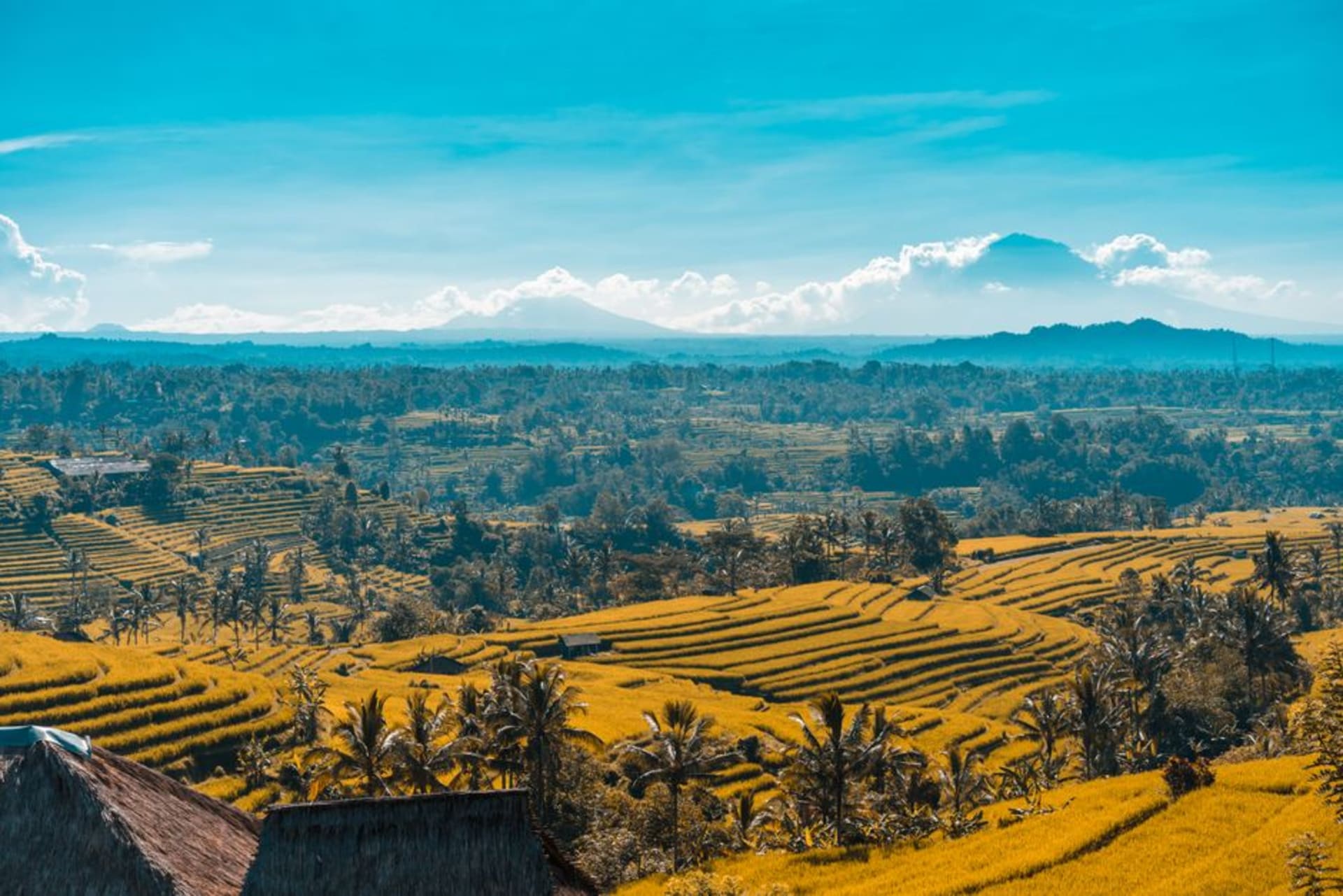
Jatiluwih sits on the southern slopes of Mount Batukaru, in Tabanan regency, and it is — depending on who’s translating the name for you that day — either “truly marvelous” or “beautiful in every way.” Both work. This is the terrace system that UNESCO singled out in 2012 when it inscribed the Cultural Landscape of Bali Province on the World Heritage list, and it was chosen deliberately: not because it’s the prettiest rice field in Bali, though it might be, but because it’s the clearest surviving demonstration of subak — the cooperative water-management system that Balinese Hindu farming communities have run, through temple-affiliated water councils, for close to a thousand years.
Subak is easy to describe and hard to feel until you’re standing in it. Water descends from crater lakes and mountain springs through a network of canals, tunnels, and weirs, governed not by ownership but by a religious philosophy called Tri Hita Karana — harmony between people, nature, and the spiritual realm. Every subak has its own water temple, and farmers meet collectively to decide planting schedules, because staggering rice cycles across a watershed prevents any single farm from monopolizing the flow and confuses pests that would otherwise spread unchecked between adjacent, simultaneously ripening fields. It’s an agricultural system with a built-in ethic. Walking the paths at Jatiluwih, you can actually trace it: a canal splits at a stone junction, half the water diverting downhill to one terrace, the rest continuing on, an eight-hundred-year-old decision still being executed in real time.
The walk, and the volcano watching over it
There’s a marked trekking loop through the terraces, several kilometers, that climbs gently enough that you’re never really out of breath but steadily enough that the views keep changing — one bend reveals a checkerboard of paddies in a dozen shades of green depending on growth stage, the next reveals Batukaru itself, often wreathed in cloud, one of Bali’s six holiest mountains and home to Pura Luhur Batukaru, an important temple complex I didn’t have time to reach that day but which anchors the whole landscape’s spiritual geography. The rice grown here is still largely the traditional Balinese red rice varietal in places, alongside modern high-yield strains, and farmers work the fields the old way in sections too steep or narrow for machinery — hand-planting, water buffalo occasionally still used for plowing.
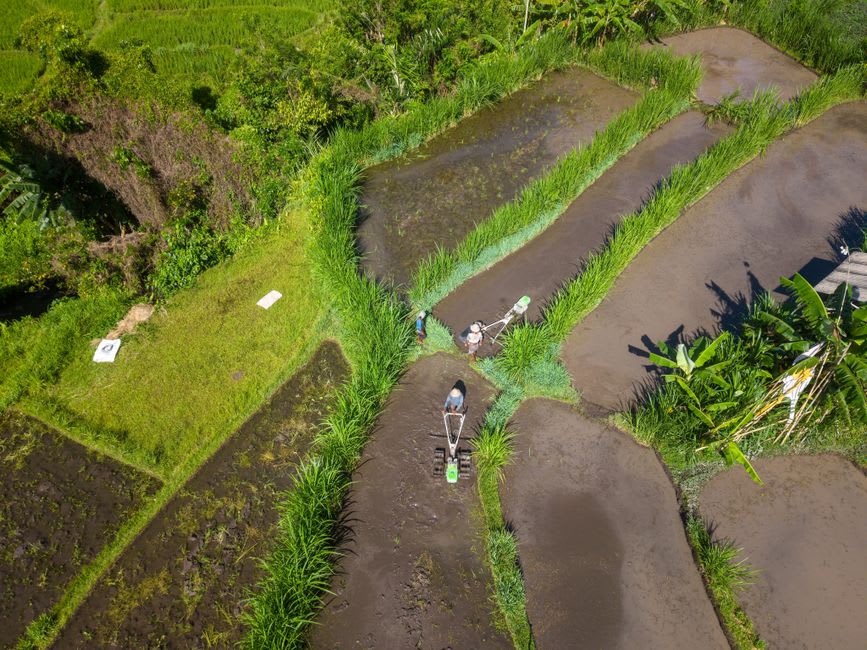
I went early, before the tour buses that come up from Ubud arrive around mid-morning, and had long stretches of the path with nobody on it but a farmer adjusting a sluice gate with a wooden paddle, redirecting the flow with the same unhurried competence you’d expect from someone whose family has done exactly this, on exactly this hillside, for generations they’ve stopped counting individually.

When to go: March to May or September to October, when different sections are at different growth stages and the greens are most varied; arrive before 9am to beat both the heat and the bus tours.