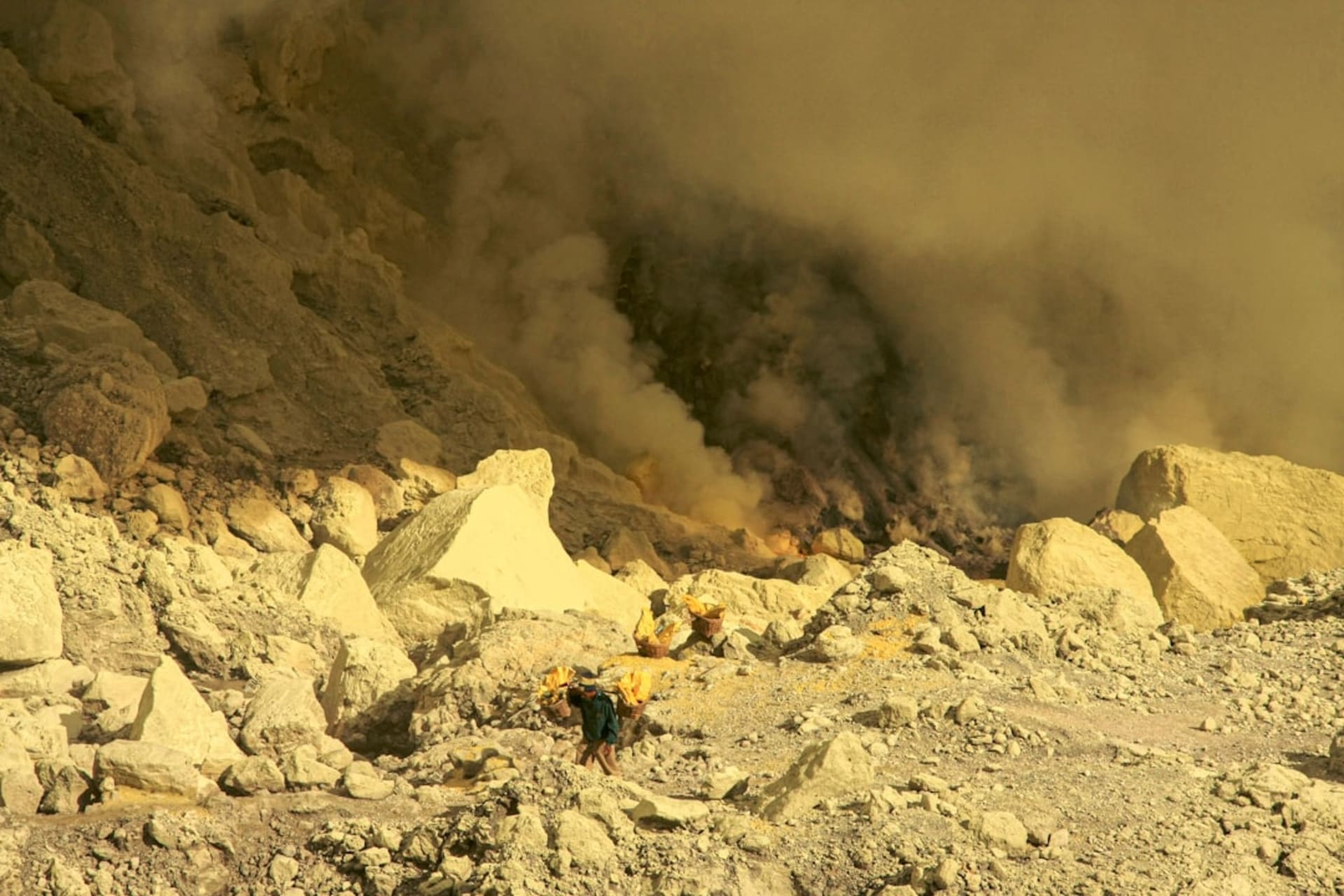
Kawah Ijen
"I climbed a volcano in the dark to watch it burn blue, and came down thinking about the men who do it for a living."
A volcano that bleeds sulfur, burns blue at 2am, and employs men to carry its weight down the mountain on bamboo poles for a wage that shamed me into silence.
The alarm went off at midnight, which is standard practice for anyone climbing Kawah Ijen, because the phenomenon everyone comes for — the electric-blue flames that lick along the crater’s sulfur vents — is only visible in full darkness, before sunrise burns the effect out of existence. I started from the Paltuding post on the mountain’s flank alongside a stream of headlamps, a mix of tourists in rented jackets and miners in flip-flops carrying nothing but the poles and baskets they’d use for work.
Ijen sits on the border of Banyuwangi and Bondowoso regencies, part of the Ijen Plateau volcanic complex that also includes Merapi (a different, smaller Merapi than the famous one near Yogyakarta) and several dormant cones. Its crater holds the largest highly acidic lake on earth — a turquoise expanse with a pH close to zero, corrosive enough to dissolve metal, colored that impossible color by dissolved metals and sulfuric compounds welling up from below. Dutch geologists mapped it in the 19th century and immediately recognized the sulfur deposits as commercially valuable, and mining has continued here, essentially unchanged in method, for well over a hundred years.
The blue fire and the men who work beside it
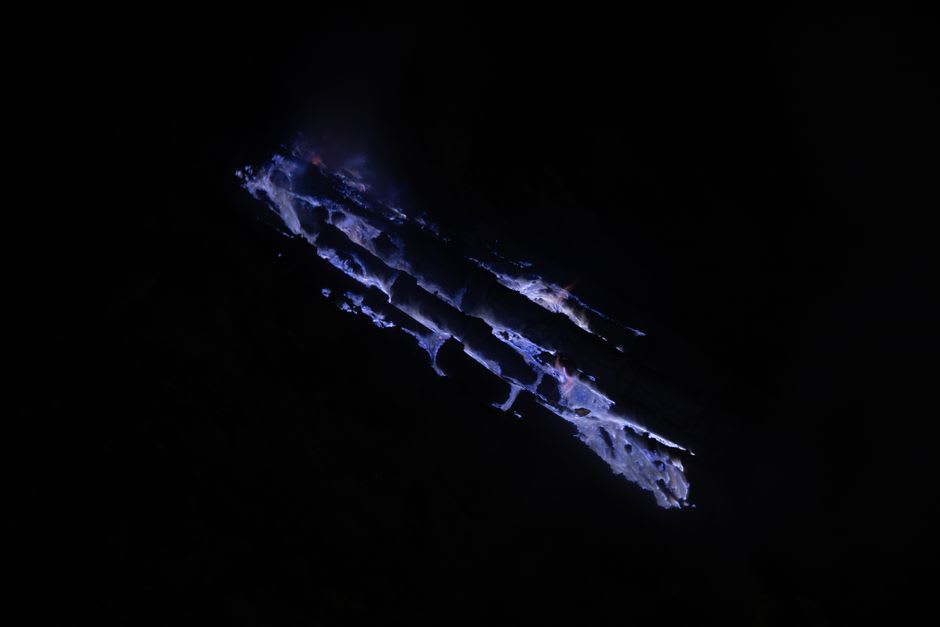
The blue flames are not lava, despite what half the tour brochures imply. They’re combusting sulfuric gas escaping the vents at temperatures high enough to ignite on contact with oxygen, burning with a cold, otherworldly blue that photographs look almost fake. I sat on the crater rim for nearly an hour watching the flames flicker along fissures in the rock, genuinely unable to process that it was real and not some projected effect.
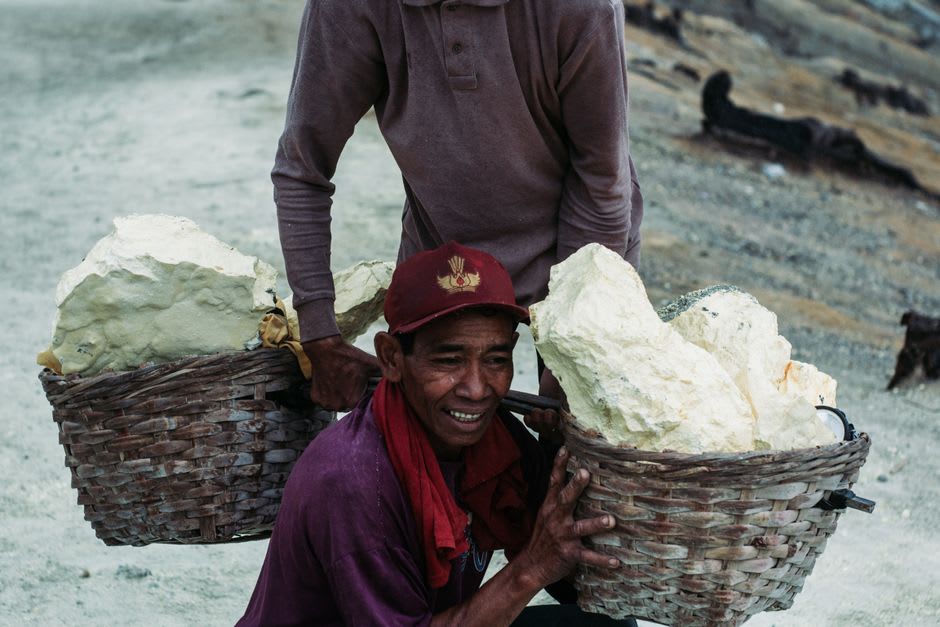
But what stayed with me longer than the fire was watching the miners work. They descend into the crater with no real protective gear beyond a cloth wrapped around the face, break off chunks of molten sulfur as it cools into yellow slabs at the vent mouths, load sixty to ninety kilograms of it into two baskets slung over a bamboo pole, and carry that weight up the crater wall and back down the mountain — a round trip of several hours — for a payment calculated by the kilogram that works out to a few dollars a load. Some do it twice a day. I passed a man on the descent, maybe sixty years old, moving at a steady unhurried pace under a load I couldn’t have lifted off the ground, and he nodded at me and kept walking. Tourism has changed the economics slightly — some miners now supplement their income posing for photos or guiding — but the sulfur work itself hasn’t changed since the Dutch colonial era.
Dawn breaks over the crater lake in stages — first a gray outline, then the turquoise color emerging as the light strengthens, steam rising off the water in sheets. Watching it happen from the rim, sulfur fumes catching in my throat every time the wind shifted, felt like the appropriate way to end the climb: beautiful, a little dangerous, and impossible to separate from the labor that happens in the same crater every single night.
When to go: April through October, dry season, for stable trail conditions and the clearest blue-fire visibility. Aim to start the climb by 1am to reach the crater rim well before sunrise, and bring a gas mask or at minimum a wet cloth — the sulfur fumes near the vents are genuinely harsh.