
Bogor
"Bogor doesn't do half measures with its afternoon storms, and I stopped minding fairly quickly."
The city of rain and botanical gardens, where a Dutch governor's private paradise became the green lungs of West Java.
Locals call Bogor “Kota Hujan” — the City of Rain — and they are not exaggerating for effect. I got caught in three separate downpours in two days, each one arriving with almost comedic punctuality around 3pm, turning the streets into rivers before clearing an hour later into a washed, golden evening light. The city sits at the base of Mount Salak and Mount Gede, and that geography funnels tropical moisture upward into clouds that break almost daily. Once I stopped fighting it and just ducked into a warung for fried tempeh and hot sweet tea whenever the sky opened, Bogor became one of the most relaxing stops of my whole trip through Java.
The reason to come is the Kebun Raya, the Bogor Botanical Gardens, founded in 1817 by the German botanist Caspar Georg Carl Reinwardt under the Dutch colonial government — one of the oldest and most significant tropical botanical gardens in the world. Eighty-seven hectares of collected flora, including an avenue of towering kanari trees planted so long ago they’ve formed a cathedral-like canopy, a collection of orchids in a dedicated house, and — if you’re lucky with timing — a Rafflesia arnoldii or Amorphophallus titanum in bloom, the corpse flowers whose stench announces itself before you see the plant. I wandered for nearly four hours and didn’t cover half the grounds.
A palace built on someone else’s ambition
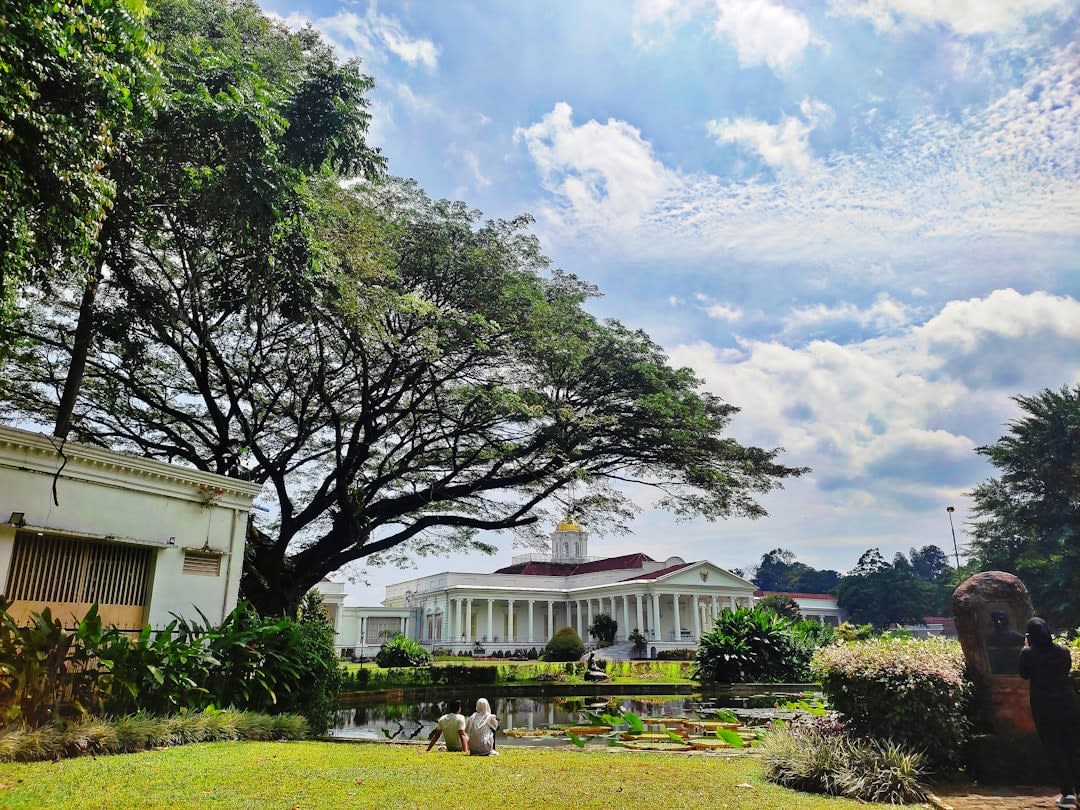
Inside the gardens sits the Istana Bogor, the presidential palace, originally built in 1745 as the country retreat of Dutch Governor-General Gustaaf Willem van Imhoff, who supposedly modeled it after a European hunting lodge. It later became Sukarno’s favored residence — he kept a significant portion of Indonesia’s state-owned art collection here, and reportedly loved the place enough to be buried, briefly, in the palace grounds before his remains were moved to Blitar. Herds of spotted deer, descendants of a gift from the Dutch royal family, still graze the palace lawn, unbothered by the security fence separating them from garden visitors just meters away.
Bogor’s other pleasure is entirely edible: it’s often credited as a birthplace of soto mie, a Bogor-style noodle soup with beef, risoles, and a spicy broth distinct from the sotos you’ll find elsewhere on Java, and the asinan Bogor — a pickled fruit and vegetable salad doused in tamarind-chili syrup — is sharp enough to wake you up after a humid afternoon. I ate both within an hour of each other at a market stall near the old train station and regretted nothing.

When to go: June to September brings relatively drier weather, though “dry” in Bogor is relative — pack a rain jacket regardless of season and plan garden visits for the morning, before the daily storms arrive.