Bengkulu
"Bengkulu is the province Britain traded for Singapore, and it never quite got its due for the deal."
A former British colony traded away like a poker chip, home to the world's largest flower and the house where a young Sukarno fell in love while under Dutch exile.
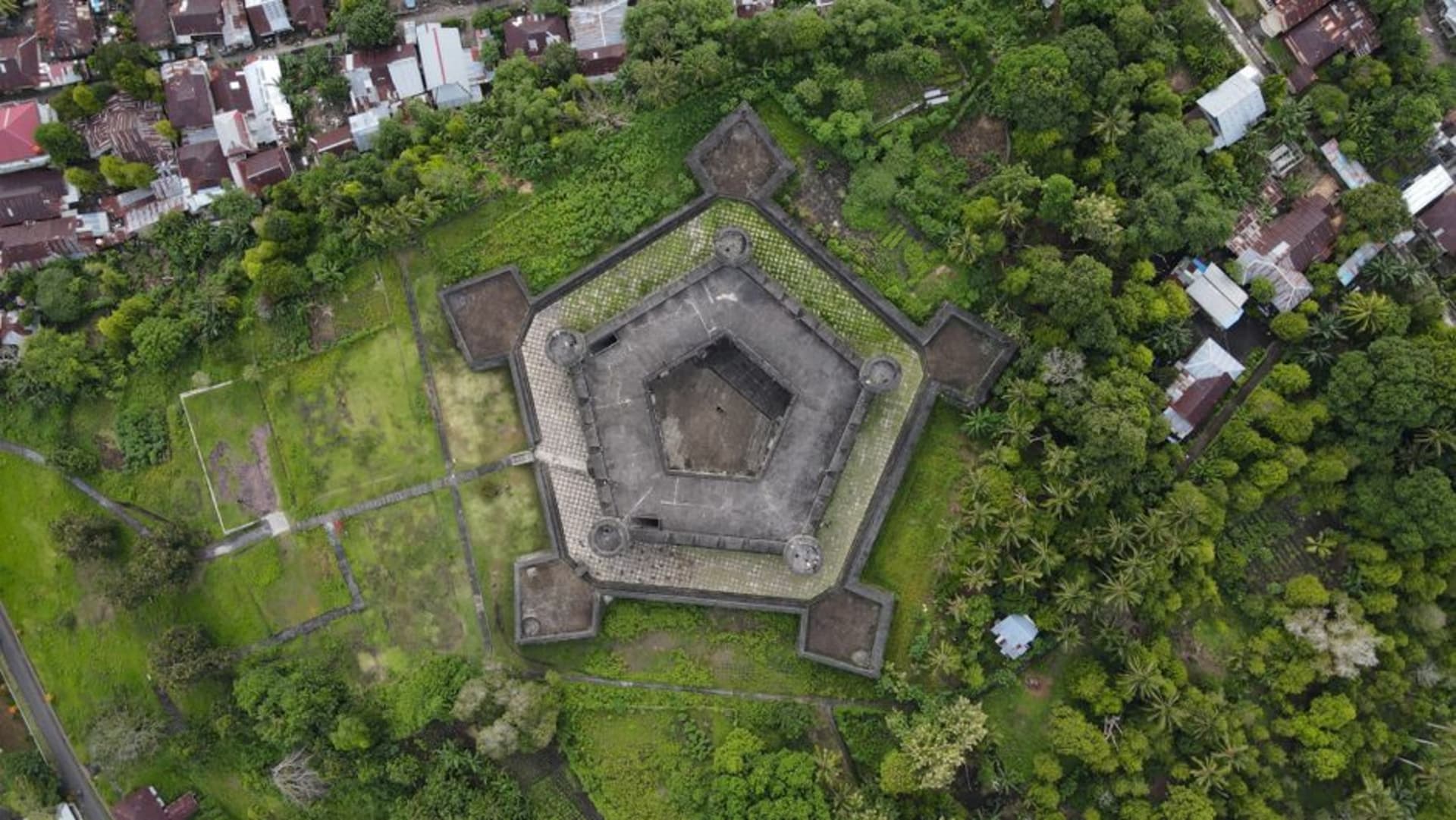
Most people, if they know Bengkulu at all, know it as a footnote in someone else’s empire. The British East India Company set up a pepper-trading post here in 1685, and for close to 140 years this stretch of Sumatra’s southwest coast was administered from London rather than Amsterdam — a strange colonial island inside a Dutch archipelago. That history is still standing at Fort Marlborough, completed in 1719 and the largest British fort ever built in Southeast Asia, its thick brick bastions still overlooking the Indian Ocean with a kind of stubborn permanence. Walking its ramparts, cannon still mounted, I kept trying to picture the logic of a trading company running a fort this substantial on a coast this remote, purely to protect a pepper monopoly. The whole arrangement ended in 1824 with the Anglo-Dutch Treaty, when Britain swapped Bengkulu for Dutch Malacca and, crucially, uncontested claim to Singapore — one of history’s more consequential real-estate trades, decided thousands of kilometers away by men who’d likely never seen either place.
The Dutch inherited Bengkulu, and so, eventually, did Indonesian nationalism. Sukarno, the country’s founding president, was exiled here by the Dutch colonial government from 1938 to 1942, and the house where he lived still stands, modest and quietly preserved, a world away from the grandeur you’d expect of a future head of state’s residence. It was in Bengkulu that Sukarno met and married Fatmawati, who would later sew the first Indonesian flag raised at independence in 1945. There’s something fitting about a British trading outpost becoming, two centuries later, the unlikely birthplace of the woman who stitched the flag of the nation that would eventually absorb it.
The flower that shouldn’t exist
Bengkulu’s other claim to fame is entirely botanical: this province is the type locality for Rafflesia arnoldii, the largest single flower on earth, first documented for Western science here in 1818 by the naturalist Joseph Arnold, traveling with Sir Stamford Raffles — yes, that Raffles, before he went on to found Singapore with the very territory Britain got in the swap. The flower itself is a leafless, stemless parasite that lives entirely inside a host vine and only reveals itself for a few days when it blooms, producing a blood-red, meter-wide bloom that smells deliberately, aggressively of rotting meat to attract the carrion flies that pollinate it. Finding one in bloom takes luck and a local guide who tracks the vines through the surrounding forest, but the moment you’re crouched next to a flower the size of a car tire that genuinely does smell like something died nearby, you understand immediately why it became a colonial-era sensation.

Bengkulu also holds onto a distinctly un-Sumatran religious tradition: Tabot, an annual festival commemorating the martyrdom of Hussein ibn Ali at Karbala, brought by Shia-influenced Sepoy soldiers the British stationed here in the colonial period. Watching the elaborate tabot processions in Muharram, in a province that’s otherwise thoroughly Sunni, is a reminder of how deep and specific the layers of history here actually run beneath a coastline most travelers skip entirely on their way to Padang or the Mentawais.
When to go: May to September for the driest weather and the best chance of Fort Marlborough sightseeing without downpours; Rafflesia blooms are unpredictable year-round, so check with local conservation guides just before you go.