Bandung
"The Dutch called it the Paris of Java. I'm not sure Paris deserves the comparison."
A highland city of art deco facades and volcanic craters, where colonial Bandoeng's café culture never quite disappeared — it just started serving different coffee.
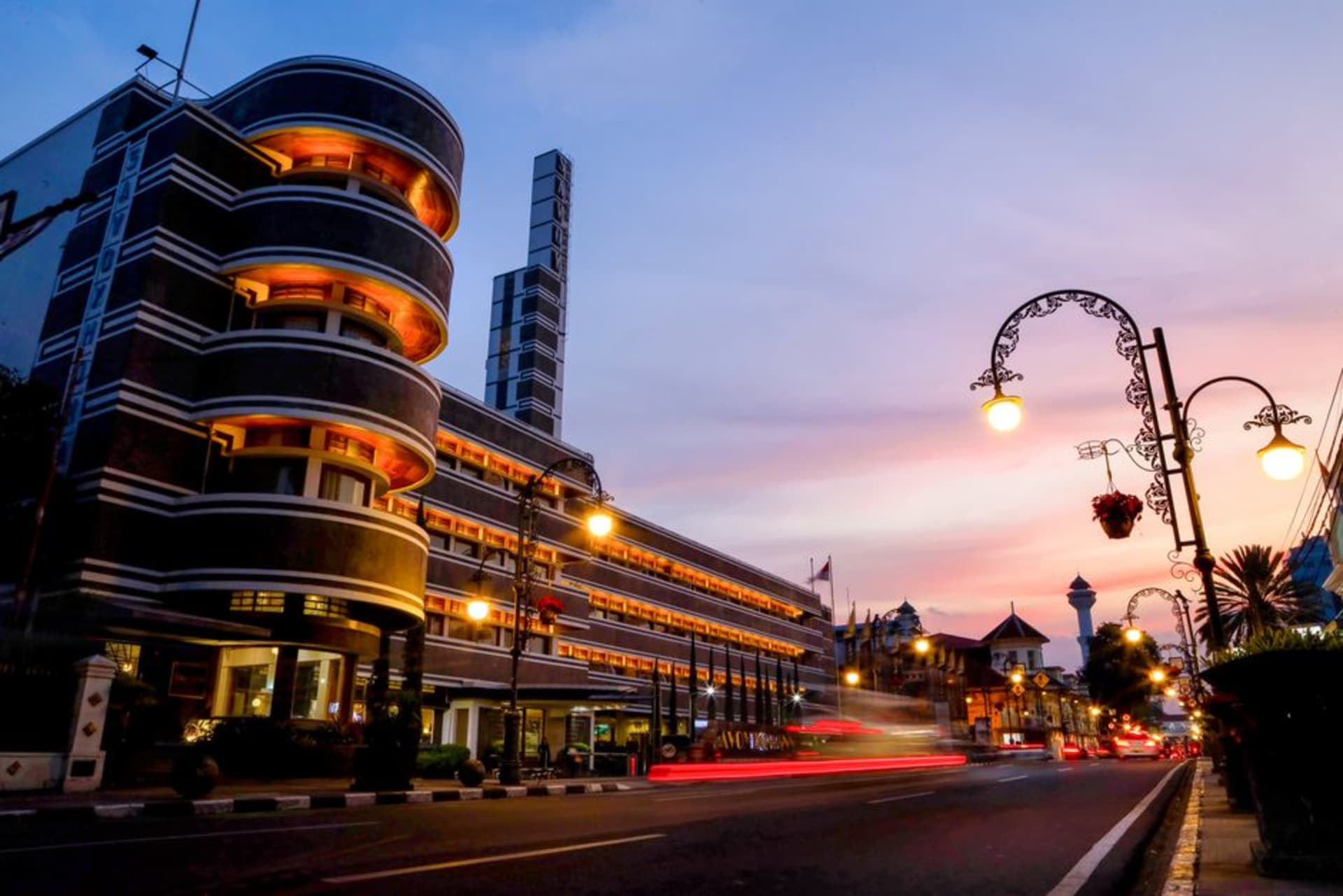
Bandung sits at roughly 700 meters, ringed by volcanoes, and the altitude changes everything about how the city feels compared to the sweat-soaked lowlands of Java. The air actually cools at night. The Dutch noticed this in the 19th century and built a resort town of wide boulevards and art deco buildings — Bandoeng, as they spelled it — that earned its old nickname, Parijs van Java, the Paris of Java. Whether that comparison holds up is a matter of taste, but walking down Jalan Braga at dusk, past buildings like the Landmark and the old Savoy Homann hotel with their curved deco lines and pastel paint jobs, I understood why the name stuck. It’s one of the best-preserved collections of art deco architecture in Southeast Asia, and almost nobody outside Indonesia talks about it.
The 1955 Asian-African Conference — the meeting that effectively founded the Non-Aligned Movement, with Sukarno hosting Nehru, Zhou Enlai, and delegates from 29 newly independent or soon-to-be-independent nations — happened at the Gedung Merdeka on Jalan Asia Afrika. It’s a genuinely underrated piece of 20th-century history: the moment the postcolonial world declared, in one room, that it wasn’t picking a side in the Cold War. The building is now a museum, modest and a little dusty, but standing in the same hall where that declaration happened gave me more of a jolt than most grander monuments manage.
Volcanoes and factory outlets
Bandung’s other identity is as Indonesia’s textile and fashion capital, which sounds unglamorous until you realize it means the city is full of factory outlet stores selling export-overrun clothing at a fraction of retail — a genuinely local shopping culture that predates any tourist infrastructure built around it. But the real draw for most visitors, myself included, is what surrounds the city. Tangkuban Perahu, the “overturned boat” volcano named for a Sundanese legend about a son cursed for nearly marrying his own mother, has a crater rim you can drive right up to, sulfur steam rising off pale green pools below. It’s touristy and a little overrun with vendors, but the smell of sulfur and the sheer scale of the crater still stopped me mid-sentence.
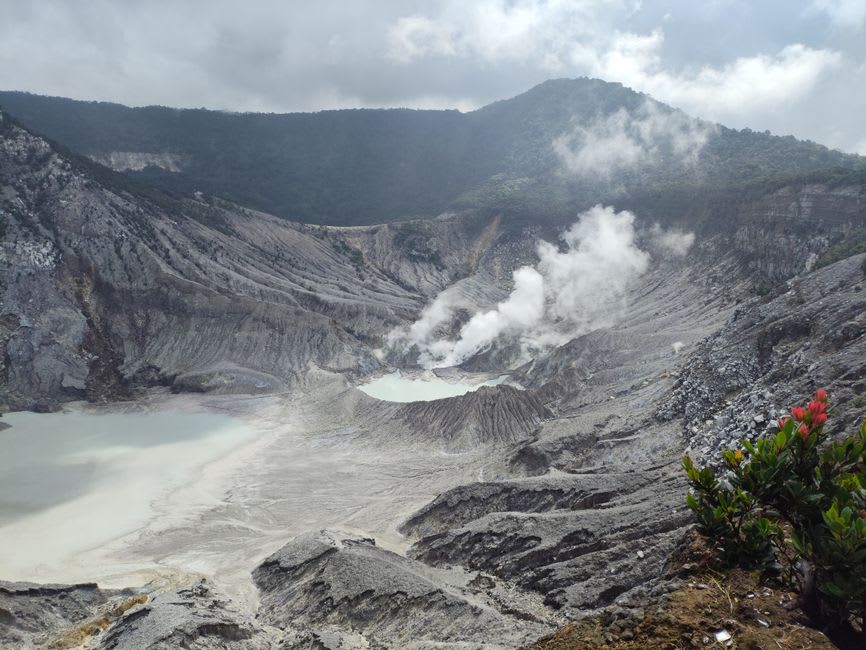
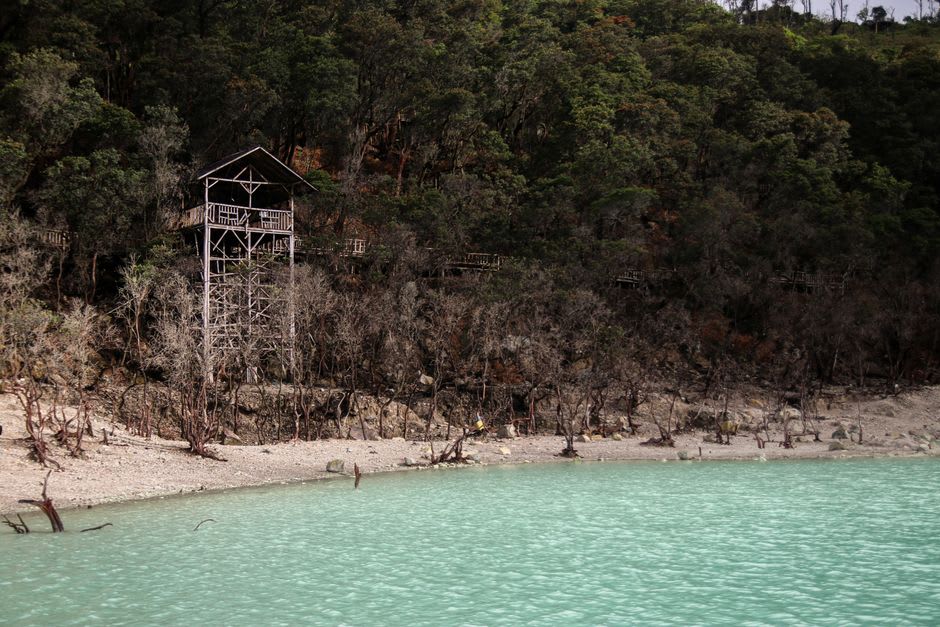
Better, quieter, is Kawah Putih — the White Crater — a sulfuric lake that shifts from turquoise to milky white depending on mineral concentration and light, ringed by dead trees bleached pale from the acidity. I went early, before the tour buses, and had maybe twenty minutes of near-silence broken only by the occasional hiss of gas from the water. Sundanese culture, distinct from the Javanese culture of central and eastern Java, dominates this whole highland region — the language, the angklung bamboo music, the fiery sundanese cuisine built around raw vegetables and sambal, all of it different enough from Yogyakarta or Surabaya to feel like crossing into another country entirely.
When to go: June through September for clear volcano views and cool, dry evenings; Bandung’s elevation makes it a natural retreat from Jakarta’s heat any time of year, but weekends bring heavy traffic from Jakarta day-trippers on the toll road.