Vrindavan
"I have never heard a town sing this much, this constantly, and mean it this genuinely."
The forest where Krishna played as a child, now a dense pilgrim town of bhajan halls, widow ashrams, and devotion sung around the clock.
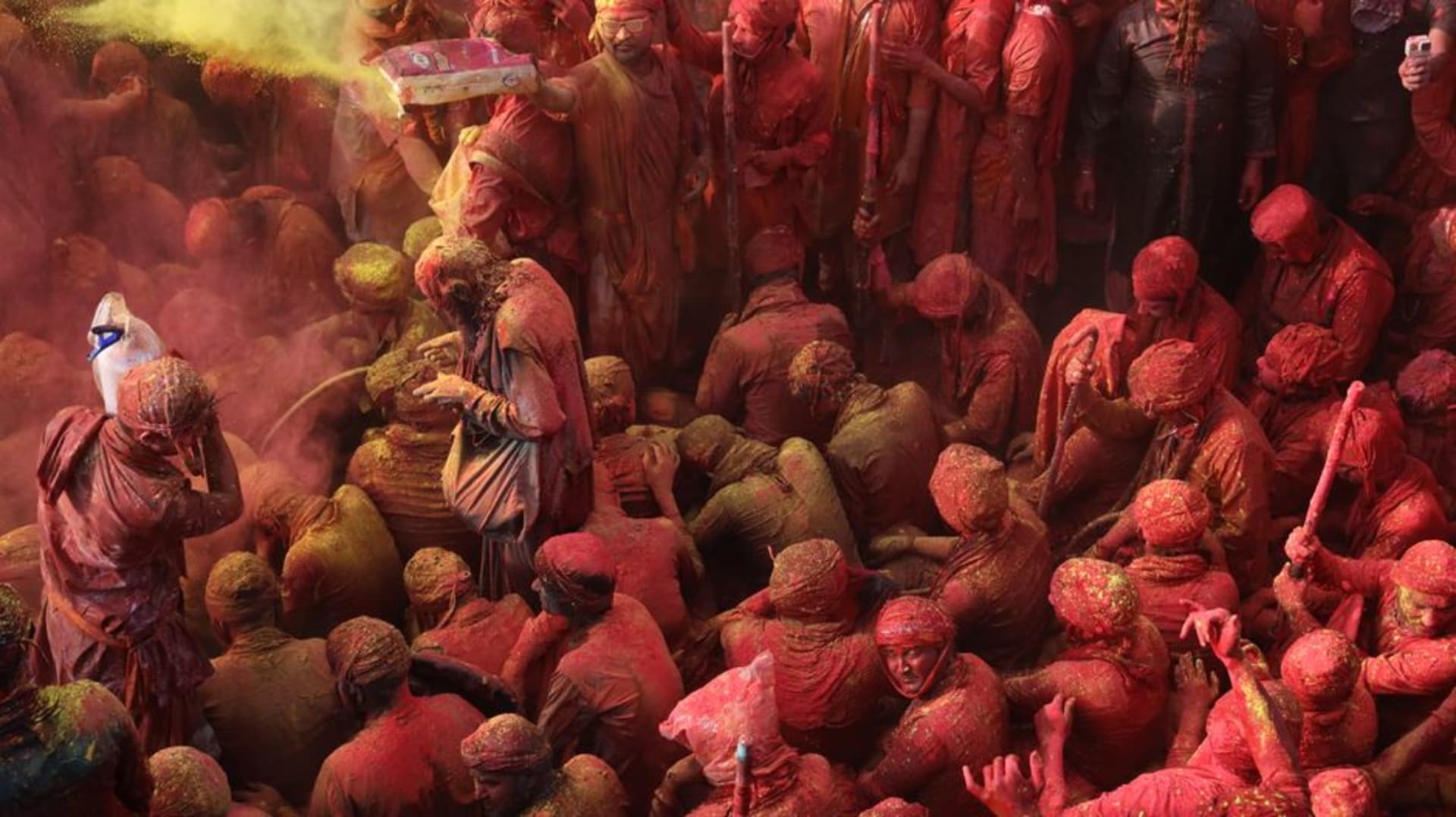
Vrindavan announces itself through sound before you see a single temple spire — from a rickshaw still a few streets away, I could already hear the layered wash of bhajans, devotional songs, bleeding out of half a dozen ashrams at once, harmoniums and clapping and voices that didn’t quite sync with each other but somehow didn’t clash either. This, tradition holds, is the forest where Krishna spent his childhood among the gopis and cowherds, and the town has spent the centuries since building an entire devotional economy on top of that memory.
Banke Bihari Temple is the emotional center of town, dedicated to a form of Krishna so beloved that the curtain in front of the idol is opened and closed every few minutes rather than left open continuously — the priests believe that if devotees stared at the deity’s eyes too long without a break, they would become so entranced they’d forget to leave. I stood in the crush of the crowd for one of those curtain openings, packed shoulder to shoulder with pilgrims straining forward, and the collective gasp and surge when the curtain pulled back was unlike anything I’ve experienced in a religious building anywhere in the world.
The widows who sing
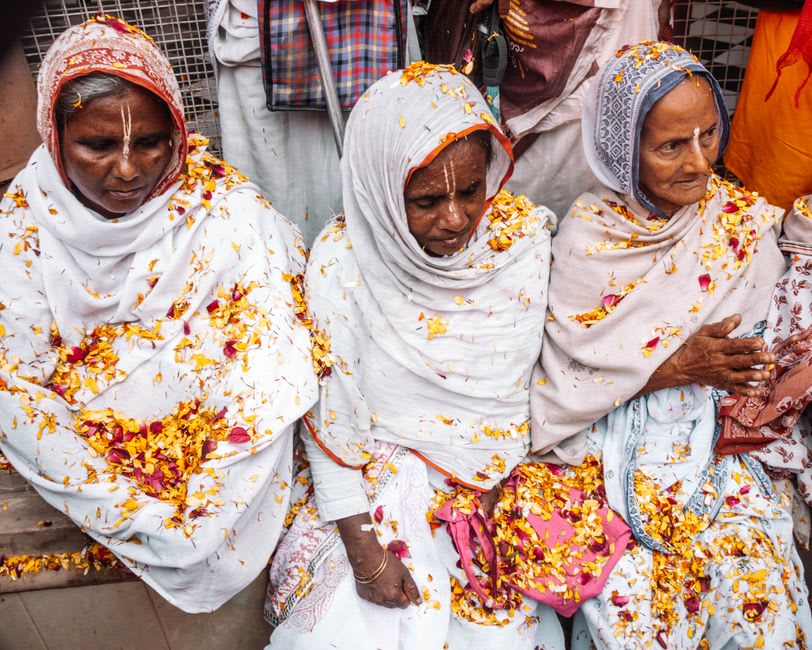
Vrindavan carries a harder history too. For generations, the town became a refuge — sometimes by choice, often by social exile — for Hindu widows, particularly from Bengal, who came here because tradition offered them few other places to live out their lives with any dignity after their husbands died. Several ashrams still house hundreds of these women, many now elderly, who spend hours daily singing bhajans in exchange for small stipends, a practice that has drawn criticism as exploitative and been the subject of reform efforts in recent years. I visited one of the larger ashrams with a local guide’s introduction, and the sight of dozens of women in plain white saris singing in unison, their voices worn but unwavering, was the single most affecting scene I encountered in weeks of travel in India.
A short walk away, the ISKCON temple — built by the Hare Krishna movement and a magnet for foreign devotees since the 1970s — offers a completely different register: air-conditioned halls, informational displays in English, and a gift shop selling Bhagavad Gita translations in a dozen languages. The contrast between ISKCON’s polished internationalism and the older town’s raw, unmanaged devotion around it captures something true about how Vrindavan holds multiple versions of the same faith simultaneously.
When to go: October to March for cooler weather and manageable crowds outside festival peaks. Janmashtami in late summer, marking Krishna’s birth, turns the entire town into a non-stop celebration if you want to experience it at full intensity.