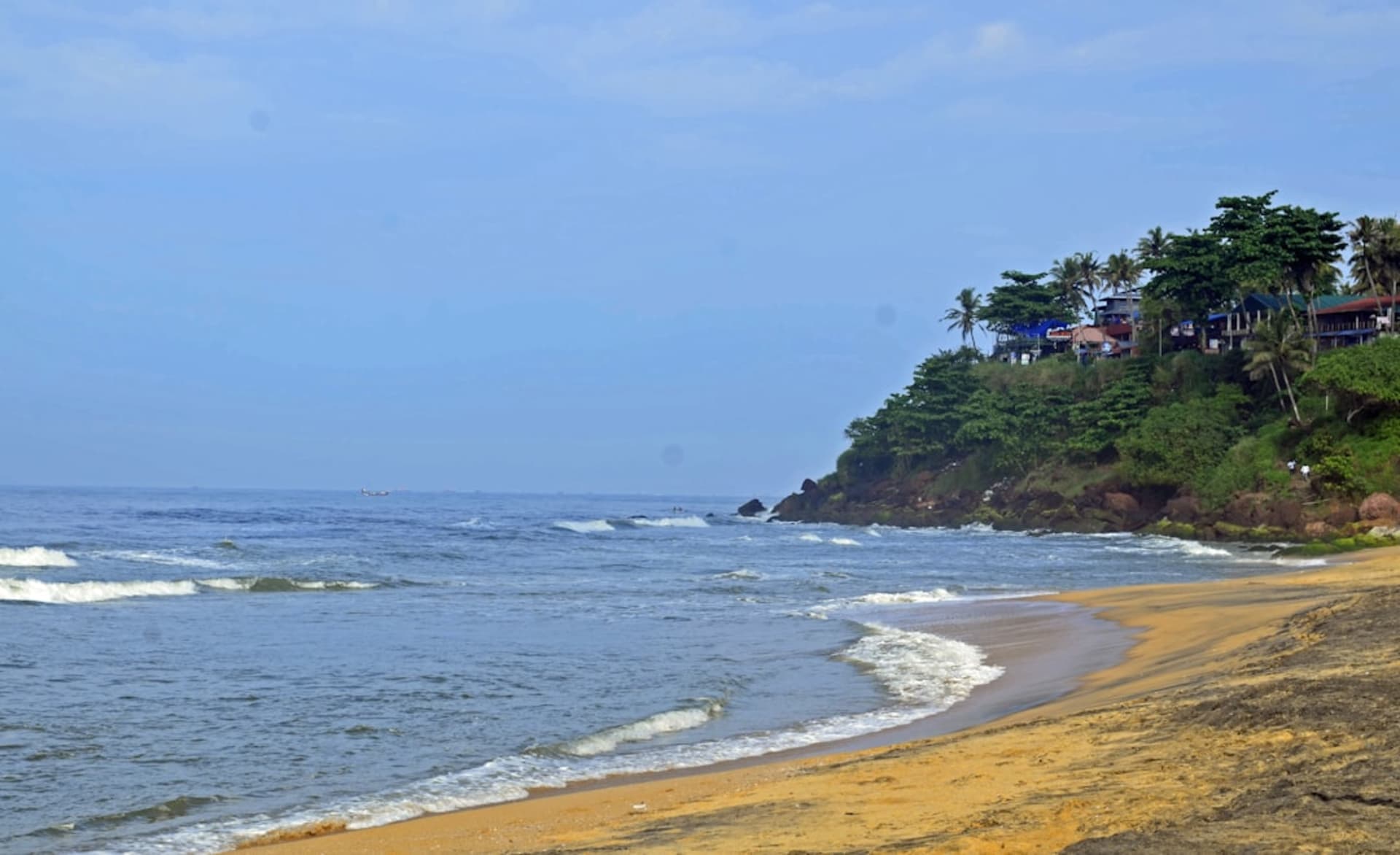
Red laterite cliffs drop straight into the Arabian Sea while cafes balance on the edge above, and pilgrims wash away their sins on the beach below.
The cliffs are the thing nobody quite prepares you for. I’d seen photos of Varkala before I arrived, but photos flatten the drop — standing at the edge for the first time, watching Papanasam Beach unfurl thirty, forty meters straight down with the sea folding in below, I actually stepped back instinctively, the way your body does before your brain catches up. The laterite rock is a deep rust red, streaked darker where water runs off it in the monsoon, and the cliff-top path that runs along the top of it is now lined, almost wall to wall, with cafes serving banana pancakes and fresh lime soda to a mix of Indian families, European backpackers, and the occasional stray cow that has clearly decided the cliff belongs to it too.
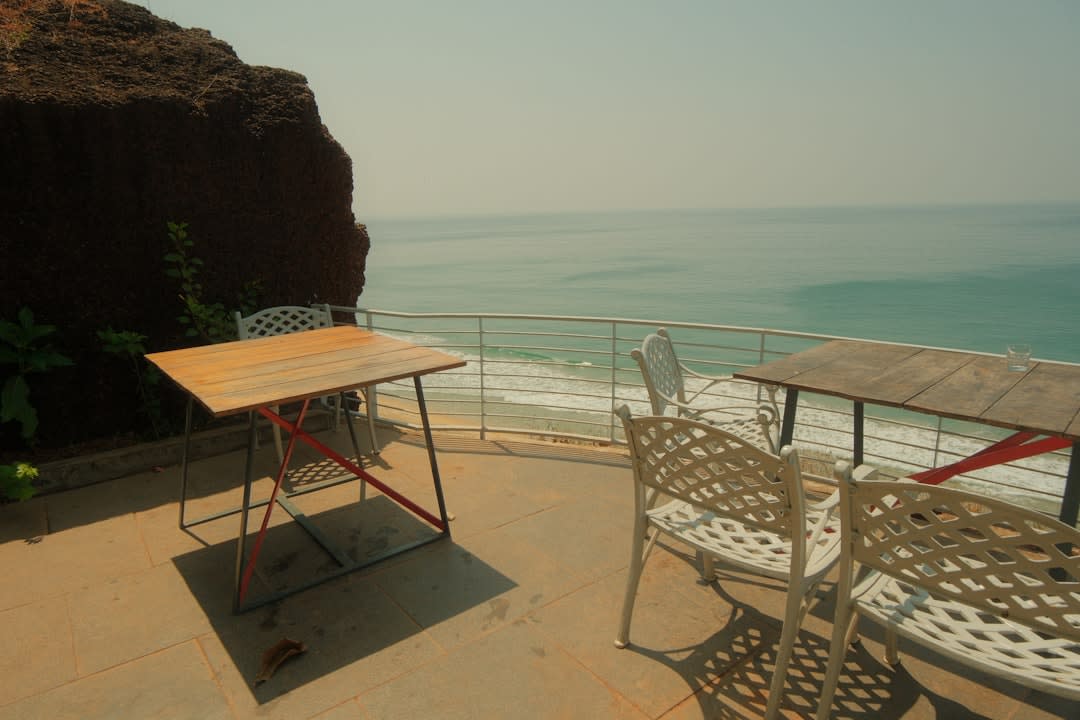
I stayed in a guesthouse just back from the cliff edge and spent my first evening doing exactly what everyone does in Varkala: nursing a Kingfisher at a cliffside table, watching the sun go down into the Arabian Sea, listening to a mix of Hindi film songs and reggae drifting out of neighboring restaurants. It’s touristy in the specific, gentle way that doesn’t feel like a betrayal of the place, because the beach below is still doing something entirely unrelated to tourism.
Papanasam, the beach that cleanses
Papanasam means “sin-destroying” in Sanskrit, and Hindu pilgrims have been coming here for centuries specifically to bathe in this stretch of sea, believing it washes away accumulated karma. Early mornings are when you see it properly — before the cafe crowd stirs, before the day-trippers arrive, small groups of pilgrims wade into the surf at a spot marked by a modest temple, some of them performing rituals for deceased relatives, priests nearby offering blessings for a few rupees. I walked down the steep steps cut into the cliff one morning at six, half to watch the ritual and half because I wanted the beach without anyone else’s footprints on it, and found instead an entire quiet economy already awake: a chai stall, a man selling marigold garlands, two priests setting up under a battered umbrella. The mingling of pilgrimage and holiday — families doing puja twenty meters from a woman in a bikini reading a paperback — is very Kerala, very unbothered, and it took me a full day to stop finding it strange.
There’s a natural spring near the northern cliff said to have curative mineral properties, and a scattering of small Ayurvedic centers less polished than Kovalam’s but often cheaper and, I was told by a German traveler I met over breakfast, more effective because the therapists here still mostly treat locals rather than tourists. I never tested the claim myself, but the man’s shoulder problem, by his own account, was gone within a week.
When to go: November to February for the calmest sea and the safest swimming — Varkala’s currents get genuinely dangerous during the monsoon and immediately after, and the lifeguard flags are not decorative here.