Valley of Flowers
"I've never trekked toward a place that seemed less believable in photographs and turned out to undersell it in person."
A UNESCO-listed alpine meadow in the Garhwal Himalayas that explodes into hundreds of wildflower species each monsoon, reached by a trek that shares its trailhead with Sikh pilgrims bound for Hemkund Sahib.
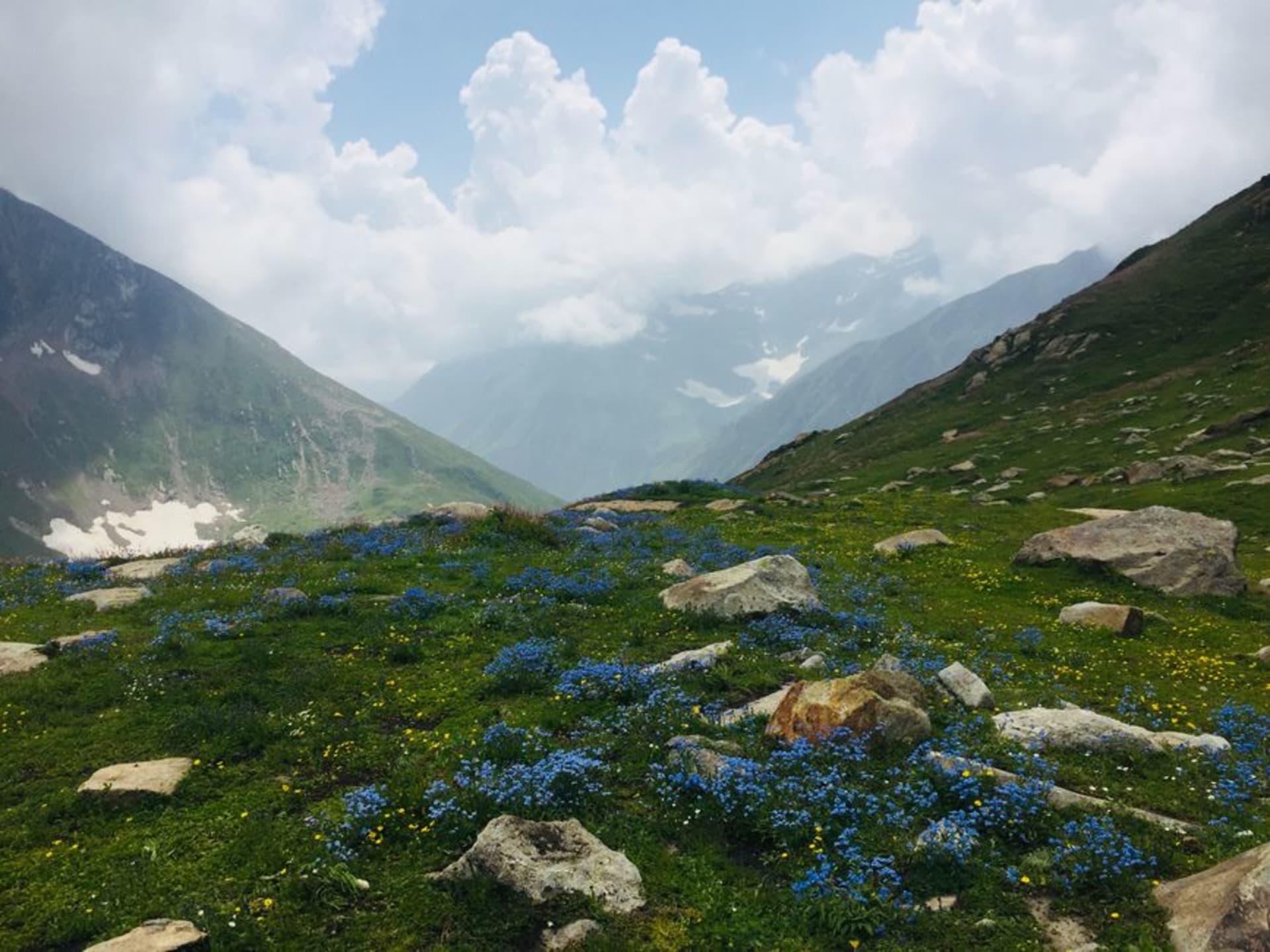
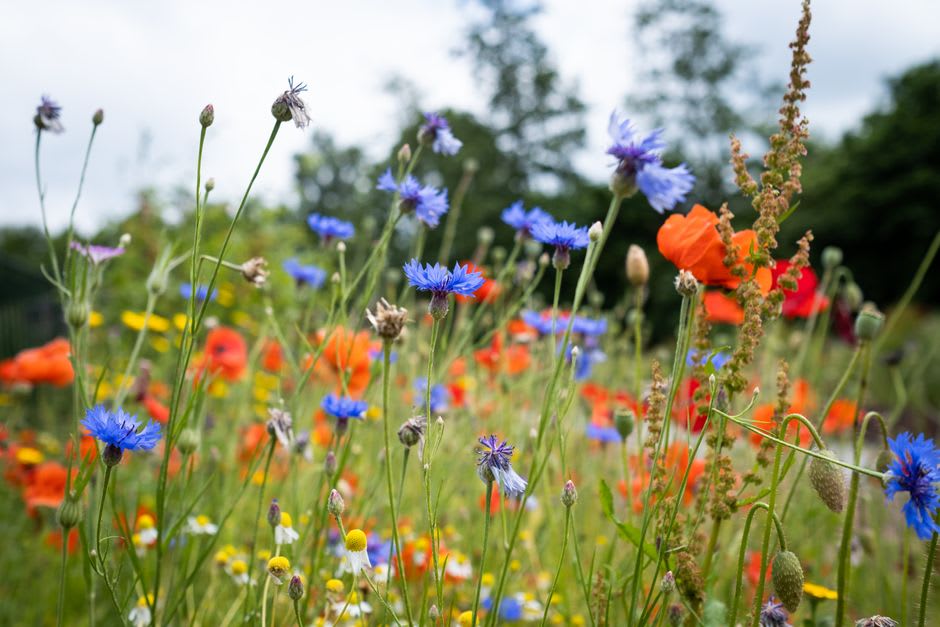
The trek to Valley of Flowers starts in Govindghat, follows the Pushpawati river gorge up through Ghangaria — a small tent-and-lodge outpost that exists purely to serve trekkers and pilgrims — and only on the second day, after a climb through forest and scree, does the valley itself open up. I’d read about it, seen the photographs, and still wasn’t prepared for what actually appeared: a broad glacial valley floor carpeted, in July, with a chaotic, overlapping riot of blues, purples, yellows, and reds — blue poppies, Himalayan asters, potentillas, orchids, and cobra lilies among the roughly 300 to 500 species botanists have catalogued here, all packed into a valley barely ten kilometres long.
The place was essentially unknown outside local shepherd communities until 1931, when British mountaineer Frank Smythe stumbled into it while descending from an expedition and was so struck by what he saw that he wrote an entire book, The Valley of Flowers, that put it on the international map. Standing in the middle of the meadow, boots soaked from crossing meltwater streams, with the Pushpawati roaring somewhere below and glaciated peaks like Nilgiri Parbat framing the head of the valley, I understood exactly why a hardened Himalayan climber felt compelled to write a book about a meadow rather than a summit.
A trail shared with pilgrims, not tourists
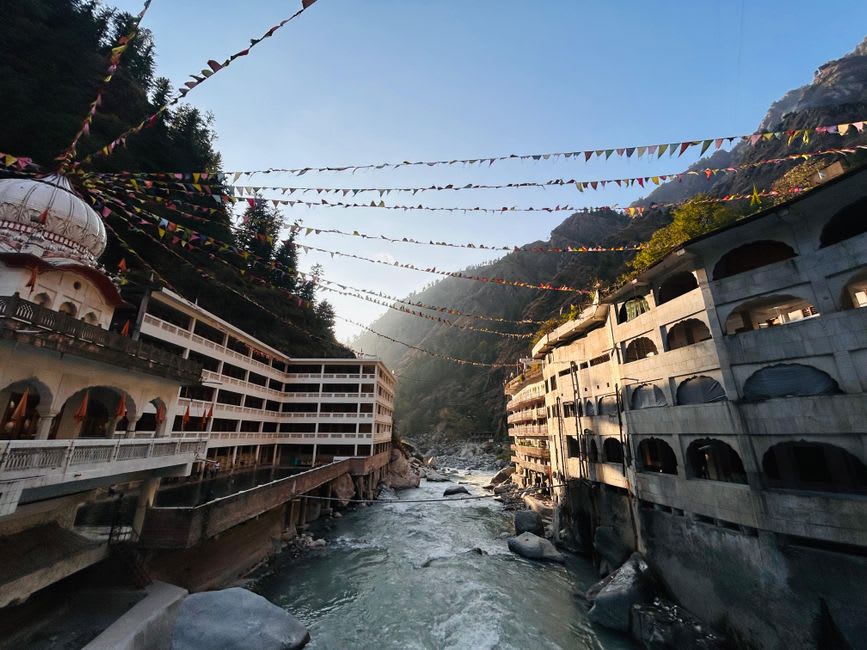
What struck me almost as much as the flowers was the company on the trail. The same path to Ghangaria is the main route to Hemkund Sahib, a Sikh gurdwara at over 4,300 metres beside a glacial lake, built at the site where Sikhs believe the tenth Guru, Gobind Singh, meditated in a previous life. Thousands of Sikh pilgrims, including elderly devotees and small children carried by relatives, make this same steep climb every season, many in simple sandals, moving with a steady, unhurried devotion that put my trekking poles and merino layers faintly to shame. I fell into step with a family from Punjab for an hour of the ascent, the grandmother chanting quietly the entire way, and when we parted at the fork toward Hemkund while I continued to the valley, she blessed me for the rest of my walk as easily as if we’d known each other for years.
The valley is only accessible for a narrow window each year, and even then only by permit and only on foot — no roads reach it, nothing is built inside the park boundary beyond a couple of forest rest huts, and rangers close the gates the moment the monsoon clears and the flowers fade back into dormant tundra grass for another ten months.
When to go: Mid-July to mid-August is peak bloom, right in the heart of monsoon, so expect rain, leeches, and slippery trails as the price of the flowers. The park is only open from June to October, and closed entirely outside that window.