Thekkady
"You don't go to Thekkady to see a tiger. You go to feel like the forest might be watching you instead."
A cardamom-hill town beside Periyar Tiger Reserve, where boat safaris drift past wild elephants at the water's edge and spice gardens perfume the surrounding slopes.
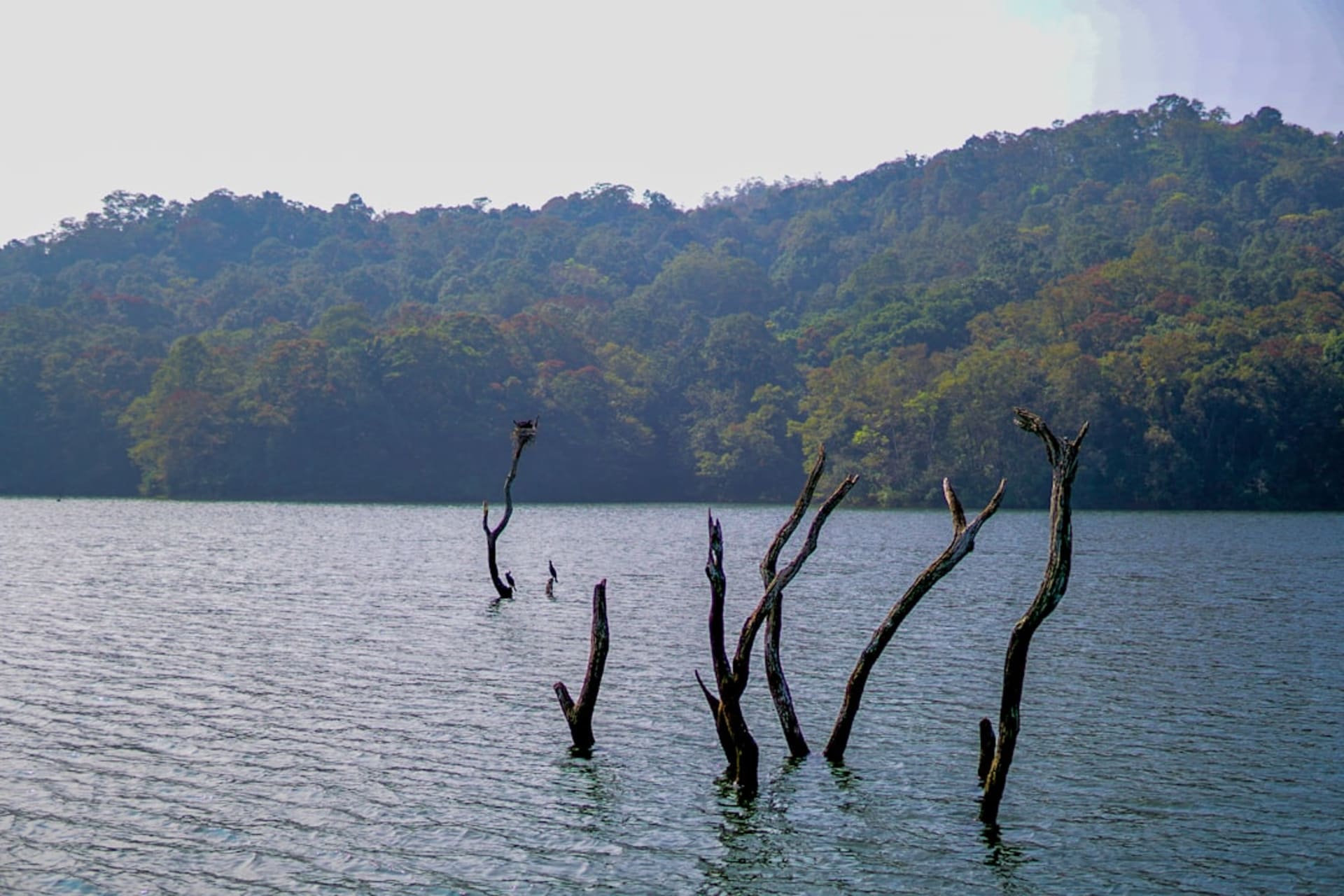
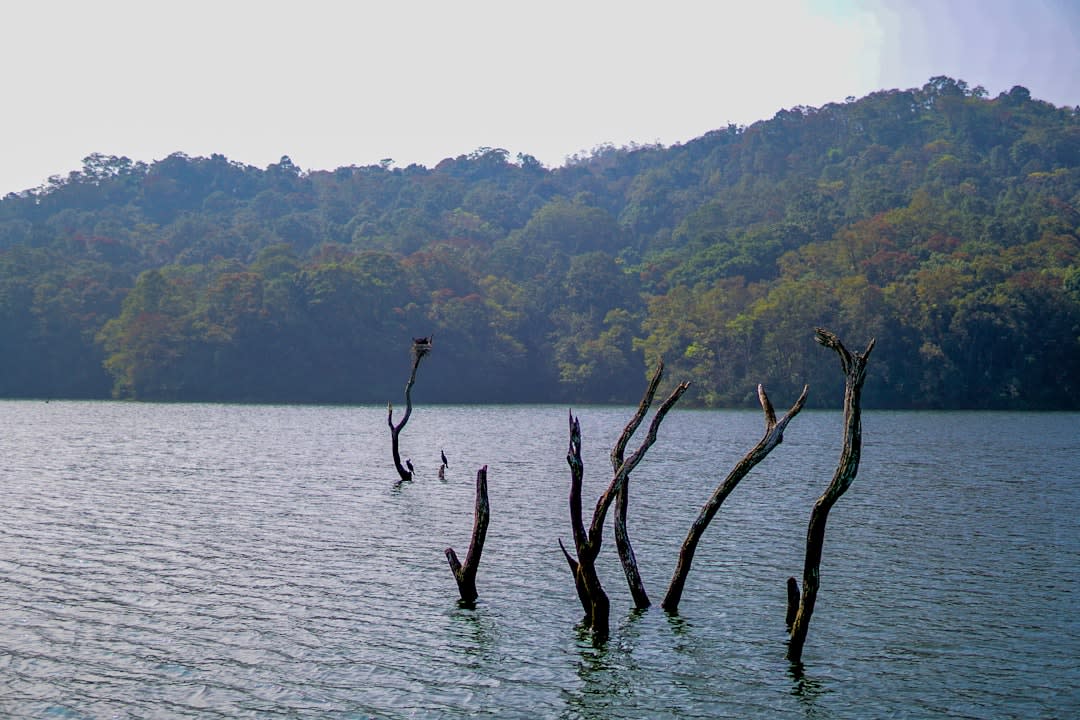
The boat engine cut to a slow idle as we rounded a bend on Periyar Lake, and the boatman lifted a single finger without a word — the signal, I’d already learned, for something worth staying quiet for. On the far shore, half-submerged in the shallows, a small herd of wild elephants stood drinking, utterly indifferent to the boatload of tourists holding their breath fifty meters away. Dead trees, drowned when the reservoir was dammed by the British in 1895, stood out of the water around them like bleached, standing skeletons, and the whole scene had the eerie, suspended quality of watching something that wasn’t staged for anyone.
A Reserve Built Around a Reservoir
Periyar Tiger Reserve, at nearly a thousand square kilometers, is one of India’s earliest protected forests, established as a wildlife sanctuary back in 1934 around the lake formed by the Mullaperiyar Dam, and it’s the boat safari on that lake — rather than any jeep track — that makes Thekkady distinct from every other tiger reserve I’d visited. You’re on the water rather than a dirt road, silent rather than engine-loud, and the wildlife comes to the shoreline to drink rather than being tracked through undergrowth. Tigers themselves stay famously elusive here, and I didn’t see one, but between the elephant herds, sambar deer picking along the banks, and a pair of Malabar giant squirrels crashing through the canopy overhead, the absence of the reserve’s namesake cat barely registered as a disappointment.
Cardamom Hills and the Smell That Follows You Home
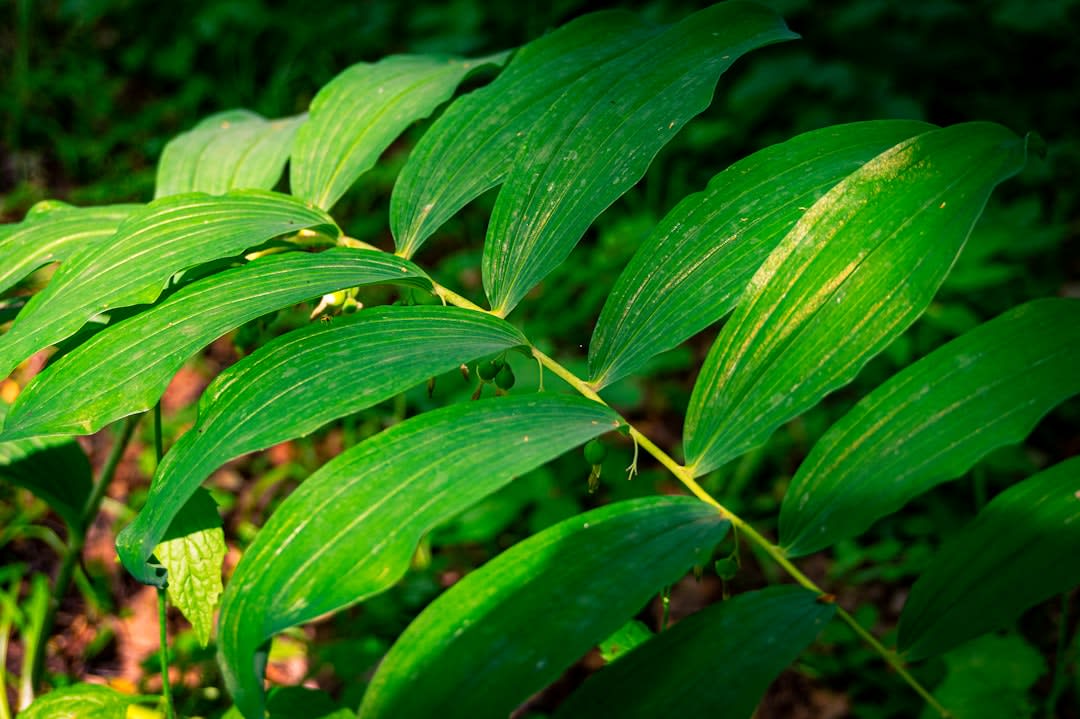
Thekkady sits at the heart of Kerala’s cardamom-growing country, and the spice gardens on the slopes around town were, for me, nearly as memorable as the safari. A grower walked me through rows of cardamom plants growing in the dappled shade of taller trees, splitting open a fresh green pod so I could taste the oil directly off his thumb — sharper and more floral than anything that survives the trip to a spice jar back home. Pepper vines, vanilla orchids, clove and nutmeg trees filled out the same slope, planted in the kind of deliberately layered system that’s kept these hills productive for well over a century. I left with a small bag of cardamom pods that perfumed my entire backpack for the rest of the trip, a smell I still associate, months later, with the particular quiet of that boat idling on Periyar Lake.
When to go: October to March for the coolest weather and the best chances of wildlife at the water’s edge, since animals cluster near the lake more reliably in the drier months when other water sources shrink.