Sundarbans
"The one place in India where I felt, for the first time, like I might not be at the top of the food chain."
A tidal maze of mangrove forest straddling India and Bangladesh, home to the only tigers on earth that swim between islands and are said to watch from the reeds.
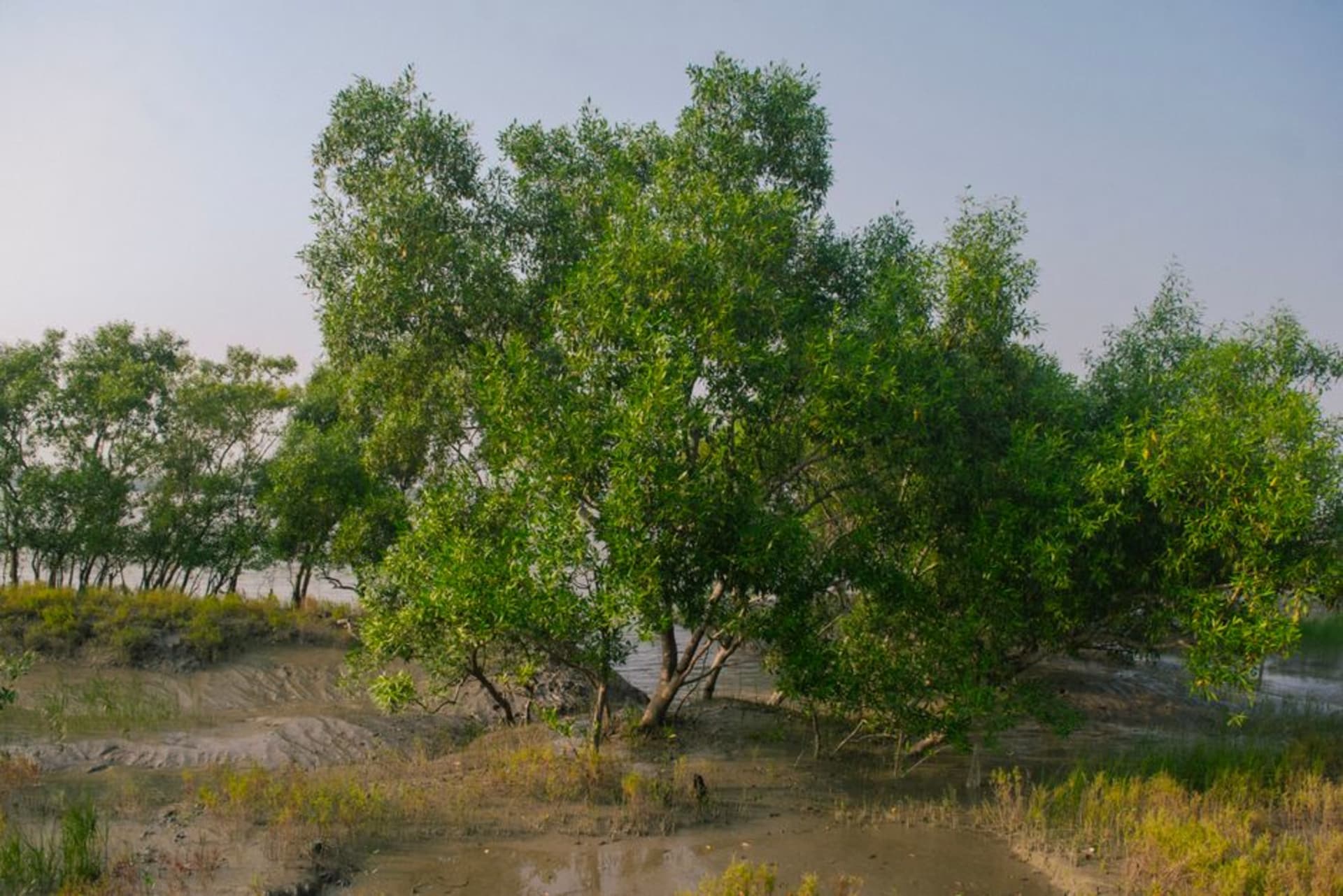
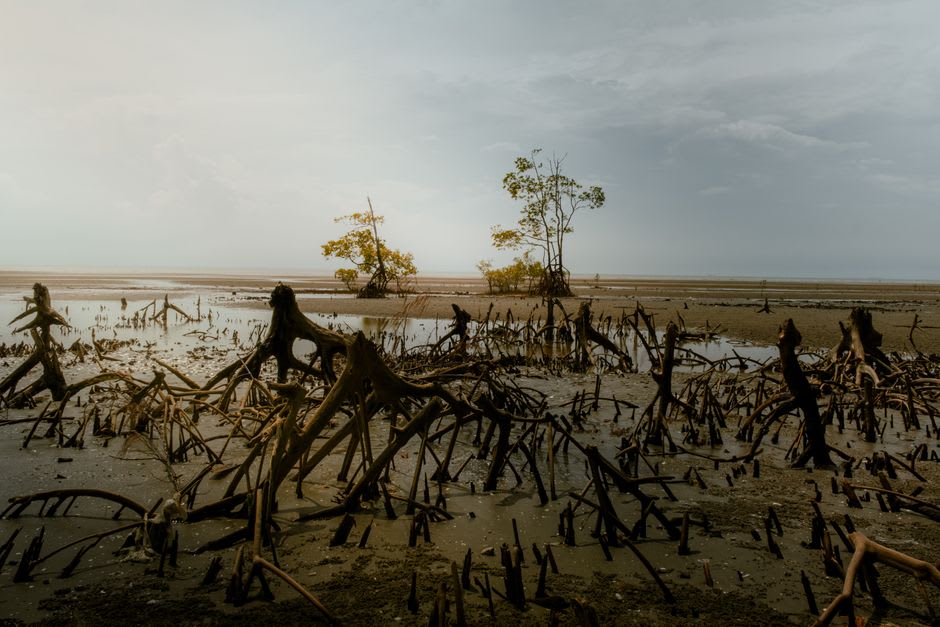
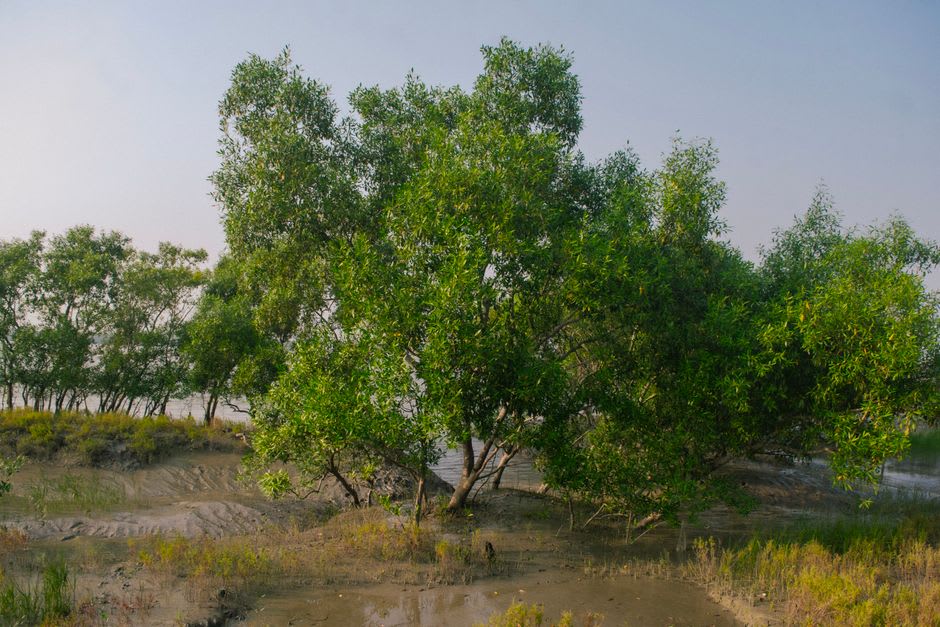
The boat left before sunrise from Godkhali, a small jetty south of Kolkata where the last paved road gives out and the delta takes over. Within an hour the Hooghly’s distributaries had narrowed into a labyrinth of tidal creeks lined with mangrove — sundari trees, which gave the forest its name, their roots exposed like knuckles at low tide, breathing through spikes called pneumatophores that poke up from the mud like something out of a nature documentary about an alien planet. The guide cut the engine periodically so we could drift in silence, and in that silence the forest felt watched, or watching, in a way no landscape I’d visited in India had.
The Sundarbans is the largest mangrove forest on the planet, shared uneasily between India and Bangladesh, and it is the last significant home of a Bengal tiger population that has adapted to a genuinely strange life — swimming between islands, hunting crabs and fish alongside deer, occasionally attacking the honey collectors and fishermen who still enter the deep forest despite knowing the statistics. Local folklore has built an entire protective mythology around this danger: Bonbibi, the forest goddess, is invoked by fishermen and honey gatherers before every entry, a Hindu-Muslim syncretic figure who is said to protect the humble and punish the greedy, and every boatman I met wore a small locket or had a shrine painted somewhere on the hull.
Watching for Stripes That Rarely Show
We never saw a tiger — almost nobody does, and any guide who promises one is lying. What we did see, from a watchtower at Sudhanyakhali, was a set of pugmarks fresh enough that the ranger went quiet mid-sentence, and a spotted deer herd that had frozen entirely, noses up, in a stillness that told you more about the tiger’s presence than any sighting could. Our boatman, who had lost a cousin to a tiger attack a decade earlier, spoke about the animal with a mixture of dread and reverence that had nothing performative in it — this was not conservation-brochure respect, it was the plain fact of sharing a landscape with something that could kill you and mostly, out of some arrangement nobody fully understands, chooses not to.
In the late afternoon we drifted past a fishing village on stilts, nets drying on bamboo racks, kids waving from a bank that floods twice a day with the tide, and I understood that the real story of the Sundarbans isn’t only the tiger — it’s the people who have built entire lives inside a forest that could, with total indifference, take them.
When to go: November to February, when temperatures are mild and the water is calmer for boat travel. Avoid the monsoon months of June to September, when cyclonic weather makes the delta genuinely hazardous.