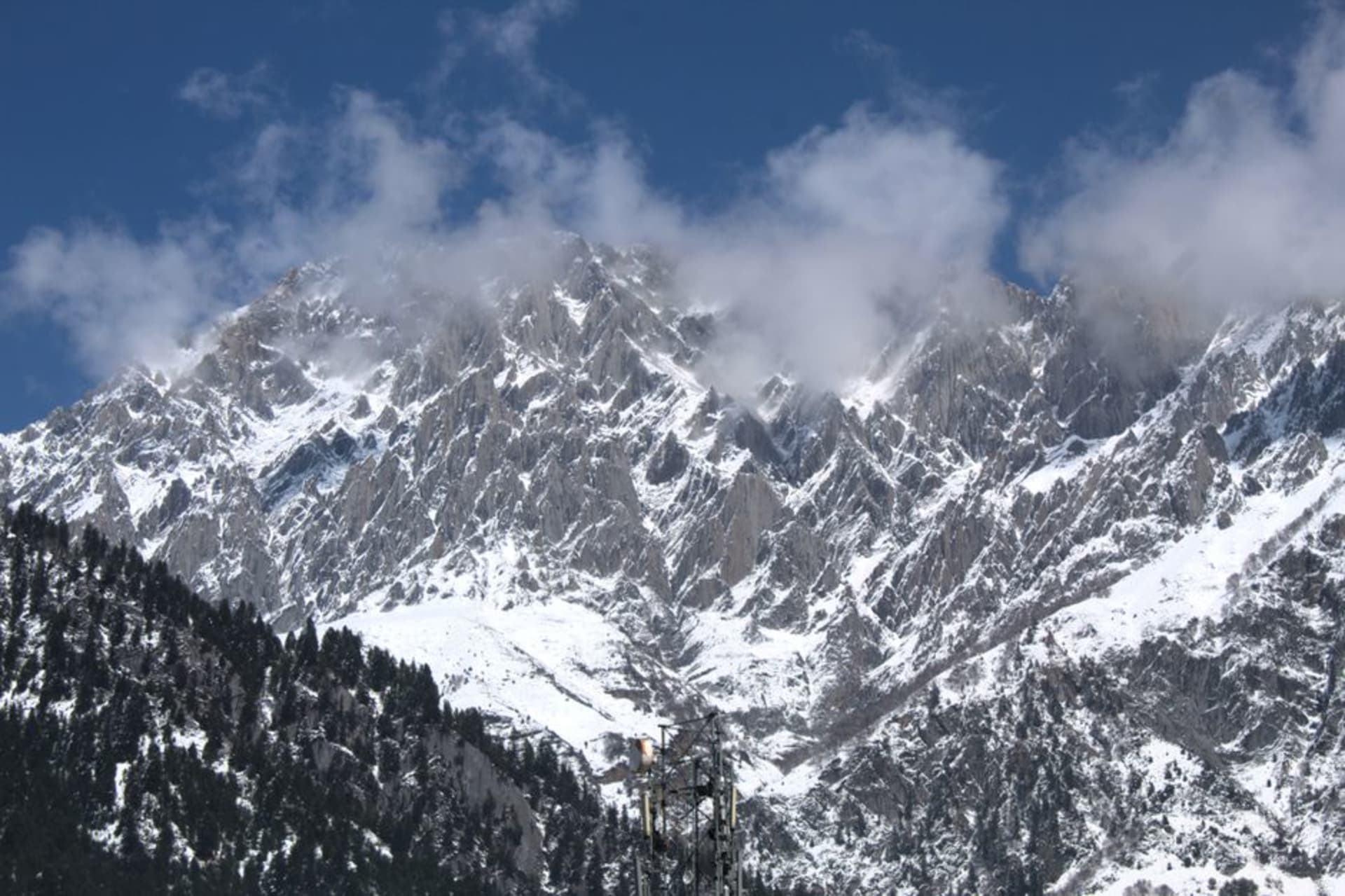
The 'meadow of gold' guarding the road to Zoji La, where glacier water, pony trails, and thin mountain air announce that Ladakh is close.
The name means meadow of gold, and I assumed that was tourist-brochure poetry until I actually saw it in late September, when the birch trees along the valley floor turn the exact color the name promises and the whole approach road looks lit from within. Sonmarg sits at around 2,800 meters, a single strip of guesthouses, dhabas, and pony stands strung along the road that eventually climbs over the Zoji La pass into Ladakh, and everyone here is either heading toward that pass or has just come down from it looking slightly stunned.
I got out of the shared cab with my ears already popping and immediately understood why this town exists purely as a staging post. There is not much to Sonmarg itself — a market street, army convoys idling before the pass opens for the day, men shouting fares for pony treks — but the setting does the work the town doesn’t need to. The Sindh river churns past milky with glacial silt, and behind the last row of buildings the land just tips upward into bare rock and snow.
Thajiwas Glacier and the pony economy
The classic outing is the trek, or more commonly the pony ride, to Thajiwas Glacier, about three hours round trip through meadow and moraine. I chose to walk it rather than ride, partly out of stubbornness and partly because the pony wallahs’ hard sell wears you down faster than the altitude does. The glacier itself, by late season, is a grubby tongue of ice streaked with rock debris rather than the pristine white wall of postcards, but the setting more than compensates — a bowl of peaks holding the ice in place, marmots whistling from the scree, and the temperature dropping ten degrees the moment you step into the glacier’s shadow.
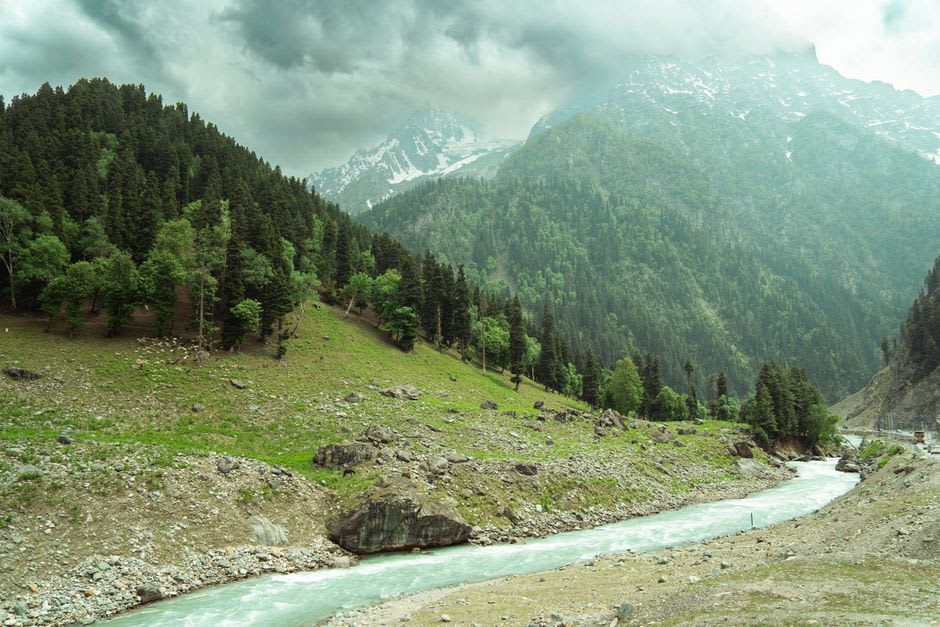
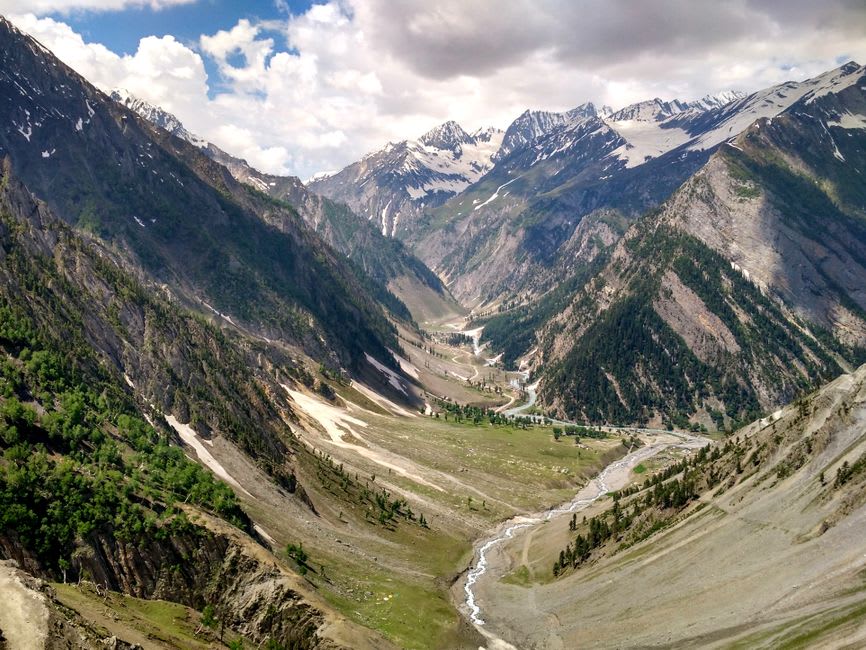
What actually stayed with me was the Zoji La pass itself, which I crossed the next morning in a shared Sumo heading toward Kargil. The road out of Sonmarg switchbacks up a nearly vertical wall of scree with no guardrail worth mentioning, and the driver — who does this crossing most days from May to November, before the pass is snowed shut for winter — chain-smoked and chatted about his daughter’s exams the entire way while I gripped the door handle. At the top, the landscape changes in the space of about four hundred meters: Kashmir’s green pine valleys behind, Ladakh’s bare brown moonscape ahead. Nowhere else in India have I felt a border between two worlds drawn that cleanly by geology alone.
When to go: June to September for the road over Zoji La to be reliably open and the meadows green. Late September brings the golden birch color the name refers to. The pass closes with the first heavy snow, usually by November, and Sonmarg itself gets buried through winter.