Shekhawati
"A whole region turned into a competitive art project by rich men trying to impress each other."
An open-air gallery of frescoed merchant mansions scattered across dusty Rajasthani towns, painted by families competing to outdo each other in color.
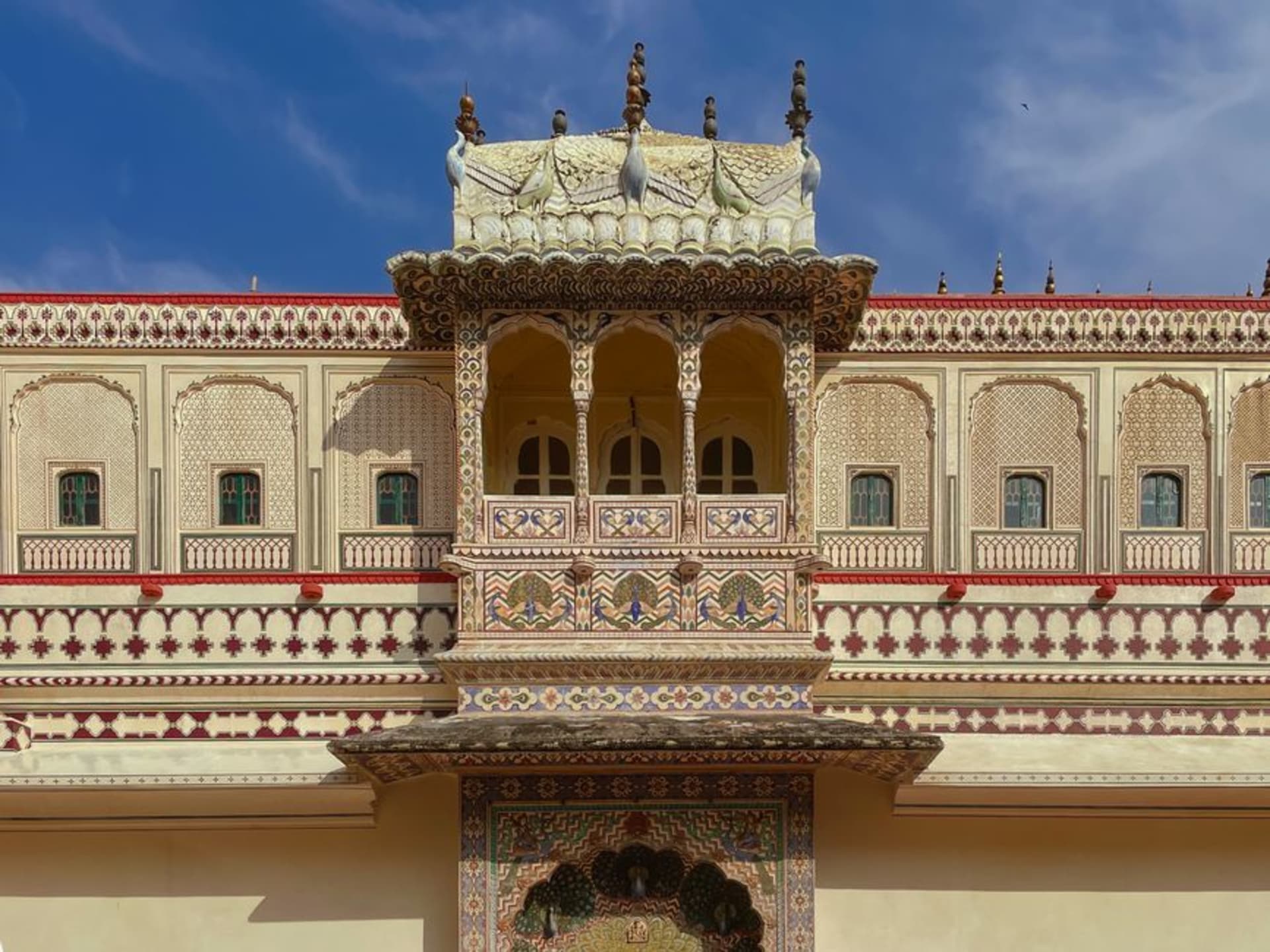
Nobody I’d met before visiting Rajasthan had mentioned Shekhawati to me, and I still don’t fully understand why, because it might be the strangest and most rewarding region I covered in the state. It’s not a single town but a scatter of small ones — Mandawa, Nawalgarh, Fatehpur, Ramgarh — spread across a dry, semi-desert triangle north of Jaipur, and every one of them is stuffed with havelis, grand merchant mansions whose exterior walls are covered floor to roofline in fresco paintings. I drove between three of these towns over two days with a hired car and driver, and the experience felt less like sightseeing and more like flipping through an enormous, crumbling picture book left out in the sun.
The story behind it is almost as good as the art itself. From the 18th through early 20th centuries, Shekhawati’s Marwari merchant families made fortunes trading along caravan routes and later in colonial-era commerce in Calcutta and Bombay, and they funneled a competitive share of that wealth back into their home towns — building havelis whose painted facades grew more elaborate as families tried to outdo their neighbors. The result is one of the largest concentrations of frescoes anywhere on earth, sometimes called the world’s largest open-air art gallery, though “gallery” undersells how unmanaged and exposed most of it still is.
Gods, trains, and Victorian gentlemen on the same wall
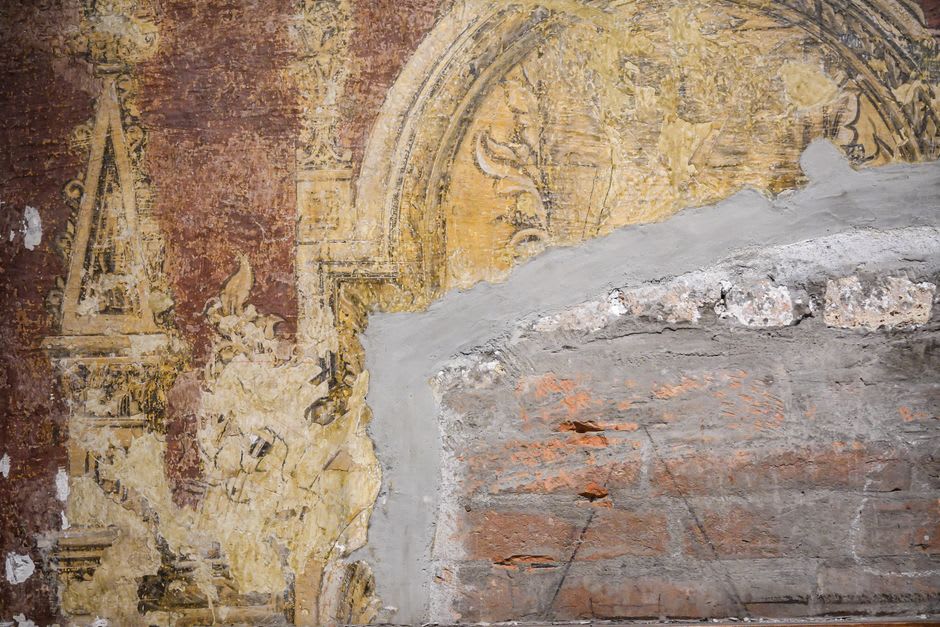
What struck me most was the range of subject matter painted side by side. Traditional scenes of Krishna and Radha, elephant processions, and Ramayana episodes share wall space with steam trains, hot air balloons, gramophones, and Englishmen in top hats and motorcars — painters working from secondhand descriptions or postcards of a modernizing world they’d never seen firsthand, rendered in the same folk style as the mythological panels beside them. In Nawalgarh, I stood in front of one haveli wall for ten minutes just cataloguing the mixture: a blue-skinned Krishna dancing three feet from a painted steam locomotive, both rendered with equal conviction.
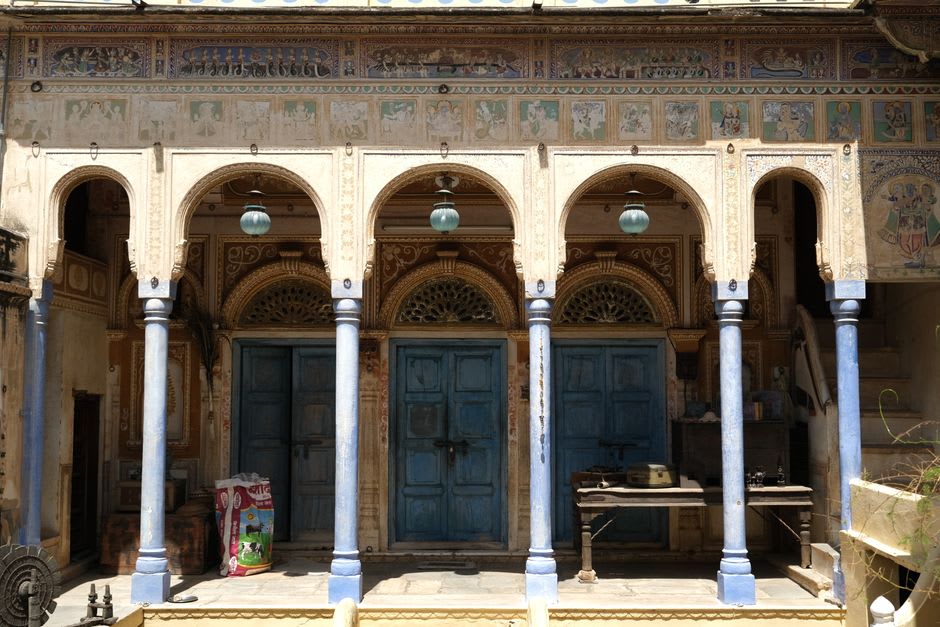
Mandawa is the most visited of the towns, with a fort-turned-hotel and a handful of well-preserved havelis open as small museums, but Fatehpur and Nawalgarh rewarded wandering more — many of their grandest mansions stand empty, their merchant families long relocated to the cities, caretakers living in a single ground-floor room while the painted upper stories flake and fade in the sun. It’s a melancholy kind of beauty, wealth on public display slowly returning to dust because nobody who inherited it wants to live here anymore.
When to go: November to February, when daytime desert heat is manageable for the walking required to move between havelis across several towns. Midday light is harshest on the frescoes; early morning or late afternoon brings out the color best.