Sarnath
"Ten kilometers from Varanasi's chaos, the Buddha found the one place in India built for silence."
The deer park outside Varanasi where the Buddha gave his first sermon, and where the noise of India finally, briefly, goes quiet.
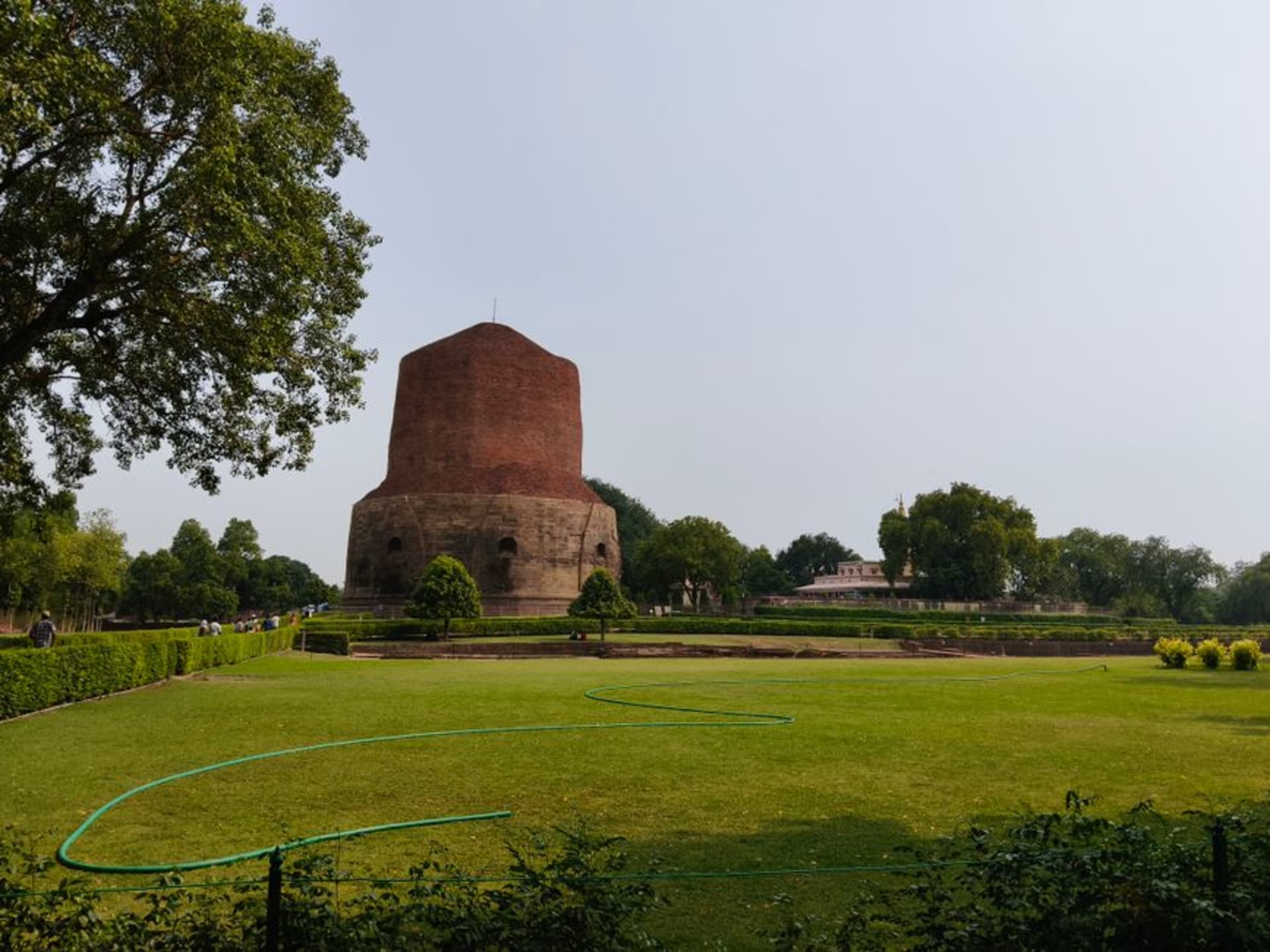
I took an auto-rickshaw out of Varanasi expecting more of the same — horns, cows, the press of bodies at the ghats — and instead arrived at a lawn. An actual lawn, mowed and green, with deer grazing at its edges and monks in maroon and saffron robes walking slow circuits around a great brick stupa. The contrast hit me physically, like stepping out of a furnace into shade. Varanasi is the loudest place I’ve been in India. Sarnath, ten kilometers up the road, might be the quietest.
This is where the Buddha came after his enlightenment at Bodh Gaya, to find the five ascetics who had once been his companions and had abandoned him when he gave up extreme asceticism. He found them here, in what was then a deer park, and gave his first sermon — the Dhammacakkappavattana Sutta, the “turning of the wheel of law” — laying out the Four Noble Truths and the Eightfold Path for the first time to anyone. Buddhism, as an organized teaching rather than one man’s private realization, effectively began on this patch of ground.
The stupa and the lion that became a nation
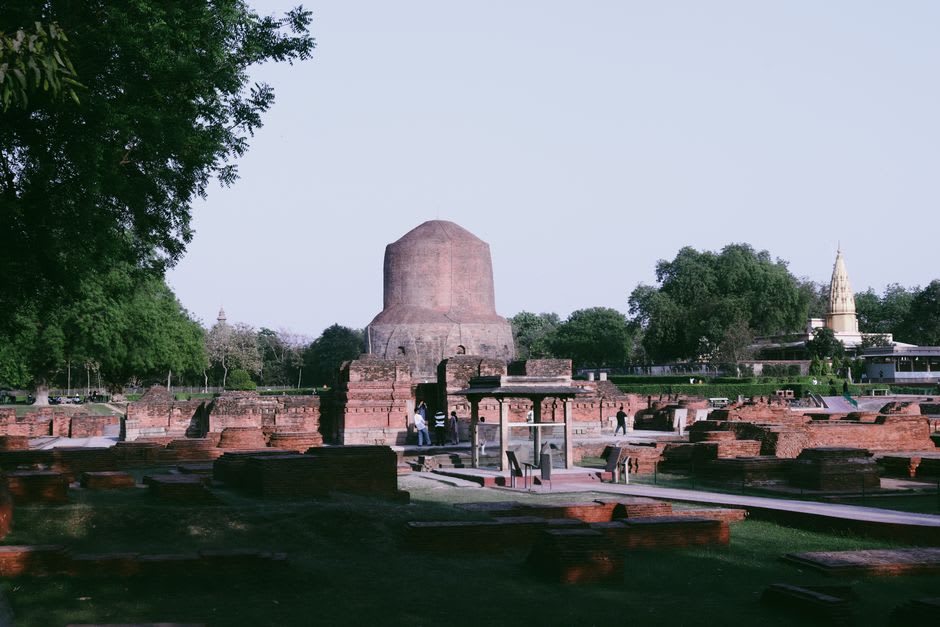
The Dhamek Stupa is the site’s anchor — a cylindrical tower of stone and brick, 43 meters tall, marking the exact spot tradition holds the sermon happened. It’s been rebuilt and expanded over centuries, and the brickwork at its base still carries traces of Gupta-era carving, geometric bands worn soft by seventeen hundred years of monsoons. I sat on the grass across from it for the better part of an hour, watching pilgrims from Sri Lanka, Thailand, and Myanmar do slow prostrations in front of it, robes in every shade of the Buddhist world.
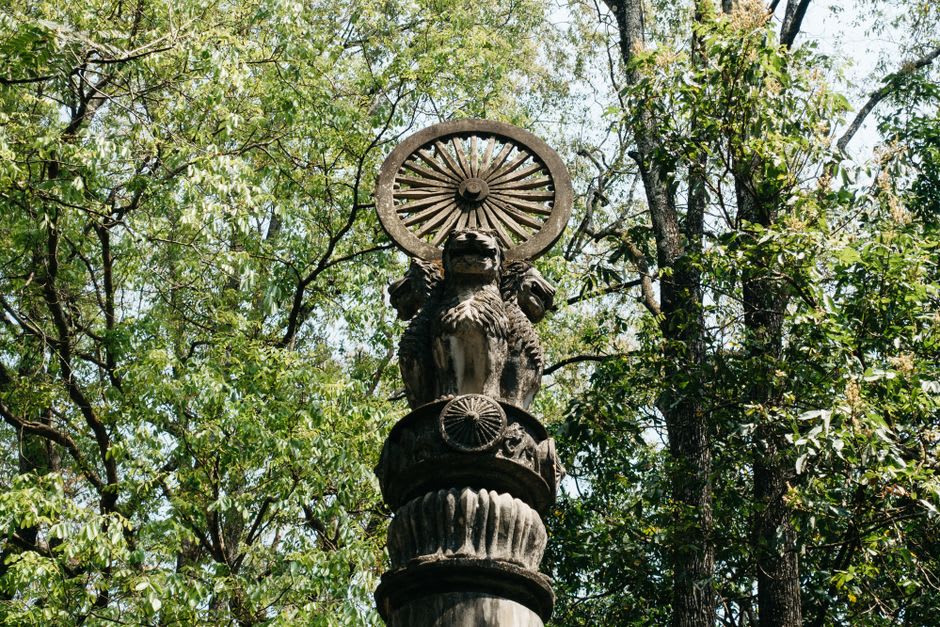
But the object that actually stopped me was smaller and behind glass in the site museum: the Ashokan lion capital, carved in polished sandstone around 250 BCE on the orders of Emperor Ashoka, who erected a pillar here to mark the spot as a place of imperial reverence. Four lions, back to back, stand atop a wheel and a frieze of a lion, an elephant, a bull, and a horse. It is, I realized standing in front of it, the same image on every Indian rupee note in my wallet and on the cover of every Indian passport — India’s national emblem, sourced directly from a 2,300-year-old Buddhist monument. Nobody had ever pointed that out to me before I stood there reading the placard, and it recalibrated how I understood the whole country’s relationship to its own layered history.
The ruins spread out from the stupa in low brick foundations — monastery walls, the Ashoka pillar’s broken shaft still standing where it fell, the Mulagandhakuti Vihara built by the Mahabodhi Society in the 1930s with murals inside depicting the Buddha’s life. I ended the visit at the modern temple, where a bell donated by the Buddhist community of Japan rang out over the grounds while the deer, descendants — supposedly — of the ones in the original park, dozed in the shade of a bodhi tree grown from a cutting of the original in Bodh Gaya.
When to go: October to March, matching Varanasi’s own best season — cool mornings for the walk around the stupa grounds before the day heats up. Early morning also means fewer tour buses and more monks actually practicing rather than posing.