Rameswaram
"Cross the Pamban Bridge and you're driving over water toward a story three thousand years old."
A pilgrimage island linked to the Ramayana, home to India's longest temple corridor and a sea bridge that seems to float across the strait toward Sri Lanka.
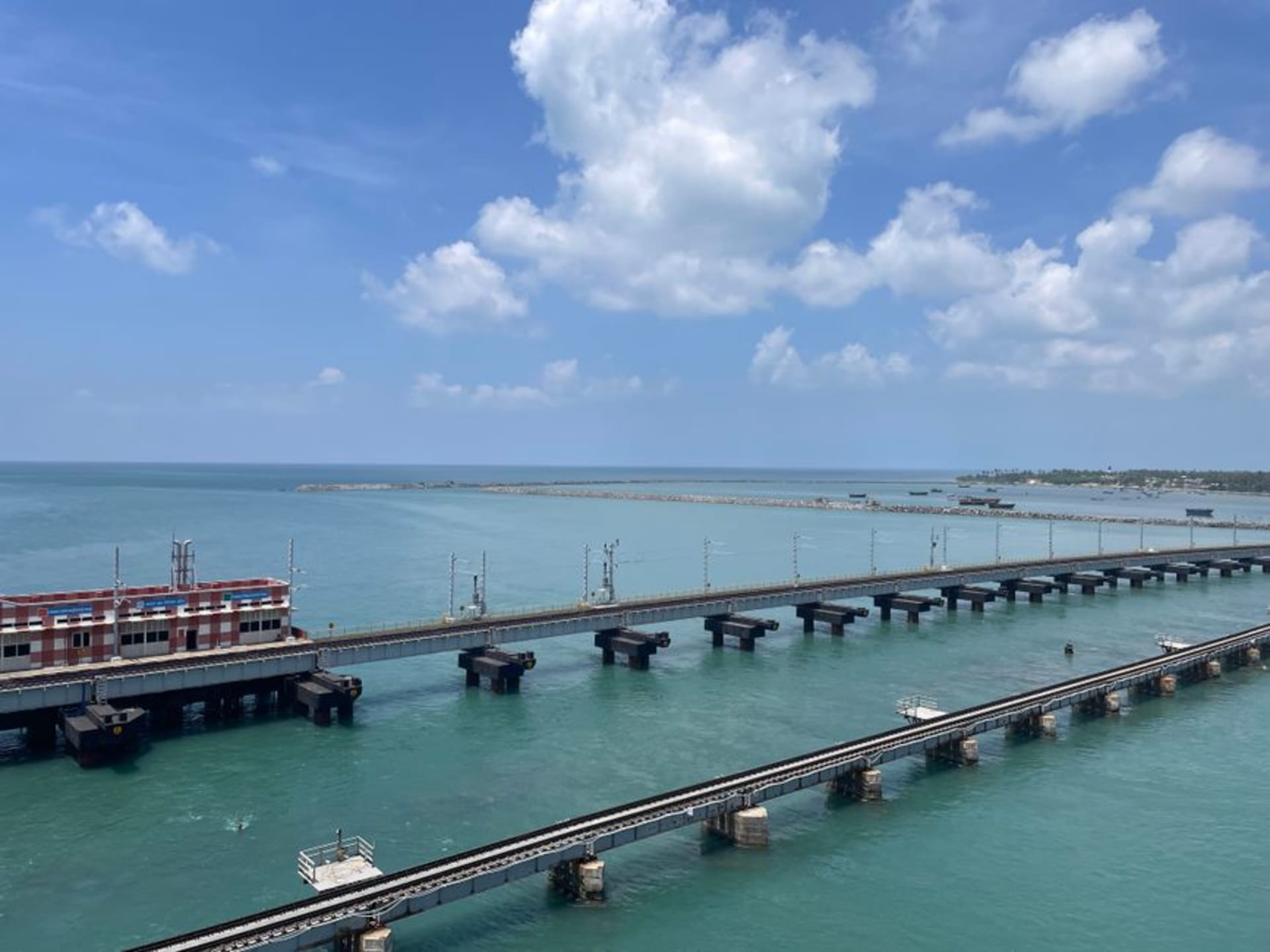
The bus crossed onto Pamban Bridge just after sunrise, and for a few minutes the road seemed to disappear entirely — nothing visible on either side but pale turquoise water, the mainland gone behind and the temple town of Rameswaram not yet in view ahead. It’s a strange, weightless feeling, driving what looks like a road laid directly on the sea, and it’s not an accident that the crossing feels significant. This strait is, according to the Ramayana, where Rama’s army of monkeys and bears built a bridge of floating stones to rescue Sita from Lanka. Whether or not you take the epic literally, arriving in Rameswaram by water puts you in exactly the right frame of mind.
The Longest Corridor in India
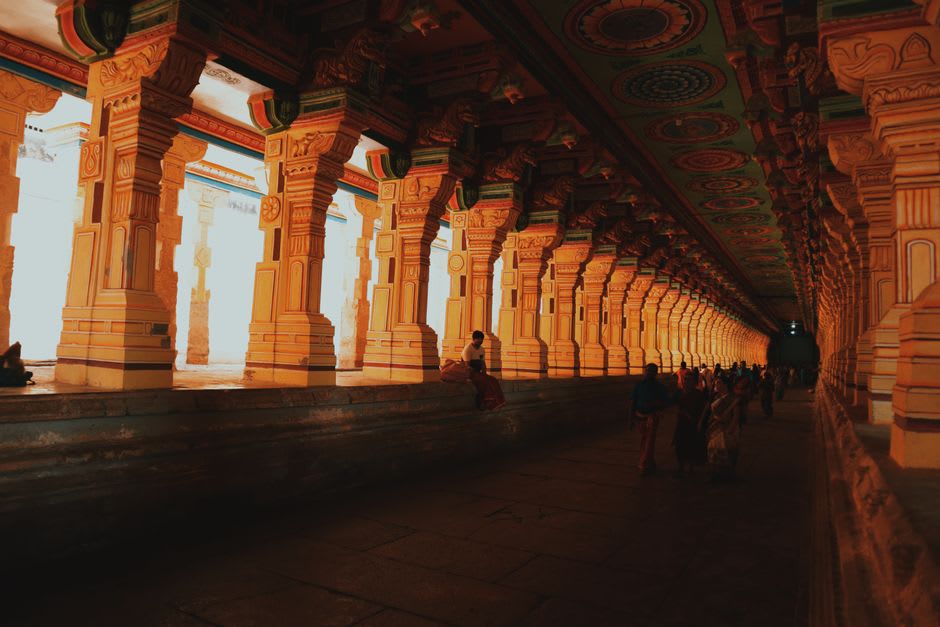
Ramanathaswamy Temple sits at the center of the island and holds the record, among Hindu temples, for the longest corridor in India — over a thousand meters of covered walkway lined with intricately carved stone pillars, each one slightly different from the next, stretching in four directions from the inner sanctum. I walked it barefoot on cool stone in the early morning, the corridor lit only by shafts of light falling through gaps in the roof, and the scale of it kept unfolding further than I expected every time I thought I’d reached the end. Pilgrims here follow a ritual bath in twenty-two separate wells inside the temple complex, each said to carry different waters and different blessings, and a priest doused me with bucket after bucket from well to well while I tried, and mostly failed, to keep count.
Dhanushkodi, the Town the Sea Erased
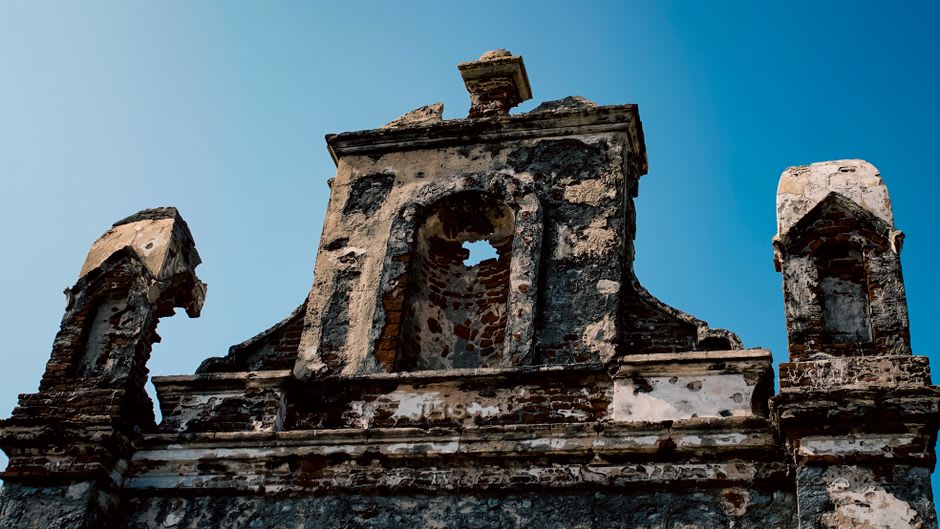
Beyond the temple, a jeep track runs to Dhanushkodi, a ghost town at the very tip of the island that a cyclone destroyed in 1964 and that the government never allowed to be rebuilt. What’s left is a scatter of roofless stone walls half-buried in sand, with the Bay of Bengal on one side and the Indian Ocean on the other, converging at a point so narrow you can see both seas meeting from a single spot on the beach. I stood there at low tide with fishermen mending nets a hundred meters off, the wind constant and slightly mournful, and it was the closest I’ve come in India to feeling like I’d walked to the literal edge of something.
When to go: October through March, when temperatures stay bearable for the long barefoot temple corridor and the crossing to Dhanushkodi is calm; avoid the pre-monsoon months when this stretch of coast can turn brutally hot and cyclone-prone.