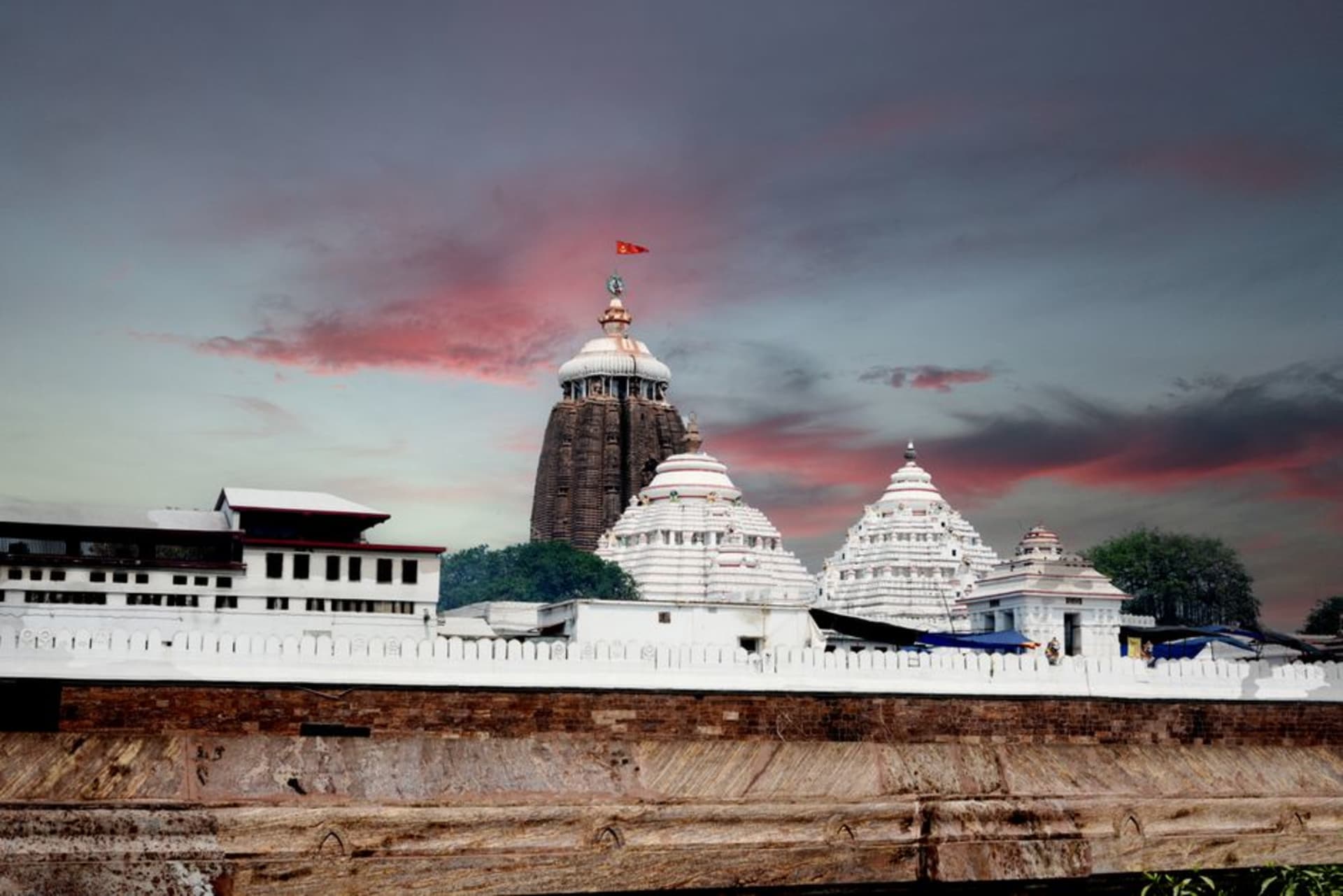
A coastal pilgrimage town in Odisha built around the Jagannath Temple, where a wooden chariot festival draws a million people and the beach never quite stops being sacred.
I arrived in Puri on an overnight train from Kolkata and stepped out into a town that smells simultaneously of frying jalebi, sea salt, and incense — three ingredients that turn out to define the whole place. The Jagannath Temple dominates everything, its main spire visible from most of the town, topped with the sudarshan chakra and a flag that is, according to local belief, always flapping against the wind rather than with it. Non-Hindus cannot enter, and I stood outside the eastern gate for a long while just watching the flow of pilgrims — barefoot, garlanded, some who had traveled days by bus from villages I’d never find on a map — disappear through the entrance in a steady, unhurried current.
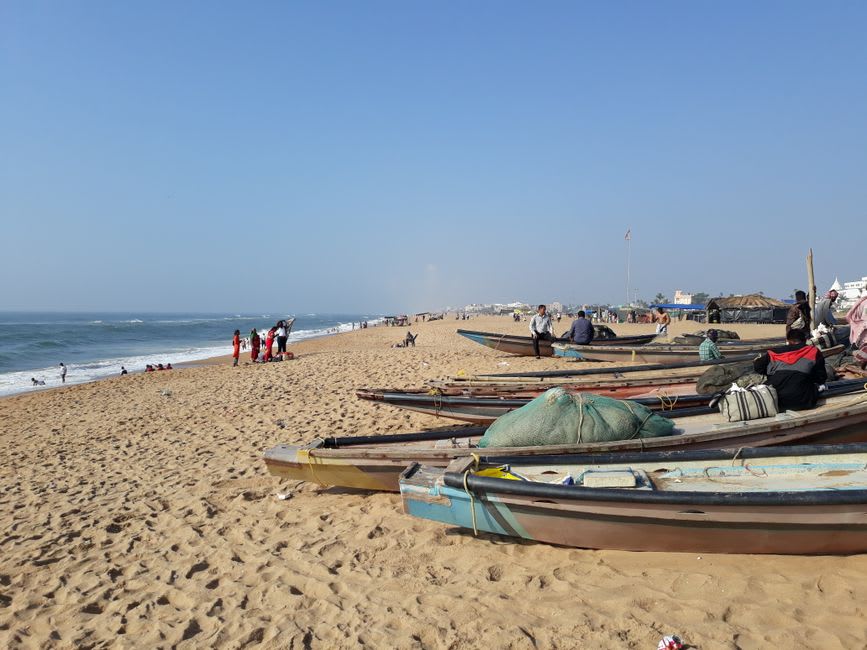
Puri Beach stretches wide and grey-gold south of the temple, a working beach rather than a resort one, lined with fishing boats and the occasional sand sculptor — Odisha produces some of India’s most celebrated sand artists, and a small open-air museum near the shore shows what the medium can do in skilled hands. I watched fishermen haul in a net at dusk, the whole catch flopping silver in the fading light, while pilgrims bathed a few hundred meters down, treating the same ocean as both livelihood and holy water without any apparent contradiction.
The Chariots That Move a City
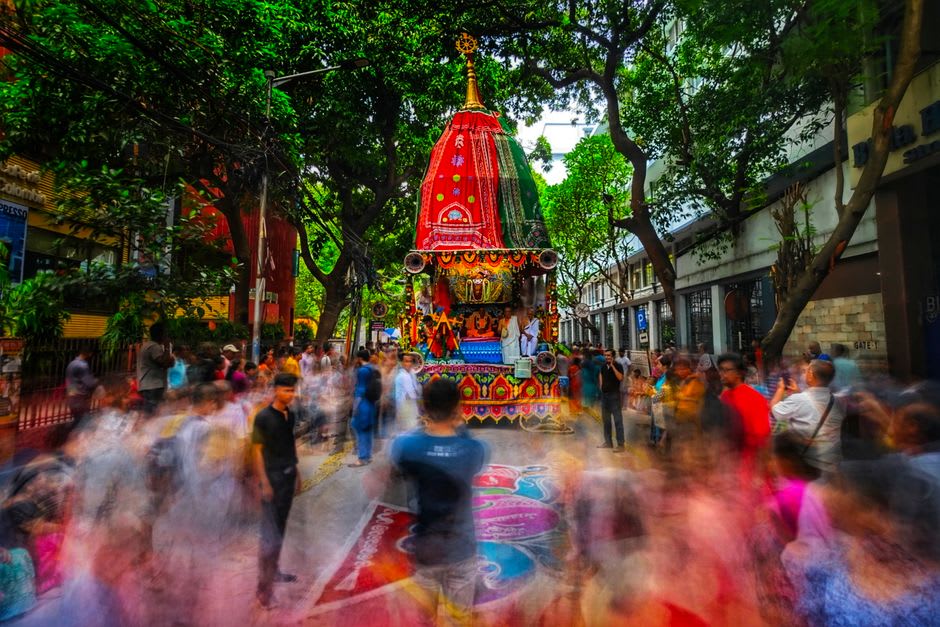
If you can time a visit to Rath Yatra, do it, though be warned about what you’re signing up for. Once a year the deities of Jagannath, Balabhadra, and Subhadra are brought out of the temple and installed on three towering wooden chariots — the tallest over fourteen meters, built fresh each year from scratch by temple carpenters using techniques passed down for centuries — and then pulled through the Grand Road by thousands of devotees on thick ropes. I got caught in the crowd near the temple gate the year I visited, and when the ropes finally went taut and Jagannath’s chariot lurched forward, the sound that came from the crowd was less a cheer than a physical release, something that had been building in the town for days. It is, incidentally, the origin of the English word “juggernaut” — from early European accounts, some exaggerated, of the crowd’s fervor.
Away from the temple, Puri settles into something gentler: the Gundicha Temple, the deities’ symbolic “garden house” destination during Rath Yatra, quiet markets selling appliqué work that Odisha is famous for, and small thali restaurants serving Odia food — dalma, a lentil-and-vegetable stew, and pakhala, fermented rice served cold in the brutal pre-monsoon heat, a dish that makes far more sense once you’ve sweated through an Odisha afternoon.
When to go: June or July for Rath Yatra itself, if crowds don’t deter you — the dates shift with the lunar calendar. October to February offers calmer, cooler beach weather.