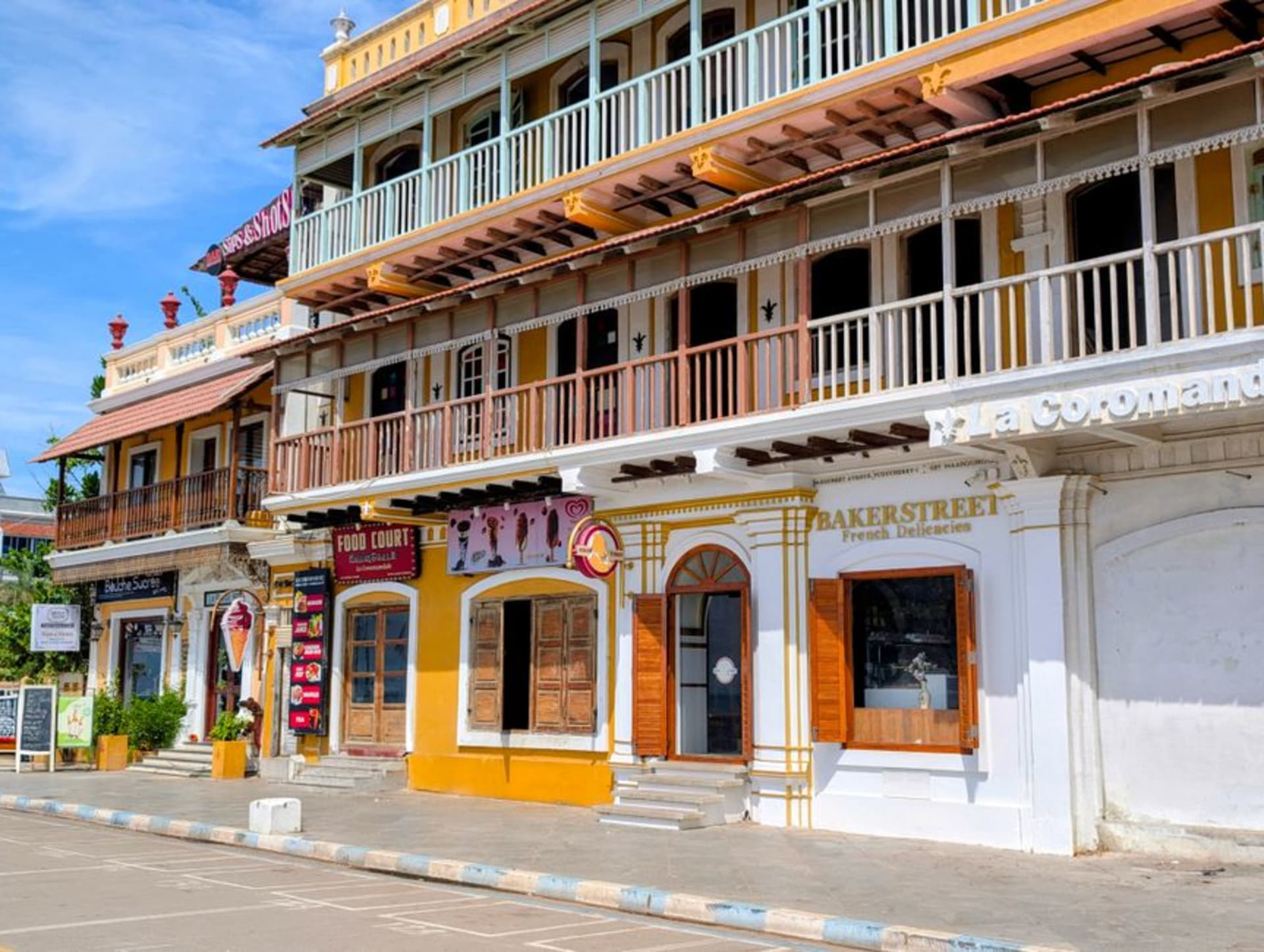
Pondicherry
"Cross one street in Pondicherry and you leave Tamil Nadu for a version of France that never quite left."
A former French colonial port where mustard-yellow villas, bougainvillea, and café culture sit improbably inside Tamil Nadu, a few streets from the sea.
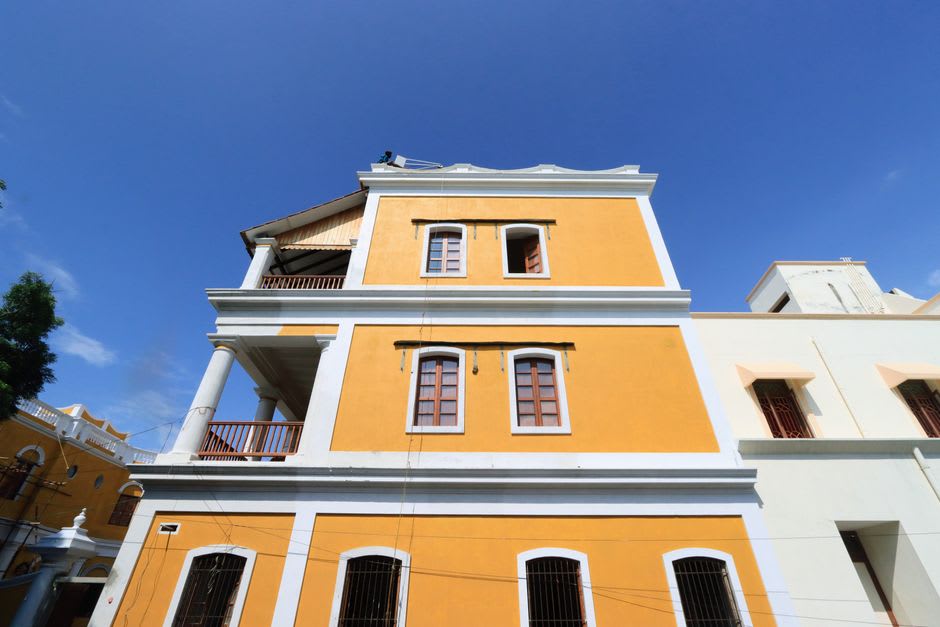
I crossed the canal that splits Pondicherry into its Tamil and French halves expecting a gimmick — a few colonial facades kept up for tourists — and instead found an entire quarter that genuinely operates on a different register than the rest of Tamil Nadu. The traffic noise drops. The street signs turn bilingual, Tamil above and French below. Villas painted mustard yellow and ochre sit behind low walls with bougainvillea spilling over the top, and somewhere a bell from a Catholic church rings over rooftops that could belong to a quiet town in Provence, if Provence had coconut palms and a smell of frangipani mixed with the sea.
What a Hundred and Fifty Years Leaves Behind
France held Pondicherry as a colonial enclave until 1954, seven years after Indian independence, and the town still carries that strange, extended timeline in its bones. Street names are still French on the old signage — Rue Romain Rolland, Rue Suffren — and the grid of the French Quarter, the Ville Blanche, was laid out with the kind of deliberate order the rest of Tamil Nadu’s older towns never bothered with. I stayed in a converted colonial house with two-foot-thick walls and shuttered windows that kept the rooms cool without any electricity at all, and the owner told me most of these heritage villas are protected now, which is the only reason they’re still standing instead of being replaced by concrete blocks like everywhere else on this coast.
Café Culture and the Utopia Down the Road
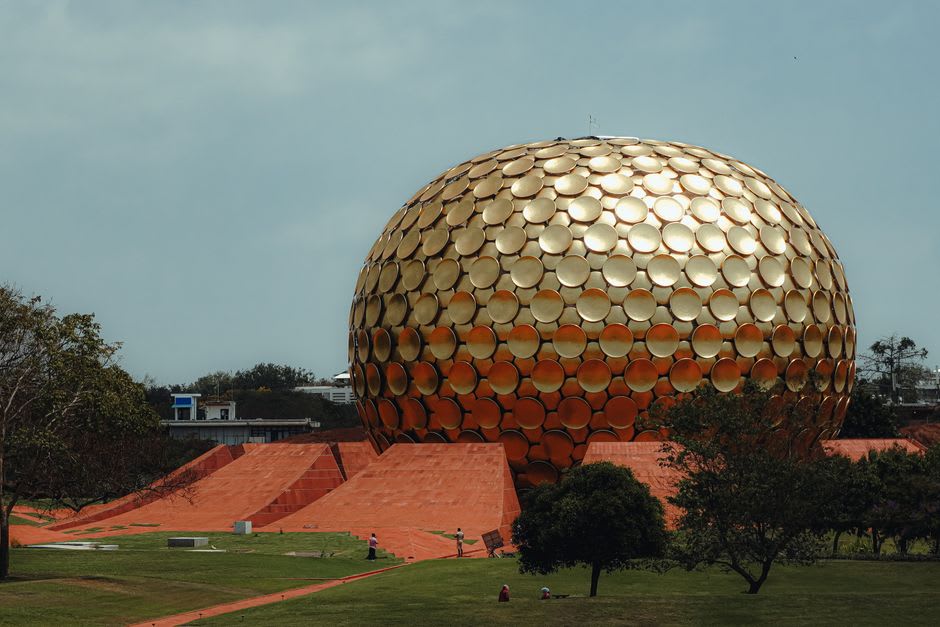
What surprised me most wasn’t the architecture, it was the pace. I sat at a French-run café on Rue Dumas for an entire morning, drinking properly made coffee — a rarity in Tamil Nadu, where the default is excellent but very different filter coffee — while writing nothing at all, just watching cyclists in white pass under the tamarind trees. It’s the only place in the state where lingering at a café table feels like the whole point rather than a break between temples. A short drive north is Auroville, the experimental township founded in 1968 around the idea of a universal human community beyond nationality or religion, its golden geodesic Matrimandir rising out of forest like something from a different century entirely. I found Auroville’s utopianism a little earnest, honestly, but standing at the edge of the amphitheater watching the dome catch the last light, earnestness felt like the right response to have.
When to go: December through February, when sea breezes keep the French Quarter’s narrow streets pleasant for walking and the promenade along the Bay of Bengal is at its best in the evenings.